
Social media has become the heartbeat of online engagement, with billions of users logging in every day to connect, share, and discover.
For businesses, this presents a vast playground of opportunities to reach and resonate with their target audience.
Social media advertising has evolved into a crucial component of any marketing strategy, allowing brands to precision-target their messages, foster meaningful interactions, and drive real results.
But what’s the current state of play in this rapidly changing field?
Let’s dive into the latest social media advertising statistics to uncover the trends, insights, and numbers that will inform your marketing approach and boost your online presence.
Key Social Media Advertising Statistics (Editor’s Pick)
- The average cost-per-mille (CPM) for social media advertising is $6.06
- For many businesses, “increased exposure” is the most common benefit of social media advertising.
- The social media advertising market is expected to reach $276.72 billion in 2025 and grow at a rate of 10.09.86% per year from 2025 to 2029.
- Increased exposure (81%), increased website traffic (71%), and lead generation (62%) are the top benefits of social media marketing.
- Mobile social media ad spending is expected to hit $82.69 billion, while desktop ad spending will total $13.01 billion.
- Social media has over 5 billion global users, with forecasts predicting this number will rise above 6 billion by 2029.
- Only 18% of marketers plan to increase their organic activities on Threads over the next 12 months. A significant majority (64%) have no plans to use the platform.
- The average CPC for Instagram ads is $1.17.
- The number of TikTok users in the US making purchases on the platform is expected to rise from 47.2 million in 2024 to 55.6 million by 2027.
- Facebook’s ad reach is 2.28 billion, covering 27.9% of the global population.
- Marketers consider Facebook the most important social media platform (37%).
- B2C marketers are more likely to boost their Facebook organic activities (44%) compared to B2B marketers (31%).
- X’s global ad revenue is expected to bounce back with a 16.5% year-over-year increase in 2025.
- Most marketers (61%) aim to boost their LinkedIn organic efforts in the next 12 months.
- 40% of surveyed B2B marketers say LinkedIn is the most effective channel for getting high-quality leads.
- Snapchat connects with 75% of 13-34 year olds and has 900 million monthly active users.
- WhatsApp reached nearly 3.3 billion unique active users worldwide in June 2025.
- 60% of marketers plan to increase their organic use of YouTube over the next 12 months.
- About 67% of marketers plan to increase their use of YouTube for video marketing.
- YouTube’s worldwide advertising revenues reached $8.92 billion in the first quarter of 2025.
- Up to two-thirds of the global population (63.9%) are social media users, totaling 5.24 billion people.
- About two-thirds of Gen Z, Millennials, and Baby Boomers use social media daily.
- Over half (56%) of Millennials use TikTok Shop at least once a week.
- About 41% of social media users in the US use TikTok as a search engine.
- One-quarter of US adults prefer social media for online searches, rising to 46% among Gen Z adults.
- In 2025, social media marketers’ top challenges are keeping up with trends (22%), measuring ROI (21%), and creating engaging content (20%).
- About 1 in 5 marketers (22%) say their top social media goal is to drive website traffic.
- Marketers say generative AI helps with efficiency (38%) and idea generation (34%) in social media marketing.
- 22% of US TikTok users have utilized the platform to sell products or services.
General Social Media Advertising Statistics
1. The average cost-per-mille (CPM) for social media advertising is $6.06. (source)
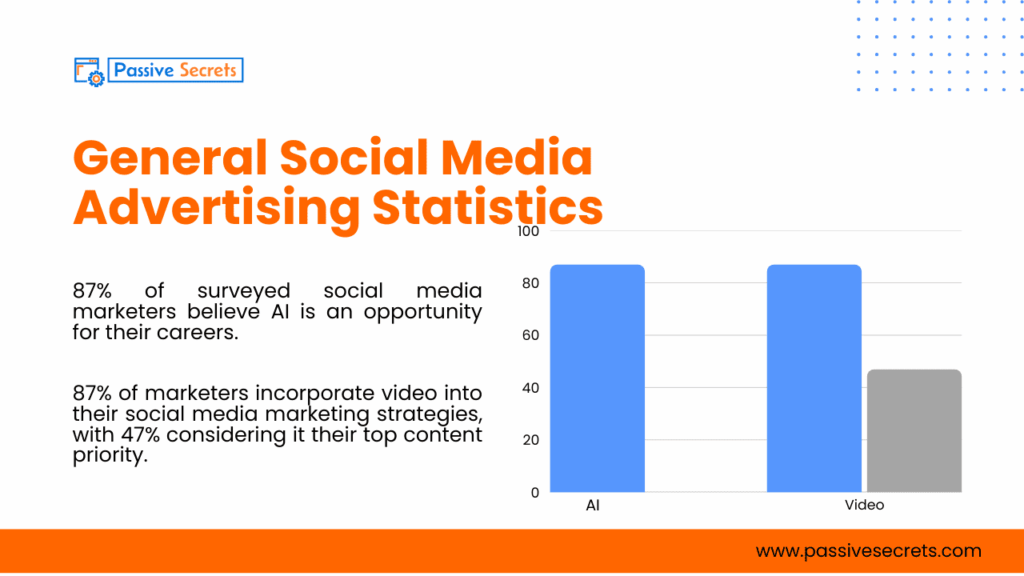
2. 87% of surveyed social media marketers believe AI is an opportunity for their careers. (source)
3. 87% of marketers incorporate video into their social media marketing strategies, with 47% considering it their top content priority. (source)
4. LinkedIn is the social media platform with the highest advertising cost-per-click. It has a CPC of $5.26. Twitter comes with the lowest CPC. It costs $0.38. (source)
5. The most common benefit of social media advertising for many businesses is “increased exposure”. (source)
6. The social network click-through rate (CTR) rose to 0.66% in Q2 2024, up from 0.64% in Q1 2024. (source)
7. Instagram, Facebook, and YouTube are the top platforms for video publication, and 67% of marketers aim to amplify their video marketing efforts on Instagram in the next year. (source)
8. The total number of social media users worldwide is expected to increase to over 6 billion by 2029. This shows how social media is increasingly dominating the digital world. (source)
9. Among the 20 selected regions for social media advertising spending, the United States tops the list with $72.3 billion, followed closely by China at $71.4 billion. (source)
10. The global social network penetration rate is 63.9%. The regions with the highest social media penetration rates were: Northern Europe (78.7%), Western Europe (77.1%), and Eastern Asia (76%). In contrast, Eastern and Middle Africa had the lowest rates, at 11.1% and 10.1%, respectively. (source)
11. The social media advertising market is expected to reach $276.72 billion in 2025 and grow at a rate of 10.09.86% per year from 2025 to 2029, reaching a projected $406.45 billion by 2029. (source)
12. By 2029, mobile devices are expected to account for 83% of all social media advertising spending. (source)
13. The global social media user base is projected to reach 6.5 billion by 2029. (source)
14. 68% of social media marketers are worried about the return on investment (ROI) from their social activities. (source)
15. Within the last three months, 41% of consumers (which include millennials, Gen Xs, Gen Zs, and baby boomers) discovered at least one product on social media. (source)
16. The Social Media Advertising Mobile segment stands out with a value of $212.68 billion, the highest among all segments. (source)
17. The top benefits of social media marketing are: increased exposure (81%), increased website traffic (71%), and lead generation (62%). (source)
18. Facebook’s and Instagram’s share among B2B marketers rose to 50% in 2024, up 7% from 2023. (source)
19. Visual content (87%) and written content (84%) are the most popular content types in social media advertising. (source)
20. B2B marketers (88%) are more likely to use written content than B2C marketers (82%). (source)
21. 62% of the global population uses social media, with over 80% in Western Europe.(source)
22. In 2023, Meta continued to dominate ad revenue, earning $117.9 billion.(source)
23. The social media subscription market is experiencing rapid growth, expanding from $24.95 billion in 2024 to $30.03 billion in 2025 at a 20.4% compound annual growth rate (CAGR). By 2029, the market is projected to reach $59.92 billion, with a CAGR of 18.9%. (source)
Global Spending and Growth Trends
24. The US social commerce market is projected to reach $104 billion in 2025 and exceed $150 billion by 2029. (source)
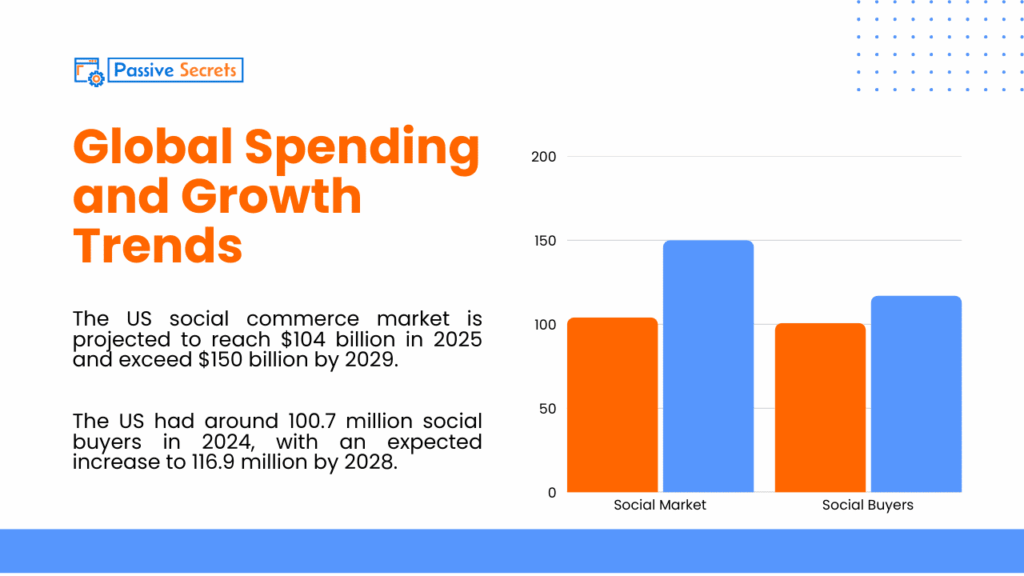
25. The US had around 100.7 million social buyers in 2024, with an expected increase to 116.9 million by 2028. (source)
26. In 2025, mobile social media ad spending is expected to hit $82.69 billion, while desktop ad spending will total $13.01 billion, reflecting a shift towards mobile devices for social media consumption. (source)
27. YouTube’s revenue soared to $36.1 billion in 2024, marking a 14.6% year-over-year surge. (source)
28. In 2025, 98% of social media marketers expect their budgets to stay the same or increase, and 96% anticipate their team sizes will remain steady or grow. (source)
29. Social media has over 5 billion global users, with forecasts predicting this number will rise above 6 billion by 2029. (source)
30. Global social media ad spending was projected to reach $234.14 billion in 2024, a 140% increase from 2019. By 2029, spending is expected to surge another 50%, exceeding $345 billion. (source)
31. YouTube raked in a whopping $8.93 billion in advertising revenue during Q1 2025, marking a 10.3% year-over-year increase. This significant increase showcases the platform’s enduring appeal to advertisers worldwide. (source)
32. TikTok Shop’s GMV skyrocketed from $1 billion in 2021 to $4.4 billion in 2022, and then surged to a staggering $33.2 billion in 2024, demonstrating the explosive growth and success of its e-commerce feature. (source)
33. The cost-per-mille (CPM) rate in Facebook was highest in the United Kingdom – at 5.98 U.S. dollars. Germany followed with a CPC rate of 5.33 dollars, while the United States rounded the top three with 4.29 dollars in CPC. (source)
34. Alphabet, the parent company of Google and YouTube, is projected to take the top spot in digital advertising revenue worldwide in 2025, with a whopping $209 billion. Breaking it down, Google’s digital ad revenue is expected to reach $190 billion, while YouTube’s revenue is anticipated to hit $19 billion. Meta, the company behind Facebook and Instagram, is forecasted to come in second with $184 billion in revenue. (source)
35. Only 18% of marketers plan to increase their organic activities on Threads over the next 12 months. A significant majority (64%) have no plans to use the platform. (source)
Social Platform-Specific Performance Statistics
Instagram Advertising Statistics
36. There are currently over 2 billion Instagram users worldwide. (source)
37. Instagram is estimated to reach about 1.44 billion monthly active users in 2025, amounting to 31.2% of global internet users. (source)
38. The average CPC for Instagram ads is $1.17. (source)
39. The average number of weekly brand posts on Instagram is 4.7. (source)
40. Men aged 25-34 accounted for 17.6% of Instagram’s global active users. Additionally, over half of Instagram’s worldwide user base was 34 years old or younger. (source)
TikTok Advertising Statistics
41. Social media users (mostly adults) in the U.S. spend an average of 53.8 minutes on TikTok daily. (source)
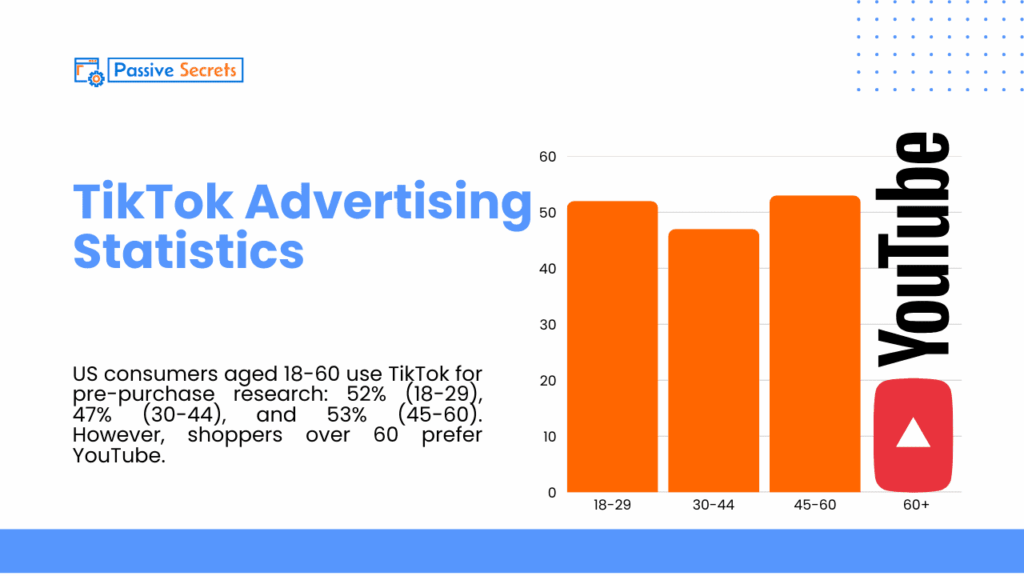
42. US consumers aged 18-60 use TikTok for pre-purchase research: 52% (18-29), 47% (30-44), and 53% (45-60). However, shoppers over 60 prefer YouTube. (source)
43. In the US TikTok Shop, beauty and personal care was the top-selling category in 2024, accounting for 21% of GMV share, followed by womenswear and underwear with 13%. (source)
44. In 2024, the United States took the top spot as the leading TikTok Shop country, with a whopping Gross Merchandise Value (GMV) of around $9 billion. Indonesia came in second, with a GMV of $6.2 billion, followed closely by Thailand with approximately $5.7 billion. (source)
45. TikTok Shop’s US GMV saw consistent growth throughout 2024, peaking at over $1.2 billion in November, and remaining strong in December at roughly the same level. (source)
46. The number of TikTok users in the US making purchases on the platform is expected to rise from 47.2 million in 2024 to 55.6 million by 2027. (source)
47. TikTok’s global user base is predominantly male, with men making up 55.7% of users, while women accounting for around 44.3%. The platform also grew significantly, with 186 million downloads worldwide in the last quarter of 2024. (source)
48. TikTok tops the list for boosting business exposure, with 78% of marketers reporting benefits. However, only 27% of marketers are using the platform, and a growing number (51%, up from 41% in 2024) have no plans to use it, indicating a widening gap between TikTok’s successes and those who are opting out. (source)
Facebook Advertising Statistics
49. Facebook’s ad reach is 2.28 billion, covering 27.9% of the global population. (source)
50. Facebook is the most popular social media platform worldwide. It has over 3 billion registered accounts. (source)
51. In the US, Facebook’s largest user group was 25-34 year olds (24.2%), followed by 18-24 year olds (19%). (source)
52. Marketers consider Facebook the most important social media platform (37%), followed by LinkedIn (29%) and Instagram (24%). (source)
53. In a 2025 global survey, B2C marketers (48%) favored Facebook as the top social media platform, while B2B professionals (53%) preferred LinkedIn. (source)
54. A 2025 survey of global marketers found that 83% used Facebook for marketing, followed by Instagram (78%) and LinkedIn (69%) as the most popular platforms. (source)
55. According to an analysis based on a total of 30.32 million impressions, the leading type of campaign on Facebook was brand awareness, with over 37 percent of shares. Traffic followed second, with 24.6 percent of the total. (source)
56. In 2024, brands increased their posting frequency on Facebook when compared to 2023. Overall, in 2024, accounts with huge followings, over 50,001 followers, posted an average of 23.72 times per week. Big accounts, those with 10,001 to 50,000 followers, published an average of 6.92 posts per week, up from 6.81 posts in 2023. (source)
57. More than 26,000 advertising accounts and more than 211,000 ad campaigns, interactions were the most used Facebook ad objective globally in January and February 2024. Traffic came second, with 32.6 percent. (source)
58. Marketers’ plans for Facebook organic marketing are mixed. While 15% plan to decrease their efforts, 36% plan to increase them. B2C marketers are more likely to boost their Facebook organic activities (44%) compared to B2B marketers (31%). (source)
59. A study found that Facebook was the leading social media platform for B2C marketers, used by around 90%. For B2B marketers, LinkedIn was the top choice, used by 87%. The study also revealed that increased exposure and traffic were the primary benefits of social media marketing globally. (source)
60. Nearly a third of marketers (27%) focus solely on organic social activities, opting out of social ads. When it comes to paid social ads, B2C marketers favor Facebook ads (48%), while B2B marketers prioritize LinkedIn ads (24%). (source)
61. India has the largest Facebook user base with over 383 million users, surpassing the population of many countries. The US, Indonesia, and Brazil also have massive Facebook user bases, exceeding 100 million each. (source)
62. Based on industry, the highest Facebook CTR is 2.06% from the apparel and footwear industry. (source)
X (Twitter) Advertising Statistics
Given its short lifespan and challenging character limit, X advertising can be the most difficult social media platform to master.
Hence, to best enhance your X (Twitter) advertising strategy, you must first understand these important Twitter statistics.
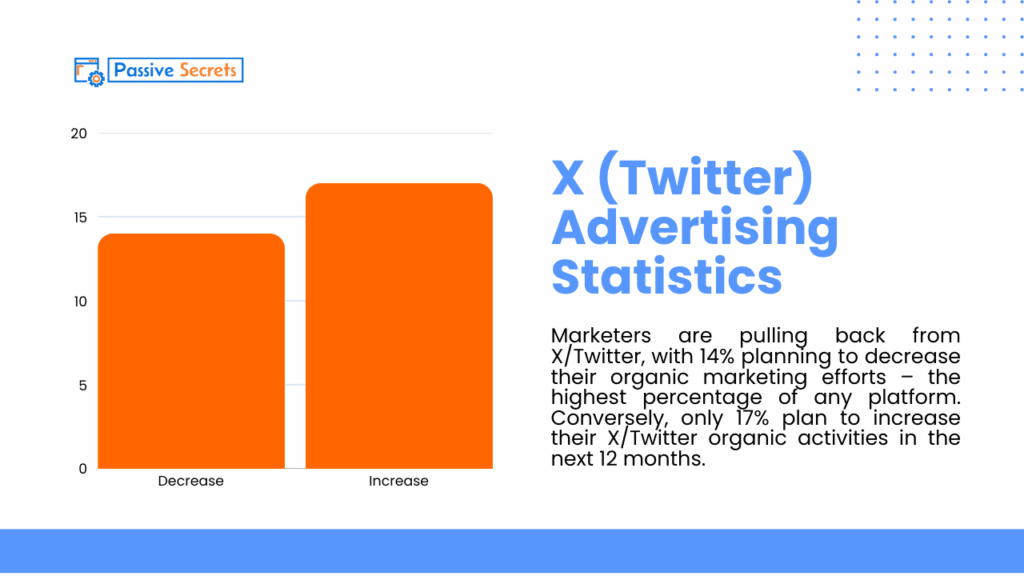
63. Marketers are pulling back from X/Twitter, with 14% planning to decrease their organic marketing efforts – the highest percentage of any platform. Conversely, only 17% plan to increase their X/Twitter organic activities in the next 12 months. (source)
64. In the U.S., X users spend an average of 34 minutes daily on the social media platform. (source)
65. X.com ranks as the 6th most visited website in the world. (source)
66. X/Twitter has up to 103.9 million users in the US, followed by Japan with over 70 million and India with 25 million. (source)
67. X’s global ad revenue is expected to bounce back with a 16.5% year-over-year increase in 2025, recovering from a significant 51.7% decline two years prior. (source)
68. In 2024, X/Twitter generated over $5 billion in total global revenue, marking an increase from 3.72 billion US dollars the previous year. (source)
LinkedIn Advertising Statistics
Although it is not the world’s No.1 social media platform, LinkedIn is the largest social network for business professionals.
Millions of entrepreneurs, business executives, corporate workers, and freelancers are on the platform.
B2B marketers prefer LinkedIn for connecting with potential customers and promoting their businesses.
69. The US has the largest audience for LinkedIn, with 250 million users, followed by India with 150 million users. (source)
70. A significant majority of marketers (61%) aim to boost their LinkedIn organic efforts in the next 12 months. This trend is more pronounced among B2B marketers, with 76% planning increases, compared to 51% of B2C marketers. (source)
71. Between 2024 and 2028, LinkedIn users in the United States are expected to grow by 10.4 million, or 5.23%, reaching a record 209.26 million after 9 consecutive years of increase. (source)
72. Over 67.1 million businesses worldwide have a page on LinkedIn. (source)
73. Brands and marketers who have advertised on LinkedIn have seen a 33% increase in purchase intent. (source)
74. 40% of surveyed B2B marketers agree that LinkedIn is the most effective channel for getting high-quality leads. (source)
75. LinkedIn’s global user base was predominantly young professionals, with 47.3% aged 25-34 and 28.7% aged 18-24. Males accounted for 56.9% of users, while those over 55 made up just 3.3%. (source)
Snapchat Advertising Statistics
Snapchat is still one of the world’s most popular social media platforms. It is an excellent tool for helping businesses connect with their audiences in a fun and engaging way.
If you want to use Snapchat as an advertising platform, ensure you include Snapchat advertising statistics in your social media strategy.
76. As of Q1 2025, Snapchat’s daily active users remained at 460 million worldwide, unchanged from Q4 2024. (source)
77. Snapchat connects with 75% of 13-34 year olds and has 900 million monthly active users, making it a hub for Gen Z and Millennials to communicate and share experiences. (source)
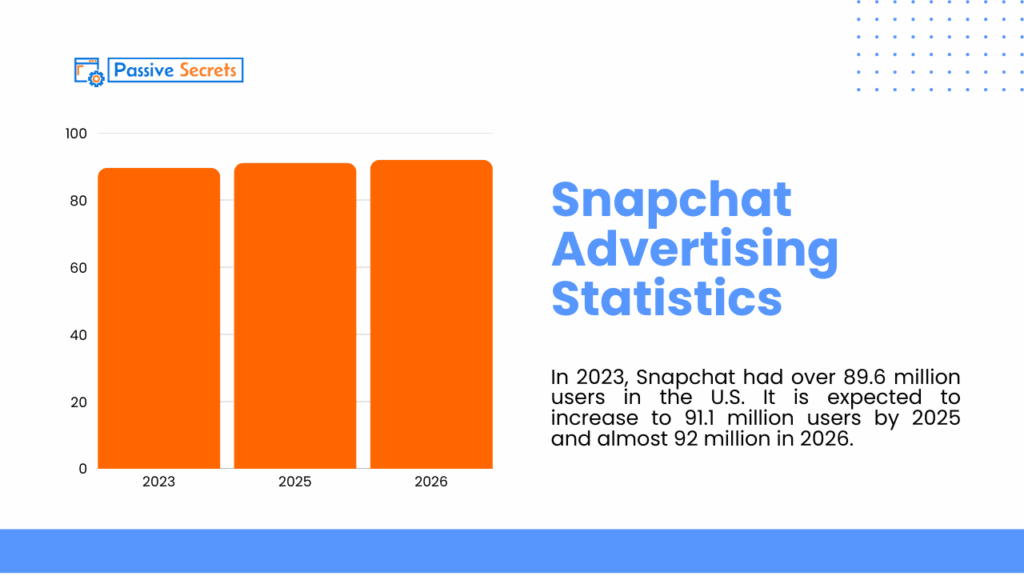
78. In 2023, Snapchat had over 89.6 million users in the U.S. It is expected to increase to 91.1 million users by 2025 and almost 92 million in 2026. (source)
79. More than 90% of people aged 13 to 34 use Snapchat to connect with friends, influencers, and various businesses. (source)
WhatsApp Advertising Statistics
Most digital marketers consider WhatsApp marketing as part of their social media marketing strategy.
WhatsApp marketing, which is a type of messenger marketing, involves promoting a business through WhatsApp.
80. An online survey in the U.S. revealed that about 30% of respondents aged 18 to 34 had a WhatsApp account. (source)
81. WhatsApp reached nearly 3.3 billion unique active users worldwide in June 2025, a 6.7% increase from June 2024. (source)
82. Globally, WhatsApp users spent around 16 hours/month on the app in 2024, down from 17 hours in 2023. Users in Indonesia (24.17 hours) and Brazil (24.04 hours) spent the most time, while those in Australia (2.44 hours) and the US (3.59 hours) spent the least. (source)
83. Around 150 billion messages are sent on WhatsApp each day. (source)
84. In January 2025, WhatsApp topped the global mobile messenger app downloads with 57 million, followed by Snapchat (30 million) and Telegram (27.6 million). (source)
85. An online survey showed that most WhatsApp users were between 18 and 34. In addition, ages between 35 and 44 were registered on the app. (source)
YouTube Advertising Statistics
YouTube has been the largest video-sharing platform for years, with over 2 billion monthly active users. The platform also gets up to a billion views daily.
Regarding advertising, YouTube has been one of the most used social networks for promoting their businesses, especially since video content has taken over as the preferred content format.
86. YouTube’s total potential ad reach is 2.53 billion. The ad reach accounts for 30.9% of the total population. (source)
87. YouTube had 2.74 billion active users in 2024, ranking it among the world’s most popular social media apps, with only Facebook having more users. (source)
88. 60% of marketers plan to increase their organic use of YouTube, followed by Instagram (55%) over the next 12 months. (source)
89. About 67% of marketers plan to increase their use of YouTube for video marketing, while 63% plan to do the same with Instagram. (source)
90. In the US, nearly half (41.2%) of the time spent on YouTube is done so through mobile devices. (source)
91. US Gen Zers prefer YouTube, with 89.3% using the platform, compared to Instagram (72.5%), TikTok (71.2%), and Snapchat (70.3%). (source)
92. Majorities of marketers plan to boost their use of video on YouTube (67%), Instagram (63%), and LinkedIn (54%) over the next 12 months. (source)
93. 51% of marketers currently use YouTube, but a notable 59% plan to increase their usage – the highest among all platforms. Additionally, 63% are interested in learning more about YouTube’s organic video marketing capabilities. (source)
94. Social media users in the U.S. spend an average of 48 minutes daily on YouTube. (source)
95. About 25% of marketers say that YouTube is the social media platform that gave them the most ROI. (source)
96. 27% of marketers believe that YouTube is the most effective platform for audience targeting when it comes to running paid social media ads. (source)
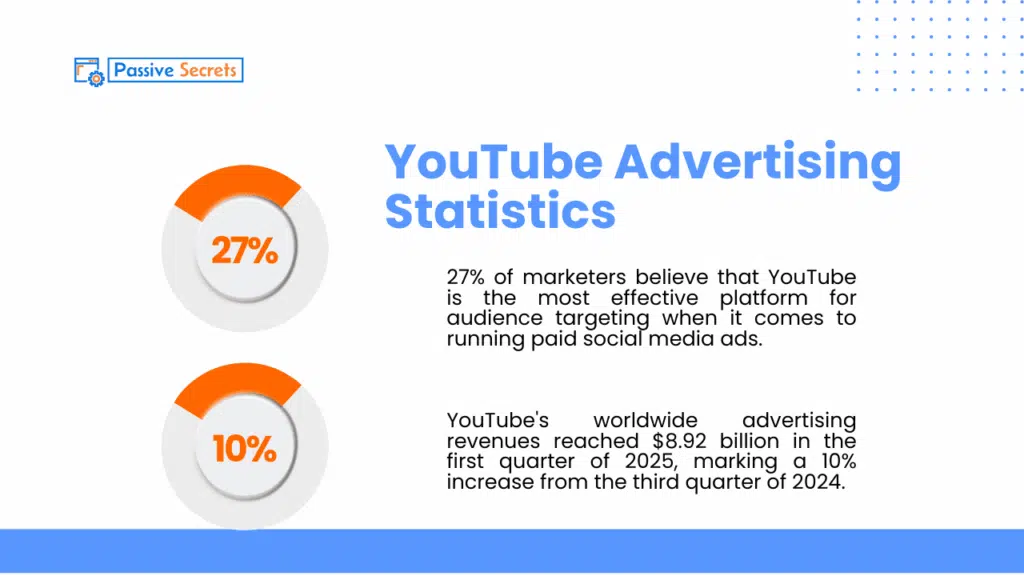
97. YouTube’s worldwide advertising revenues reached $8.92 billion in the first quarter of 2025, marking a 10% increase from the third quarter of 2024. (source)
98. An average YouTube ad costs between $0.10 – $0.30. (source)
Pinterest Advertising Statistics
Pinterest continues to be a great place for marketers to reach potential customers. The platform is unique as it has a high-spending and product-hunting user base.
Are you considering revisiting Pinterest or maximizing your current presence to be more productive?
You are on the right track.
However, note these important Pinterest advertising statistics before creating your strategy.
99. Pinterest’s monthly active users rose 11% year-over-year to 578 million. (source)
100. Gen Z’s influence on Pinterest is growing, now making up over 50% of users. Reflecting their interests, searches for second-hand fashion and nostalgic aesthetics have surged, with “dream thrift finds” up 550% and “vintage autumn aesthetic” skyrocketing 1,074% among Gen Z users. (source)
101. In the UK, 70% of Pinterest users are females aged 18 and older, while 28% are males aged 18 and older. (source)
Audience Reach and Engagement Metrics
102. Up to two-thirds of the global population (67.9%) are internet users, totaling 5.56 billion people, while 5.24 billion (63.9%) use social media. (source)
103. The top reasons for using social media are: Staying connected with friends and family (50.8%), Passing time (39%), Reading news (34.5%). “Following celebrities and influencers” is the least popular reason, with less than 20% of users citing it as their main motivation. (source)
104. Global social media usage averaged 143 minutes daily, a 8-minute decrease from the previous year. Brazil led the way, with users spending nearly 4 hours daily on social media, while US users averaged 2 hours and 16 minutes. (source)
105. Daily social media usage is widespread across generations, with around two-thirds of Gen Z, Millennials, and Baby Boomers logging in every day. (source)
106. According to a 2024 survey, humorous content generated the highest ROI for brands, with 24% citing it as the most effective, followed by relatable content (18%) and interactive content (12%). (source)
107. By 2025, daily social media usage is expected to reach 2 hours per adult. Although users are increasingly shopping and seeking customer support on social media, only 40% of B2C and 30% of B2B marketers currently utilize social platforms for sales. (source)
108. TikTok’s influence on shopping habits is significant, with: 64% of US consumers making a purchase after seeing an ad or shoppable content. 50% watching video reviews or tutorials before buying.
A similar percentage reading comments sections to gather feedback and ask questions about potential purchases. (source)
109. Gen Z consumers in the US are the most frequent users of TikTok Shop, with many accessing it one or more times a day. Additionally, over half (56%) of Millennials use TikTok Shop at least once a week. (source)
110. TikTok Shop shoppers in the US most commonly regretted their purchases due to quality issues, with nearly 20% saying the item was cheaply made. Other top regrets included making impulse buys and products not matching their advertised descriptions. (source)
111. A 2025 study found that marketers with 8+ years of experience achieve significantly better results across all platforms and metrics. For example, 80% of experienced marketers report improved sales, compared to only 16% of those with less than 12 months of experience. (source)
112. Video content remains a staple for both B2B and B2C marketers. However, written content is significantly more important for B2B marketers (36%) than for B2C marketers (21%). (source)
Emerging Trends and Future Outlook
113. About 41% of social media users in the US use TikTok as a search engine. (source)
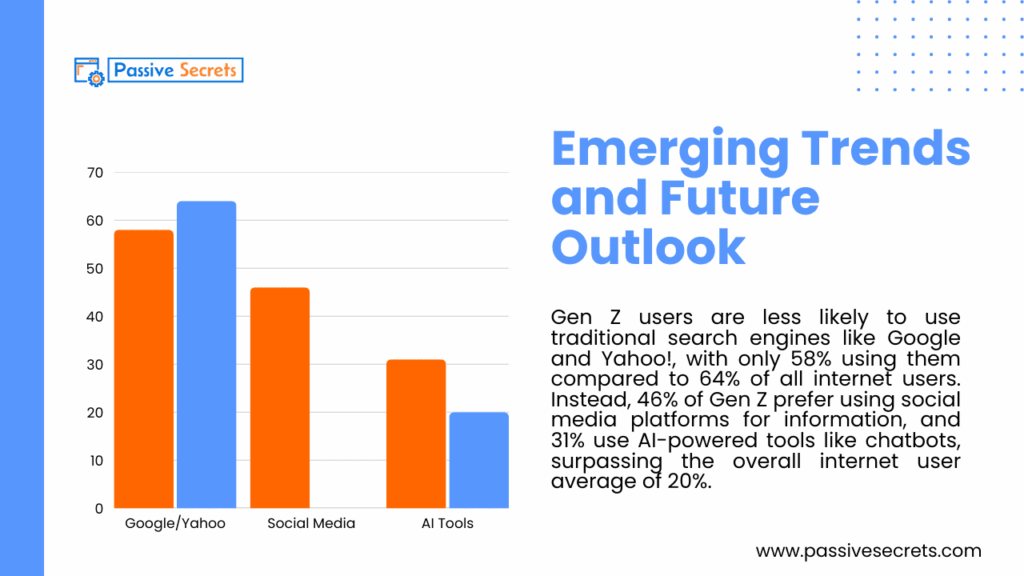
114. Gen Z users are less likely to use traditional search engines like Google and Yahoo!, with only 58% using them compared to 64% of all internet users. Instead, 46% of Gen Z prefer using social media platforms for information, and 31% use AI-powered tools like chatbots, surpassing the overall internet user average of 20%. (source)
115. About 25% of US adults prefer social media for online searches, with 46% of Gen Z adults favoring social platforms over search engines. (source)
116. Most marketers (53.3%) cite insufficient team resources as their biggest obstacle in managing social media. (source)
117. About 69% of marketers predict that social media will surpass brand websites and third-party marketplaces as the primary platform for shopping in 2025. (source)
118. A vast majority (85%) of marketers believe that fostering an engaged online community is essential for achieving social media success in 2025. (source)
119. In 2025, social media marketers’ biggest challenges include staying current with trends (22%), measuring ROI (21%), and producing engaging content (20%). (source)
120. Most marketers (66% B2B, 72% B2C) reported their social media marketing strategies were effective in achieving their goals. However, only about a quarter (26%) considered them “very
effective”. (source)
121. For 2025, about 1 in 5 marketers (22%) say their top social media goal is to drive website traffic. (source)
122. Most marketers don’t post daily on social media, with 64% posting less frequently and only 19% posting multiple times a day, freeing them to focus on more creative and thoughtful content. (source)
123. 30% of marketers think building a social media community will become more important, and 85% consider it crucial to their social media strategy. (source)
124. Marketers worldwide cited maintaining authenticity (43%) and preserving human creativity (40%) as the top challenges when using generative AI for social media marketing. (source)
125. Marketers worldwide cited increased efficiency (38%) and easier idea generation (34%) as the top benefits of using generative AI for social media marketing. (source)
126. Most marketers (62%) believe labeling AI-generated content on social media will have a positive effect on their performance, and 30% already consistently label such content. (source)
127. Nearly a quarter (22%) of TikTok users in the US have used the platform to sell products or services, either through their profile or TikTok Shop. (source)
128. TikTok Shops saw a staggering 200% year-over-year sales increase during the 2024 US holiday season, making it the fastest-growing e-commerce platform. Yet, 27% of US consumers remained wary of shopping on TikTok due to payment security concerns. (source)
129. Marketers prioritize video content, with 46% considering it most important, surpassing written (28%) and visual (23%) content in significance. (source)
130. Most marketers (69%) now utilize generative AI tools, with 45% using them daily and 24% weekly. Despite this, 56% have limited experience with these tools. Marketers’ primary interests for AI include: Content creation (70%), generating new ideas (67%), and expanding existing concepts (66%). (source)
131. Marketers are eager to learn how to apply generative AI to various tasks, with top areas of interest including:
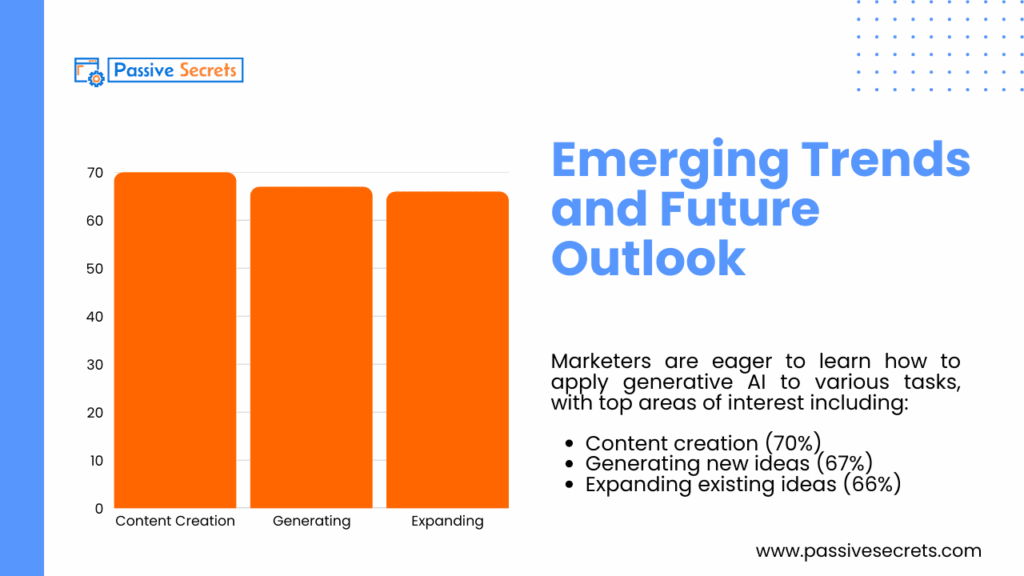
B2B marketers are particularly keen on automating repetitive tasks (72%), outpacing B2C marketers (62%). However, most marketers show little interest in using AI for decision-making. (source)
132. Marketers are embracing AI-generated avatars, with 51.9% saying they’re very likely to incorporate them into their campaigns. This trend is particularly significant on TikTok, where AI integration is becoming increasingly important for marketing success. (source)
133. Ads created with Symphony AI have shown impressive results, with a significant boost in purchase intent by 37% and an increase in brand favorability by 38%. This highlights the potential of AI-powered advertising tools to enhance marketing efforts and drive business outcomes. (source)
FAQs
Other Related Marketing/Advertising Statistics You Shouldn’t Miss:
- 50+ Essential Traditional Marketing Statistics & Trends
- Sales Enablement Statistics: Data You Need to Drive Sales Growth
- In-store vs Online Shopping Statistics And Analysis
- Social Media Addiction Statistics
- Latest In-Game Advertising Statistics
- From Passion to Profit: 120+ Creator Economy Statistics
- 80+ Big Marketing Software Statistics
- 45 Interesting Healthcare Marketing Statistics & Trends
- Print Marketing Statistics: Ad Spending, Market Size, & More
- Key Short-Form Video Statistics and Trends You Should Know
- 49 Interesting Emotional Marketing Statistics
- 70+ Top Law Firm Marketing Statistics & NEW Trends
- Millennials on Social Media Statistics
- 61+ Useful Podcast Advertising Statistics And Trends
- 50 Crucial Amazon Advertising Statistics & Trends
- 65+ Must-Know Pay-Per-Click Statistics
- 40+ Interesting Omnichannel Marketing Statistics & Trends
- Multi-Level And Network Marketing Statistics, Facts & Trends
- 100+ Top Digital Marketing Vs. Traditional Marketing Stats
- 50 Interesting Organic Vs Paid Search Statistics To Know
- 40+ Latest Multi-Channel Marketing Statistics & Huge Trends
