
If you’re still marketing to millennials like they’re broke 20-somethings obsessed with Instagram, you’re leaving billions on the table.
Millennials (ages 28 to 43) are now the ones with most of the wealth. They control $2.5 trillion in spending power. And their social media behavior in 2026 looks nothing like the stereotype you’ve been sold.
However, there’s a disconnect.
While brands chase Gen Z on TikTok, millennials are massively dominating purchasing decisions across every major platform. They are spending more, engaging differently, and responding to content strategies that most marketers have completely overlooked.
Even more exciting to know, Millennials have abandoned platforms you think they love. And 71% of them hold opinions about social media that would shock you.
The brands winning millennial loyalty right now aren’t using louder ads or trendier memes. They’re leveraging behavioral data that reveals how this generation actually discovers, evaluates, and buys in 2026.
What follows are crucial statistics that will completely reshape your millennial marketing strategy.
Key Statistics
- Worldwide, millennials have an average of 8.4 social media accounts.
- Millennials reported spending 2.25 hours daily on online social media platforms.
- Millennials are the most active age group online as nearly 69.2% of millennials are projected to use social media in 2025.
- 93% of millennials (around 68.8 million) are active on social media, surpassing Gen Z’s rate of 87.9%.
- Millennials make up 35.8% of US LinkedIn users, the largest generational group on the platform.
- 58% of Millennial Threads users identify as content creators or influencers, compared to 48% of Gen Z users.
- 19% of Millennial TikTok users want to become content creators.
- 29% of Millennials prefer buying brands they see advertised online.
Who Are Millennials? Understanding the Generation
Millennials, also known as Generation Y, are people born between 1981 and 1996. Positioned between Gen X and Gen Z, Millennials are often described as the first truly digital-native generation. They grew up during the rise of the internet, social media, and smartphones.
Millennials witnessed the shift from dial-up to broadband, from MySpace to TikTok, and from landlines to FaceTime.
As of 2025, Millennials are between 29 and 44 years old, and they make up a significant portion of the global population.
In the U.S. alone, Millennials number around 72 million, making them one of the largest generational groups. Their influence extends across culture, technology, the economy, and—most notably—digital communication.
Millennials are tech-savvy and adaptable, value driven, experience oriented, socially connected, and financially pressured.
Millennials are a bridge between the old and new, connecting the world before the internet with today’s digital age and shaping how we live, work, and communicate.
Millennials’ Social Media Usage at a Glance (Latest Stats)
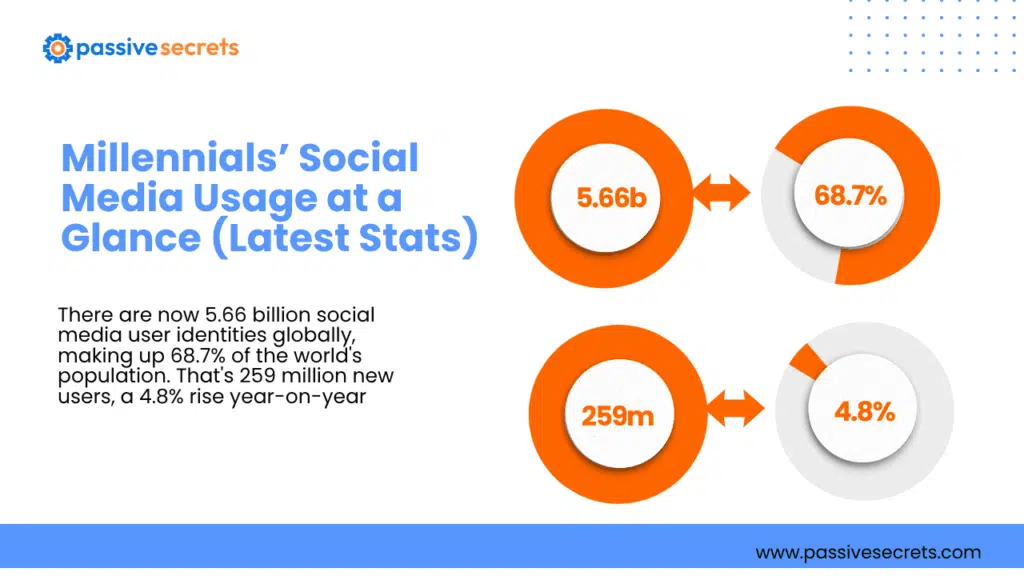
1. There are now 5.66 billion social media user identities globally, making up 68.7% of the world’s population. That’s 259 million new users, a 4.8% rise year-on-year (Meltwater).
2. Worldwide, millennials have an average of 8.4 social media accounts (Content Science).
3. By 2027, over half of all US social network users will be Gen Z and millennials, with a combined user base of 135.5 million (eMarketer).
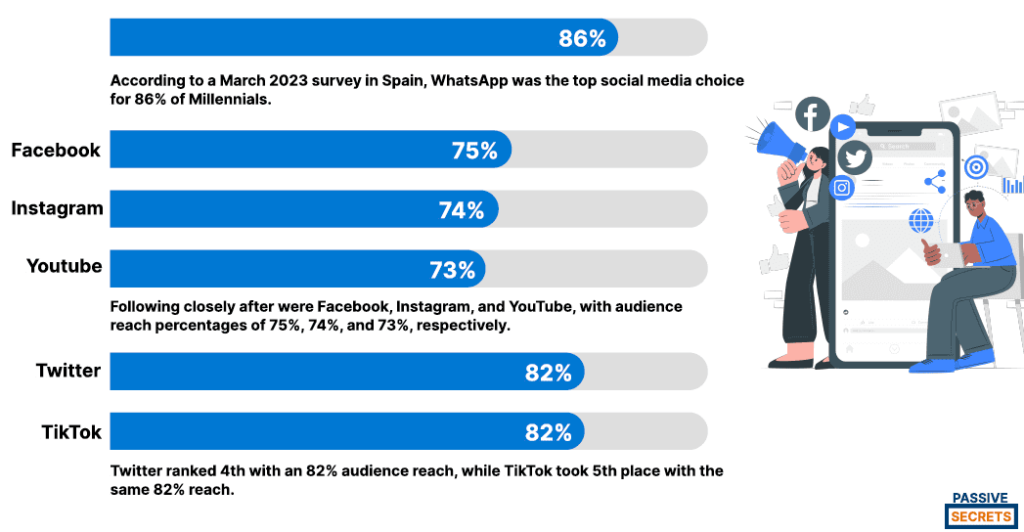
4. According to a March 2023 survey in Spain, WhatsApp was the top social media choice for 86% of Millennials. Following closely after were Facebook, Instagram, and YouTube, with audience reach percentages of 75%, 74%, and 73%, respectively (Statista).
5. Female Gen Z users (16-24) spend the most time on social media daily, averaging 2 hours and 59 minutes, closely followed by millennial women (25-34) at 2 hours and 50 minutes (Sprout Social).
6. In 2025, nearly 69.2% of millennials are projected to use social media, making them the most active age group online (Sprout Social).
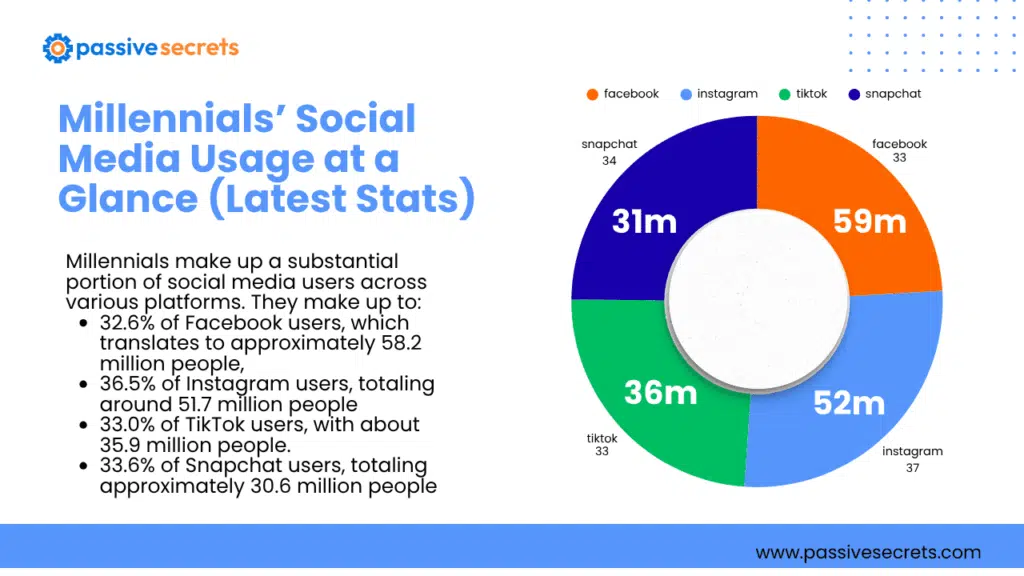
7. Millennials make up a substantial portion of social media users across various platforms. They make up to:
8. As of February 2025, 25 to 34-year-olds made up 37.5% of X’s (formerly Twitter) global user base (Statista).
9. About 93% of Millennials—68.8 million people—are active on social media, a higher rate than Gen Z, which stands at 87.9% (eMarketer).
Most Popular Platforms Among Millennials in 2026
10. For Millennials, Gen X, and Baby Boomers, Facebook’s still the top social media app with 88-89% user share, rivaled only by YouTube (90%) among Millennials. YouTube and Instagram are gaining traction with Gen X and Boomers (40-80% users), but Snapchat and TikTok skew younger: 62-79% of Gen Z and Millennials use them, vs 11-46% of those over 45 (Statista).
11. Millennials and Generation Z make up the majority of TikTok users in the United States, and they are also the most loyal (Statista).
12. Twitter ranked 4th with an 82% audience reach, while TikTok took 5th place with the same 82% reach (Marketing 4 eCommerce).
13. Millennials account for 35.8% of LinkedIn users in the US, making them the largest generational group on the platform (eMarketer).
14. In Indonesia, 34% of Millennials say they’ve used a dating app, making them the second largest group after Gen Z (38%) (YouGov).
15. In Hong Kong, Millennials are among the most active dating app users—46% of them used one in the past three months, showing much higher engagement compared to just 23% of Gen Z users (YouGov).
16. Millennials are active photo-sharers on social media, with 42% using social apps specifically to take pictures they intend to post, just slightly behind Gen Z at 47% (Instagram).
17. More than half of Millennial Threads users (58%) consider themselves content creators or influencers, compared to 48% of Gen Z users (Instagram).
How Millennials Use Social Media: Behavior and Preferences
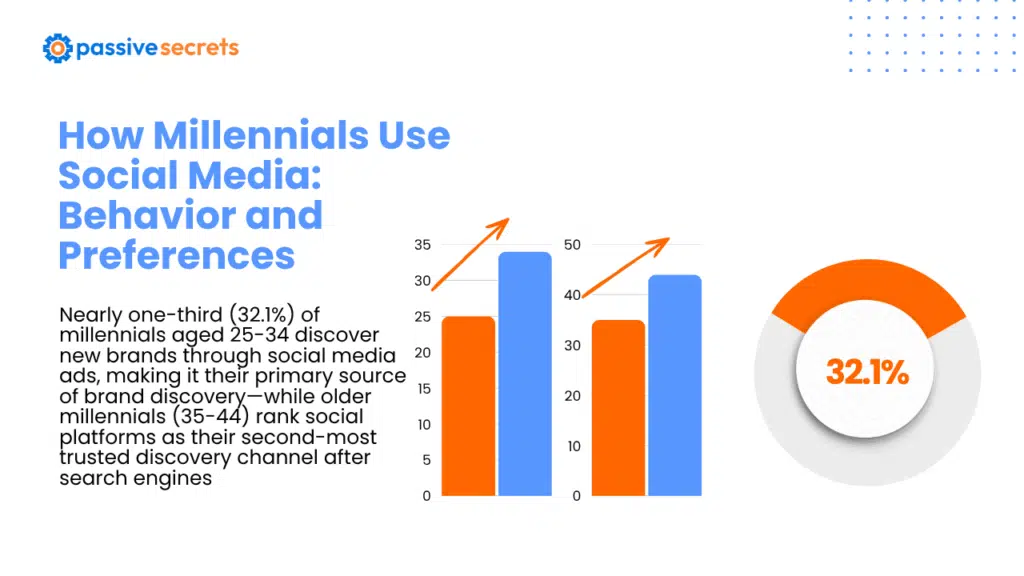
18. Nearly one-third (32.1%) of millennials aged 25-34 discover new brands through social media ads, making it their primary source of brand discovery—while older millennials (35-44) rank social platforms as their second-most trusted discovery channel after search engines (Meltwater).
19. When researching products online, millennials prefer social networks (Content Science).
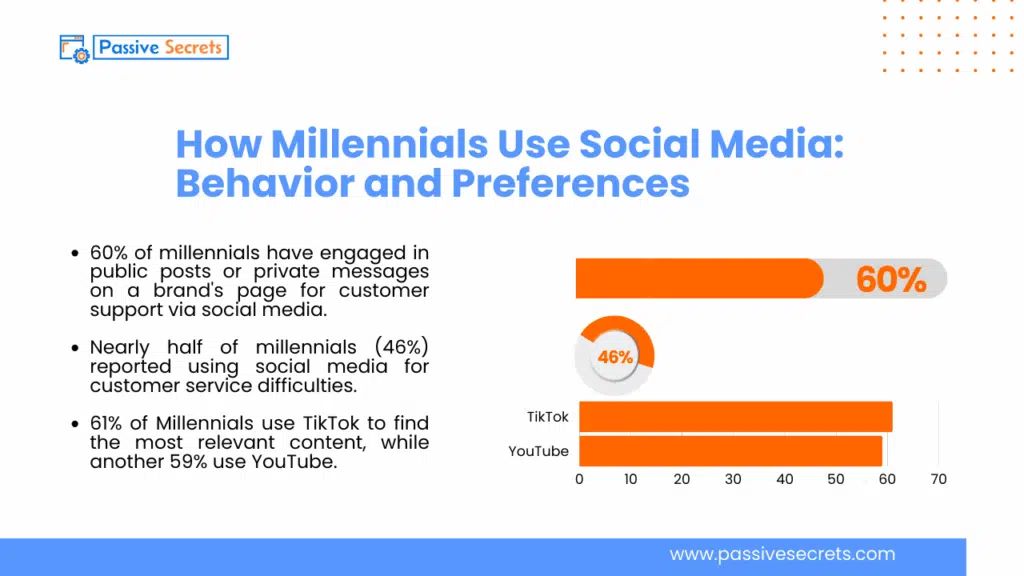
20. 60% of millennials have engaged in public posts or private messages on a brand’s page for customer support via social media (Content Science).
21. Sports stars, entrepreneurs, politicians, comedians, and gaming bloggers are the top social media accounts followed by male millennials (Content Science).
22. Female millennials follow the most popular social media accounts of food, fitness, and beauty bloggers (Content Science).
23. Nearly half of millennials (46%) reported using social media for customer service difficulties (SPG Global).
24. 61% of Millennials use TikTok to find the most relevant content, while another 59% use YouTube (Statista).
25. Millennials used emojis in 55% of their texts and instant messages (Statista).
26. 69% of Millennials said they used emojis more often when flirting or dating (Statista).
27. About 50% of Gen Z and millennials report feeling a stronger personal connection to social media creators than to TV personalities or actors (Deloitte).
28. Around 40% of both Gen Z and millennials tend to follow reality TV stars or athletes on social media after watching them on a show or in a game (Deloitte).
29. In a survey, 19% of Millennial TikTok users were interested in becoming content creators (Statista).
30. More than 25% of UK millennials use social media to plan their trips, making them 45% more likely than other travelers to turn to social platforms for travel ideas (GWI).
Millennials and Social Media Shopping Trends
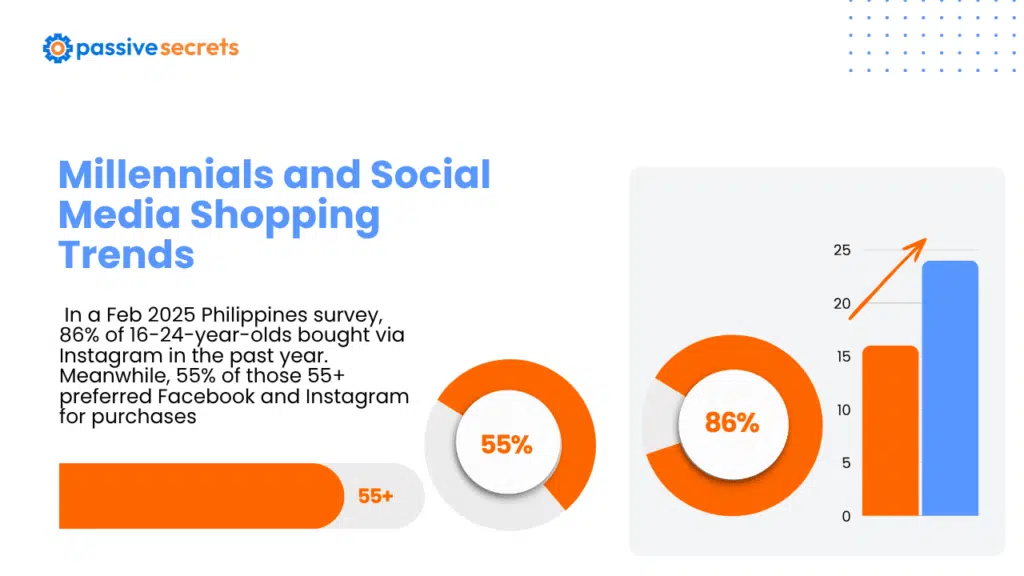
31. In a Feb 2025 Philippines survey, 86% of 16-24-year-olds bought via Instagram in the past year. Meanwhile, 55% of those 55+ preferred Facebook and Instagram for purchases (Statista).
32. A Feb 2025 Thai survey found most respondents across ages bought most via TikTok in the past year. Meanwhile, only 4% of 45-54 and 55+ age groups bought from Twitter (X) (Statista).
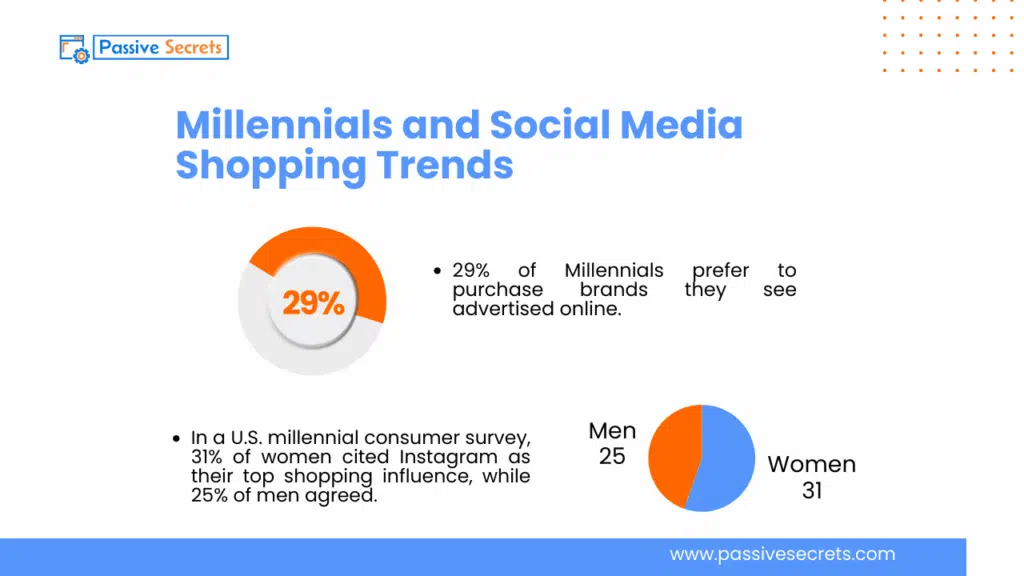
33. 29% of Millennials prefer to purchase brands they see advertised online (Content Science).
34. In a U.S. millennial consumer survey, 31% of women cited Instagram as their top shopping influence, while 25% of men agreed (Statista).
35. According to Millennials in their 30s and 40s, Facebook is the main site influencing how they shop (Statista).
36. Social media plays a big role in brand discovery for millennials, as 31% say they find new brands through ads they see on these platforms (GWI).
Millennials vs. Gen Z: Social Media Comparison
37. Gen Z, Millennials, and Gen X favor social media in the US, UK, Germany, Brazil, and Japan (Deloitte).
38. Sports videos on social media were viewed mostly by Gen Z adults (58%), Millennials (59%), and Gen Xers (53%) (SPG Global).
39. A large percentage of Gen Z individuals (84%) and millennials (73%) use social media to discover TV and video content (SPG Global).
40. Young Generation Z people and millennials accounted for 75% of those who spent five hours or more on social media (SPG Global).
41. 56% of Gen Z and 43% of millennials find social media content more relevant than traditional TV shows and movies (Deloitte).
42. In the United States, Millennials made up 40% of the online dating audience, while Gen Z accounted for 37% (Statista).
Privacy and Trust: How Millennials Feel About Social Media
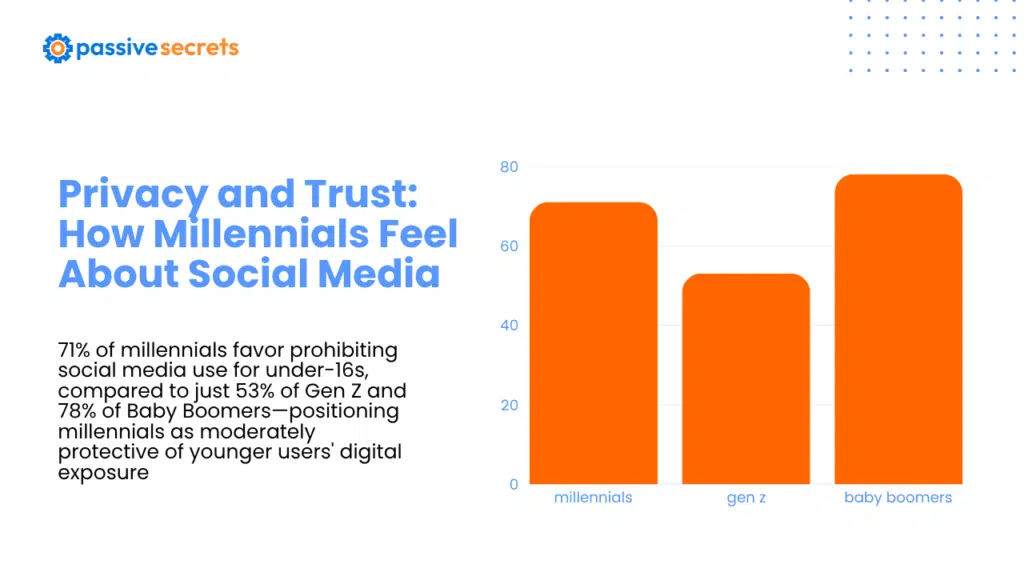
43. 71% of millennials favor prohibiting social media use for under-16s, compared to just 53% of Gen Z and 78% of Baby Boomers—positioning millennials as moderately protective of younger users’ digital exposure (Deloitte).
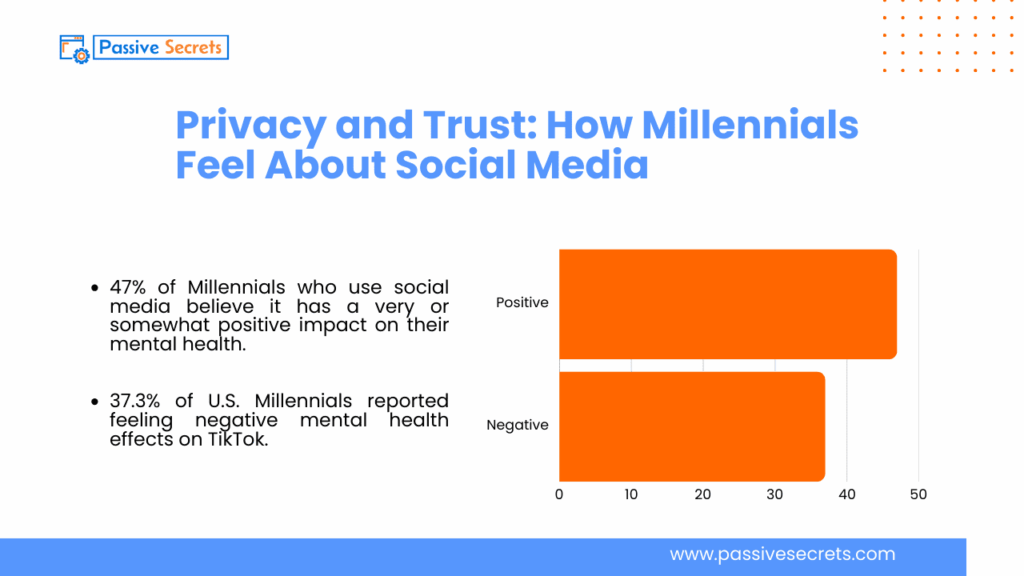
44. 47% of Millennials who use social media believe it has a very or somewhat positive impact on their mental health (Statista).
45. 37.3% of U.S. Millennials reported feeling negative mental health effects on TikTok (Statista).
Final Thought
These millennials in social media statistics reveal how this generation responds to social media.
Being introduced to the social media age, millennials are often at the forefront of social media trends.
They spend an average of 2.25 hours a day on social media and actively follow influencers who affect their purchase decisions.
Their inclination for tailored, short-form material across multiple channels is indicative of their need for smooth interactions and genuine bonds.
These statistics about millennials on social media should help you make informed decisions when targeting this generation.
FAQs
Other Statistics Posts:
- Single Moms Vs. Single Dads Statistics: Key Facts and Trends
- 40+ Incredible Single Father Statistics You Have to Know
- Holiday Spending Statistics: How Much Americans Spend & Shopping Trends
- Black Consumer Spending Statistics: $2.1 Trillion Buying Power Brands Can’t Ignore
- The Battle of the Sexes: Male Vs. Female Spending Statistics
- 110+ Shocking Income Inequality Data You Need to Know in 2025
- Gender Inequality Statistics: 160+Insights Across Regions
- The $1 Trillion Industry: Sharing Economy Stats That Prove It’s Just Getting Started
- How Much Are People Really Saving? Personal Savings Statistics
- 40+ Useful Procrastination Statistics To Help You
- Gen Z vs Millennial Spending Statistics: Income, Shopping Habits, and Trends
- Gen Z and Social Media: Key Statistics, Trends, and Insights
- Intriguing Born Into Poverty Stay In Poverty Statistics
- Gentle Parenting Statistics: Is This Parenting Style Worth It?
- Dating and Love Statistics & Facts: What the Numbers Reveal About Modern Relationships
- Relationship Statistics That Reveal How Love, Dating, and Marriage Are Changing
- Period Poverty by the Numbers: Shocking Global Statistics You Need to See
- 110+ Important Social Media Advertising Statistics & Trends
- Gen Z and Social Media: Key Statistics, Trends, and Insights
- Who Spends Smarter? Gen Z and Millennial Money Habits Compared

