
- The global corporate training market reached $398.78B in 2024 and is projected to hit $514.02B by 2029.
- The corporate eLearning market grew from $447.55B (2024) to $526.81B (2025) and is expected to exceed $1T by 2029.
- The US corporate training market recovered to $102.8B in 2025, up from $83.5B in 2020.
- 49% of L&D professionals say a skills crisis is limiting business strategy execution.
- 91% of L&D leaders say continuous learning is essential for career success.
- 88% of organizations use learning opportunities as a key employee retention strategy.
- Only 36% of organizations have career development programs that deliver real business impact.
- Just 13% of companies tie learning directly to business KPIs.
- The global soft skills training market reached $33.4B in 2024 and is growing at an 11.4% CAGR.
- The AI training dataset market is set to grow from $3.2B (2025) to $16.3B by 2033.
- 52% of employees want AI training, but only 25% of leaders plan to provide it.
- 43% of learners discover training courses via search engines.
- Only 5% of training providers rely on SEO as a core marketing channel.
- Classroom training remains dominant, used by 80% of organizations, despite rising digital formats.
- 61.3% of training content is now self-paced and modular.
- 90% of US training organizations used a Learning Management System (LMS) in 2024.
- Employees received an average of 47 training hours in 2024, down from 57 hours in 2023.
- 80% of companies reduced hiring costs through internal upskilling and reskilling in 2024.
- Simulations were rated the most engaging training format, ahead of videos and PDFs.
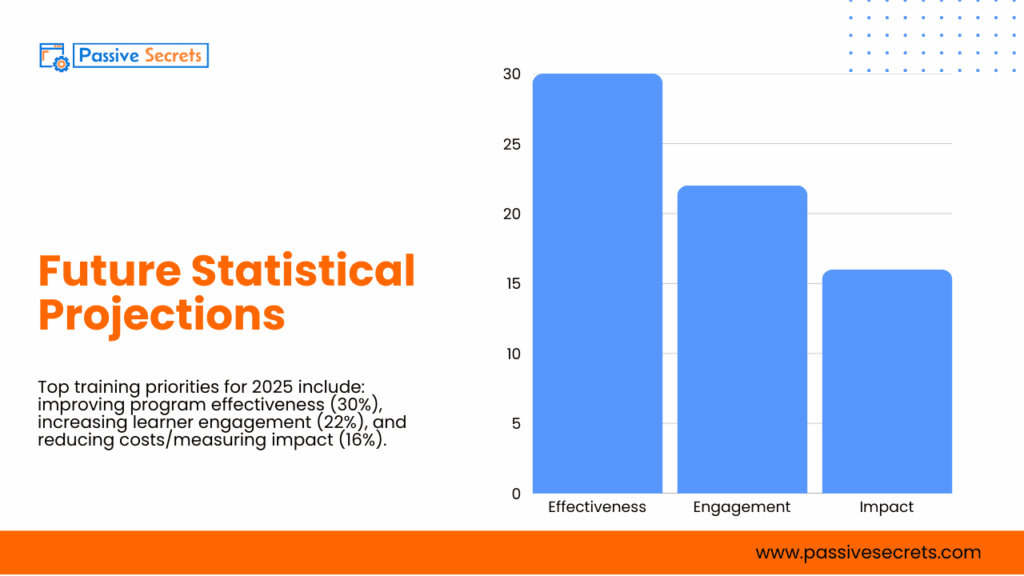
- Top 2025 training priorities include improving effectiveness (30%), boosting engagement (22%), and measuring ROI (16%).

The training industry is one of the most valuable industries for businesses and organizations in 2026.
With businesses investing heavily in upskilling and eLearning technologies revolutionizing how employees learn, the statistics reveal just how vital training has become in shaping the workforce.
This article dives into training industry statistics, offering a clear picture of market trends, spending patterns, and the impact of training programs worldwide.
Let’s keep reading to see the fascinating training industry statistics and the latest trends, and how they benefit you.
Global Training Industry Statistics & Facts
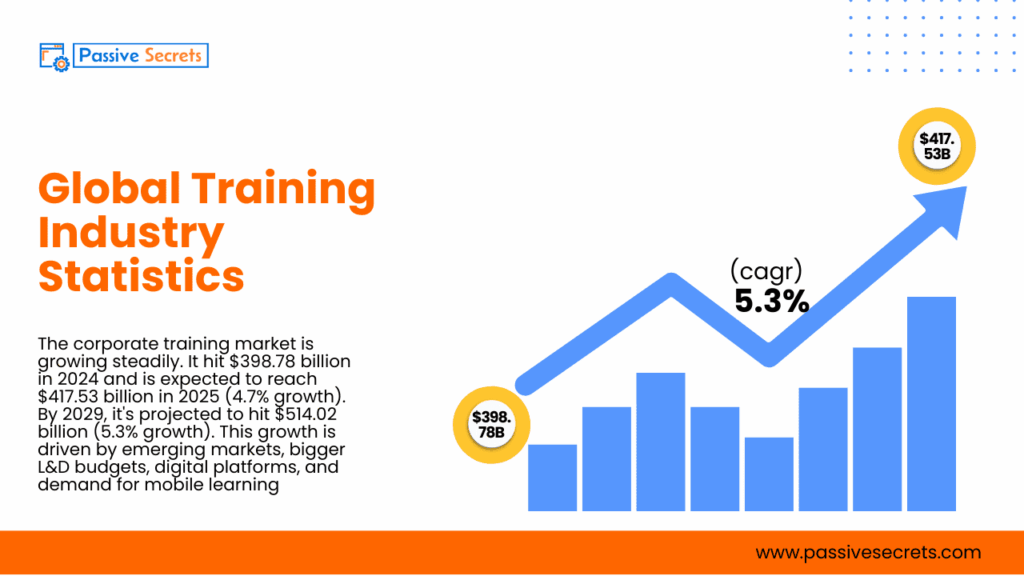
1. The corporate training market is growing steadily. It hit $398.78 billion in 2024 and is expected to reach $417.53 billion in 2025 (4.7% growth). By 2029, it’s projected to hit $514.02 billion (5.3% growth). This growth is driven by emerging markets, bigger L&D budgets, digital platforms, and demand for mobile learning (source).
2. Training providers are optimistic about classroom learning, with 41% citing it as a top opportunity this year (source).
3. LinkedIn remains, and has consistently been, the most popular platform for training providers. 69% are using it in 2025, though its usage has declined slightly from 87% in 2020. It continues to be the go-to platform for professional networks and course promotion (source).
4. LinkedIn is still the go-to platform for training providers, with 69% using it in 2025, although there’s been a slight decline from 87% back in 2020 (source).
5. The corporate e-learning market is booming. It’s moving from $447.55 billion in 2024 to $526.81 billion in 2025 (17.7% growth). By 2029, it’s expected to hit $1.03 trillion (18.4% growth). Drivers include social learning, multimedia integration, engaging courses, and education companies (source).
6. Latin America’s corporate training market generated $7.76 billion in revenue in 2024, accounting for over 5% of global revenue, and is expected to grow at a 7.6% CAGR from 2024 to 2031 (source).
7. The global soft skills training market reached $33.4 billion in 2024 and is projected to grow at an 11.4% CAGR, reaching $92.6 billion by 2033 (source).
8. The global cognitive assessment and training market is expected to grow from $5.63 billion in 2023 to $28.9 billion by 2031, at a22.7% CAGR from 2024 to 2031 (source).
9. The Cyber Security Training Market was $17.92 billion in 2024, projected to hit $19.31 billion in 2025 and $40.78 billion by 2035, growing at 7.76% CAGR (source).
10. The Business Etiquette Training Market is set for big growth, jumping from $23.64 billion (2024) to $28.34 billion (2025), and hitting $101.78 billion by 2032 at a 20.01% CAGR (source).
11. Nearly half of learners rely on search engines to find training courses (source).
12. Lack of resources topped the list of challenges for training providers in 2024, closely followed by the cost of living crisis (source).
13. The global corporate training market is expected to grow rapidly, from $511.97 billion by 2028 to $713.47 billion by 2033, driven by strong historical performance with a 4.9% CAGR from 2018-2023 (source).
14. The global AI training dataset market is booming, from $3,195.1 million (2025) to $16,320 million (2033) at 22.6% CAGR. Driven by demand for quality data for machine learning. North America led in 2025 (35.1% share), with image/video data dominating (41.9% share) (source).
15. There’s a disconnect: 62% of leaders claim they’ve encouraged AI use, but 60% of employees say they’ve received no such encouragement from management or senior leadership (source).
Corporate Training Statistics
16. US corporate training spend went up by almost $5 billion in 2025 compared to the previous year. It had dropped from $93.6 billion in 2017 to $83.5 billion in 2020, but climbed back up to $102.8 billion in 2025 (source).
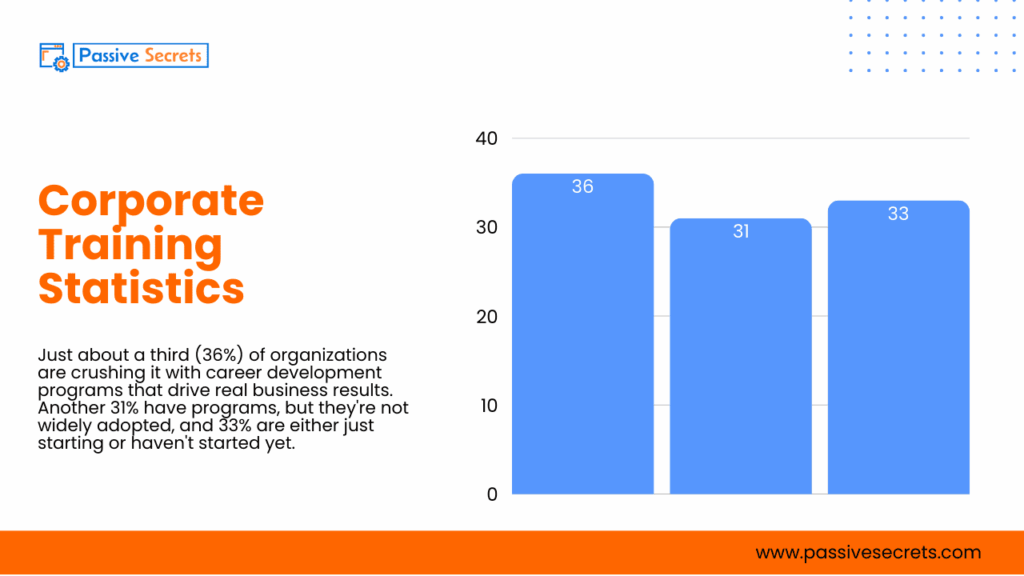
17. Just about a third (36%) of organizations are crushing it with career development programs that drive real business results. Another 31% have programs, but they’re not widely adopted, and 33% are either just starting or haven’t started yet (source).
18. Career development champs are killing it: 32% more likely to use AI training, 88% more likely to offer career-boosting gigs, and 33% more likely to prioritize career dev. Top best practice? Leadership training – 71% of orgs offer it (source).
19. Just 13% of orgs have integrated learning into workflows and tied it to business KPIs. This shows there’s room to grow in making learning a strategic part of performance goals, focusing on impact over mere completion (source).
20. In the US, annual payroll for training staff generally increased from 2012 to 2025, with some fluctuations. It grew by $28.3 billion from $36.4 billion in 2012 to $64.7 billion in 2025, marking a $4 billion increase compared to the previous year (source).
21. 98% of workers value workplace training, yet 16% received no training in the past year (source).
22. In 2023, US training expenditure per learner varied by company size: small ($1,420), midsize ($751), and large ($481), with large companies seeing a significant decrease from the previous year (source).
23. In the US training industry, non-exempt employees got the biggest chunk of training spend in 2025 – almost 40%. Exempt managers and non-managers followed with 25% and 24%. Executives had the smallest slice at 11% (source).
24. In 2025, almost half of US training companies planned to buy games/simulations (48%), followed by online learning tools/systems (45%) (source).
25. In the US, most corporations and educational institutions reported an increase in their 2024 training budgets compared to the previous year (source).
26. In 2024, a survey of US corporations and educational institutions revealed that nearly half (49%) of respondents reported no change in their training-related staff compared to the previous year. Meanwhile, 38% saw an increase, and 13% experienced a decrease in training staff (source).
27. Midsize US companies spent the most time training per employee in 2024, with approximately 53 hours (source).
28. In 2024, 90% of US training industry companies used Learning Management Systems (LMS), followed closely by virtual classrooms and video broadcasting, while 14% utilized podcasts for staff training (source).
29. The US corporate training market is expected to grow by $14.43 billion, at a 6.78% CAGR, from 2023 to 2028 (source).
30. The European corporate training market is expected to grow at a 6.7% CAGR from 2024 to 2031. Germany will remain the dominant market, reaching $41 billion by 2031, while the UK and France will grow at 5.8% and 7.5% CAGR, respectively (source).
31. The Technical and Vocational Education and Training industry generated $175.6 billion in revenue in 2024-25, despite a0.5% annual decline over the past five years and an expected 1.2% dip in 2024-25 (source).
32. US training expenditures dropped 3.7% to $98 billion in 2024, driven by decreases inpayroll (-4%) and other expenditures (-13%), but boosted by a 23% surge in spending on outside products and services (source).
33. Average training budgets in 2024 were $13.3 million for large companies, $1.7 million for midsize companies, and $374,207 for small companies (source).
34. Employees received an average of 47 hours of training in 2024, down from 57 hours in 2023. Manufacturers/distributors offered the most training hours (64), while midsize government/military organizations led in training hours by company size (87) (source).
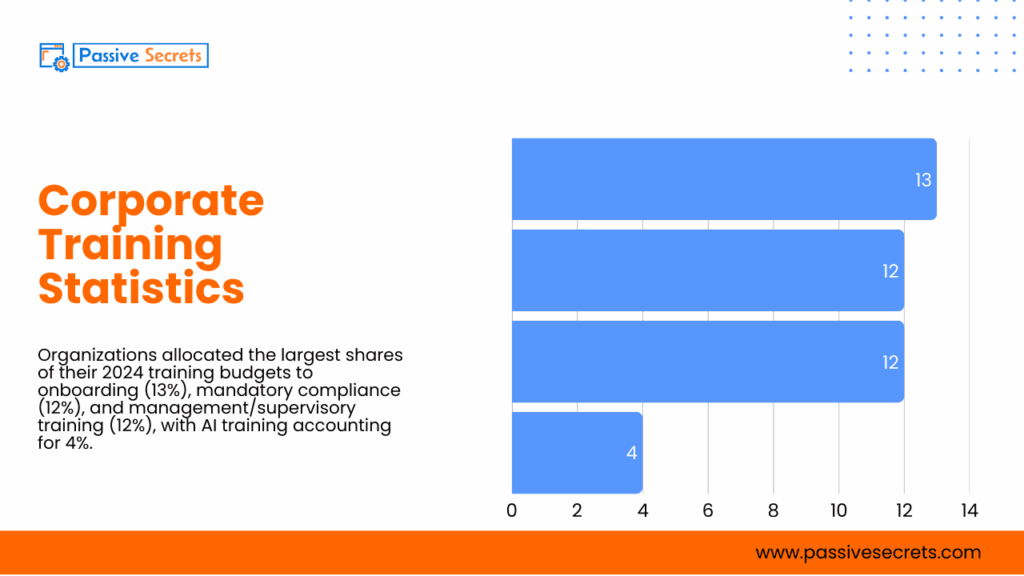
35. Organizations allocated the largest shares of their 2024 training budgets to onboarding (13%), mandatory compliance (12%), and management/supervisory training (12%), with AI training accounting for 4% (source).
36. Post-pandemic, companies are shifting back to in-person training for skills like management/supervisory (46%), onboarding (41%), and interpersonal skills (35%). However, 28% have not reinstated in-person training (source).
37. 69% of companies will maintain their current in-person vs. remote training mix, while 16% plan to increase in-person training and 13% plan to increase remote training (source).
38. The average expenditure for training outsourcing decreased to $241,311 in 2024, down from $322,376 in 2023. Large companies spent the most ($907,250), followed by midsize ($234,864) and small companies ($46,758). Despite the decrease, outsourcing accounted for a slightly larger share of the total training budget (6% vs. 5% in 2023) (source).
39. In 2024, 27% of companies outsourced LMS operations/hosting, up from 23% in 2023. Most learner support and LMS administration were handled in-house, while more instruction/facilitation was outsourced (56%) than handled internally (44%) (source).
40. More than 50% of Indian enterprises now prioritize AI training, and 58.5% of organizations in India have increased their Learning & Development budgets for FY25 (source).
41. In 2024, 80% of companies reduced hiring costs through internal talent development. Most (64%) focused on developing emerging skills in early-career professionals, while 36% aimed to boost productivity and innovation (source).
eLearning and Digital Training Statistics
42. There’s a gap in podcast offerings: 29% of learners want ’em, but only 9% of training providers are delivering (source).
43. 43% of learners search for courses online, yet only 5% of providers tap into SEO as a top marketing strategy (source).
44. In the US, the top social media platforms used for employee training in 2023 were: YouTube (1st), Facebook (2nd, 37%), and TikTok (3rd, 26%) (source).
45. Classroom training still rules (80%), but digital options are gaining ground. Podcasts and 1-1 coaching (up to 41%) are growing in popularity, showing a shift towards flexible and personalized learning (source).
46. Providers focus on short courses (61%) and instructor-led training (59%). Online self-service (47%) and virtual ILT (36%) are also popular, showing a mix of structured and flexible learning (source).
47. 43% of learners find courses via search engines, but only 5% of providers rely on SEO, indicating a possible untapped marketing channel (source).
48. Self-paced learning’s on the rise – 61.3% of content is now modular and flexible. HR and L&D leaders should focus on building ecosystems that support continuous, on-demand learning without sacrificing quality (source).
49. In 2023, US corporations and educational institutions reported that online/computer-based training was the most popular method overall, while midsize companies preferred blended learning (source).
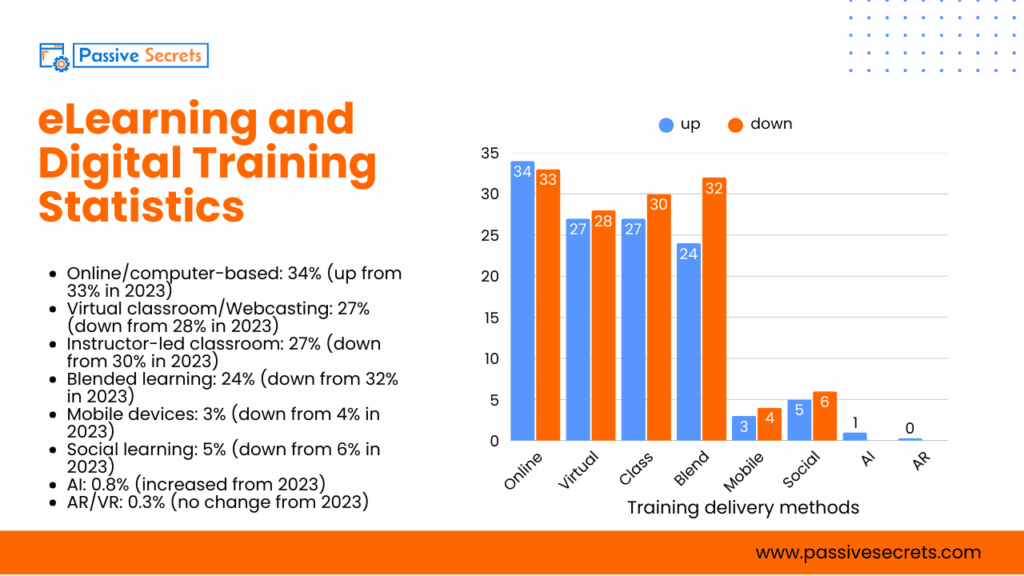
50. Training delivery methods in 2024:
- Online/computer-based: 34% (up from 33% in 2023)
- Virtual classroom/Webcasting: 27% (down from 28% in 2023)
- Instructor-led classroom: 27% (down from 30% in 2023)
- Blended learning: 24% (down from 32% in 2023)
- Mobile devices: 3% (down from 4% in 2023)
- Social learning: 5% (down from 6% in 2023)
- AI: 0.8% (increased from 2023)
- AR/VR: 0.3% (no change from 2023) (source).
51. In-person classroom training remains the top delivery method, offered by 86% of training providers (source).
52. 38% of training providers book most courses online, while 53% of training professionals find creating course materials their most time-consuming administrative task (source).
53. More than 6 in 10 training providers (62%) now receive at least half of their bookings online (source).
54. The training software market is expected to grow from $133.21 billion in 2023 to $239.49 billion by 2030, at a compound annual growth rate (CAGR) of 10.33% (source).
Skills Development and Workforce Training
55. Almost half (49%) of learning and talent development pros see a skills crisis, with execs worried employees lack the right skills to drive business strategy (source).
56. L&D pros are all about continuous learning – 91% say it’s crucial for career success. And with 88% of orgs worried about retaining employees, offering learning opportunities is their top retention strategy (source).
57. 91% of L&D professionals agree human skills are increasingly important (source).
58. Among workers who received less training, the top reasons were shifting business priorities (30%), lack of resources (29%), no training program (25%), and insufficient budget (24%) (source).
59. Many workers report gaps in workplace training: 42% say they lack necessary training, 68% find training too generic, 43% believe insufficient training hinders career advancement, and 54% feel overlooked for training opportunities as they progress in their careers (source).
60. In the US, the top motivation for employees to reskill/upskill in 2024 was personal growth (40%), followed by improving earning potential (31%), and transitioning to a new career (12%) (source).
61. Globally, companies ranked the most important practices for improving talent availability as: offering higher wages, enhancing talent progression/promotion, and providing effective reskilling/upskilling (source).
62. In the US, the top component for employee reskilling/upskilling in 2024 was access to online resources (48%), followed by professional development plans (33%), with only 9% reporting no clear structure (source).
63. Globally, C-suite members in 2024 believed employee upskilling/reskilling (44%) would most boost productivity, followed by GenAI (40%), and work redesign efforts (22%) (source).
64. Globally, companies in the education and training sector prioritized analytical thinking (59%) and technological literacy (39%) as the top reskilling skills in 2023 (source).
65. In the US, a 2024 survey found that 71% of employees were satisfied or very satisfied with their company’s reskilling and upskilling training (source).
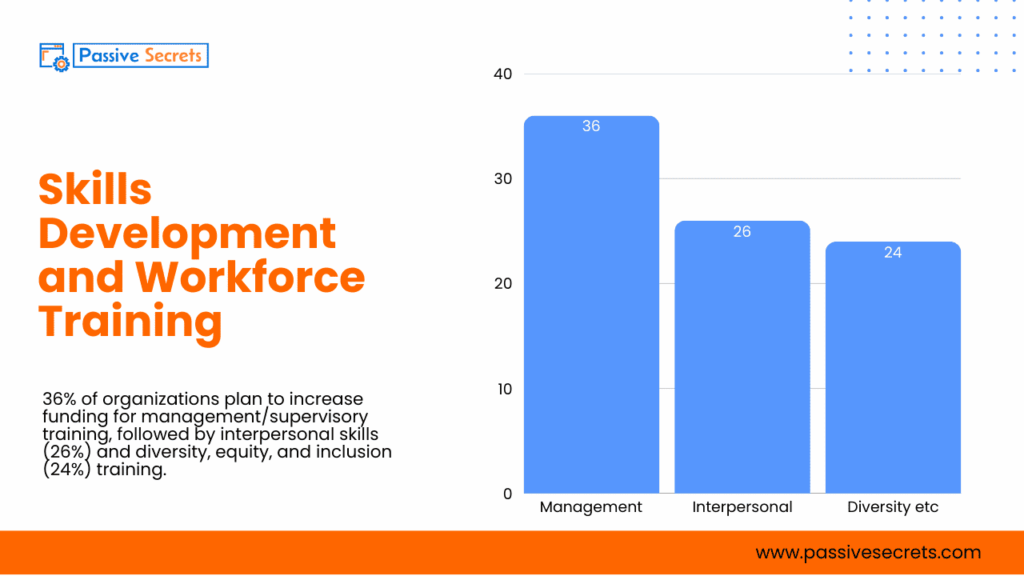
66. 36% of organizations plan to increase funding for management/supervisory training, followed by interpersonal skills (26%) and diversity, equity, and inclusion (24%) training (source).
67. 48% of training professionals think equality programs will be essential for training providers’ offerings (source).
68. In the US, corporations and educational institutions reported the reasons for their 2025 training budget increase. The top reason (64%) was an increased scope of training, followed by increased training staff (50%), and serving more learners (45%) (source).
69. To address the skills gap created by AI in the US workforce, HR managers prioritized upskilling, reskilling, and investing in AI training tools in 2023 (source).
ROI and Effectiveness of Training Programs
70. 30% of employees found their training to be “exceptionally rewarding” (source).
71. In the US, most employees in 2024 reported that their companies use skills-based hiring, with22% saying it’s not used and 20% unsure (source).
72. The most common non-mandatory training received by US employees in 2023 was soft skills training, followed closely by leadership and management training (42%), and then entrepreneurship training (21%) (source).
73. In the US, simulations were the most engaging training format in 2023, followed by training videos (65%) and digital PDFs (50%) (source).
Future Statistical Projections
74. In the US, nearly half of Gen Z respondents in 2024 believed they received better guidance from AI than their managers, while only 14% strongly disagreed (source).
75. The US food safety training industry revenue is projected to grow at a 0.3% CAGR, reaching $368.9 million by 2024 (source).
76. The IT Training market size was valued at USD 76.29 billion in 2024 and is poised to grow from USD 79.19 Billion in 2025 to USD 106.72 billion by 2033, growing at a CAGR of 3.8% during the forecast period (2026-2033) (source).
77. The online data science training market is expected to grow by $6.54 billion, at a 34.73% CAGR, from 2023 to 2028 (source).
78. The European soft skills training market reached $8.95 billion in 2024 and is projected to grow to $21.27 billion by 2032, at a 10.6% CAGR from 2024 to 2032 (source).
79. The sales training market is expected to grow from $10.32 billion in 2024 to $18.95 billion by 2031, at an8% CAGR (source).
80. The US professional development market is set to grow by $5.56 billion with a 6.9% CAGR from 2024 to 2029, driven by tech innovations in courses (source).
81. Top training priorities for 2025 include: improving program effectiveness (30%), increasing learner engagement (22%), and reducing costs/measuring impact (16%) (source).
82. Top post-pandemic training challenges include: lack of resources/personnel (33%), learner engagement (29%), budget cuts (12%), implementing new tech (11%), and lack of ROI (8%) (source).
83. Most organizations (88%) expect their outsourcing levels to remain steady in 2025, with 6% planning to increase and 6% planning to decrease outsourcing. Over half (56%) won’t outsource learner support or LMS administration (source).
84. Word of mouth and reputation are the most effective marketing tools for training providers, cited by 41% as the top technique (source).
85. 52% of employees want AI training, but only 25% of leaders plan to provide it, revealing a significant gap between employee demand and organizational supply (source).
86. 70% of employees feel AI adoption isn’t a priority, whereas 58% of leaders consider it a priority for 2025 (source).
87. In 2023, HR managers considered having clear AI policy guidelines as the top strategy for transitioning to an AI-driven future, followed closely by preparing for a blended workforce of humans and AI (source).
88. In the US training industry, 48% of companies planned to purchase games and simulations in 2025, while 45% were looking at online learning tools and systems (source).
Latest Corporate Training Trends for 2026
1. Microlearning
Microlearning is a training approach that involves breaking down learning content into shorter, bite-sized chunks, typically ranging from 3 to 10 minutes.
This trend is gaining popularity in corporate training as it caters to the decreasing attention span of modern learners and provides them with just-in-time knowledge to address specific skill gaps or challenges.
Microlearning modules can be easily accessed on-demand, allowing employees to learn at their own pace and convenience.
2. Soft Skills
Soft skills are non-technical, interpersonal skills that enhance an individual’s ability to interact, communicate, and work effectively with others.
In corporate training, soft skills training focuses on developing essential skills like communication, teamwork, leadership, time management, adaptability, and emotional intelligence.
As technology continues to automate many technical tasks, soft skills are becoming increasingly important for employees to succeed in a rapidly changing work environment.
3. Generative AI
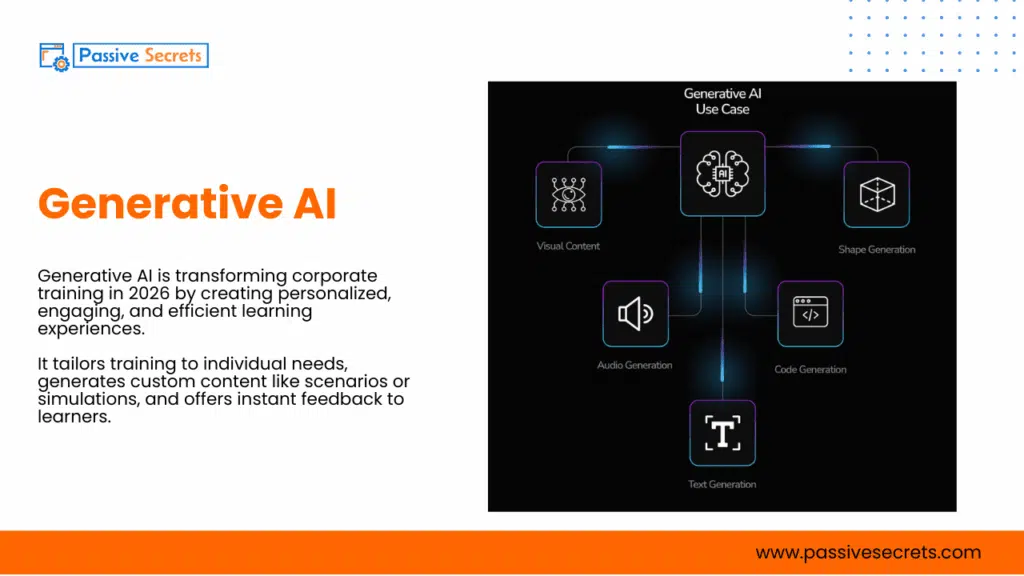
Generative AI is transforming corporate training in 2026 by creating personalized, engaging, and efficient learning experiences.
It tailors training to individual needs, generates custom content like scenarios or simulations, and offers instant feedback to learners.
Paired with technologies like VR, it creates immersive, hands-on training environments.
By making advanced tools accessible and adapting quickly to new skill demands, generative AI helps businesses future-proof their workforce and improve training outcomes.
4. Personalized Training
Personalized training is a major trend in 2025, focusing on tailoring learning experiences to individual employees’ needs, skills, and goals.
Using data and AI, personalized training identifies specific skill gaps and adapts content and pace to match each learner’s preferences.
It improves engagement, retention, and outcomes by making training more relevant and efficient. This approach helps organizations upskill employees faster and align their learning with business goals.
FAQs

Other Workplace-Related Statistics You Should Know in 2026:
- 30+ Powerful Team Building Statistics to Boost Workplace Performance
- Global IT Outsourcing Statistics 2026: Key Trends and Insights
- 90+ Interesting Marketing Jobs Statistics & Facts (Latest Report)
- 80+ Employee Benefit Statistics: Insights and Trends
- The Most Important Wealth Management Statistics You Can’t Afford to Ignore
- Enterprise Data Management: Essential Statistics and Emerging Trends
- Talent Management Statistics: Market Growth, Engagement, and Upskilling Trends
- Top Reputation Management Statistics and Trends to Improve Your Brand
- 36 Helpful Social Worker Burnout Statistics To Know
- 100 Business Process Outsourcing Statistics & Facts
- Top HR Outsourcing Statistics and Trends Every Business Must Know
- The Top Outsourcing Statistics You Shouldn’t Ignore
- 47+ Shocking 4-day Work Week Statistics To Know
- 105+ Supply Chain Statistics & Facts You Can’t Ignore
- 50+ Interesting Employer Branding Statistics And Trends
- Job Seekers Statistics: Unemployment Rates, Preferences, Challenges
- 95 Interesting Job Interview Statistics and Huge Trends To Know
- 60+ Helpful Change Management Statistics & Facts
- 65+ Employee Performance Management Statistics & Trends
- Workforce Management Statistics: Trends, Insights, & Opportunities
- 73 Revealing Workplace Distraction Statistics
- Workplace Romance Statistics: How Common Is Workplace Romance?
- 40+ Top Workplace Conflict Statistics You Should Know
- The State of Workplace Communication: Key Statistics and Trends
- 55 Workplace Collaboration & Teamwork Statistics

