
Imagine two babies born on the same day, in the same city, just miles apart. One enters the world in a warm hospital room, welcomed by parents who own their home, hold college degrees, and have a savings account ready to fund her future.
The other is born into a family where the electricity bill goes unpaid, food is rationed by the end of the month, and “getting ahead” feels like a fantasy reserved for other people.
Now here’s the question that should keep us all up at night: twenty-five years later, where do you think each of them ends up?
The uncomfortable truth is that for millions of people, poverty is not just a season of struggle; it is a cycle, passed down like a family heirloom nobody asked for. In the United States and across the globe, the circumstances of your birth remain one of the most powerful predictors of your future wealth, health, education, and opportunity. Not your talent. Not your work ethic. Not your ambition. Simply the family and the zip code you were handed at birth.
But don’t take it at face value. The numbers tell a story far more sobering and far more urgent than most of us are willing to confront.
So let’s look at the data. Because once you see these statistics, you won’t be able to unsee them.
Key Born Porn Stay Poor Statistics
- A child born into a poor household today will take 4–5 generations to reach average national income.
- In the United States, almost one-third of poor children become poor adults.
- Around 831 million people live in extreme poverty worldwide, surviving on under $3 per day.
- Over 50% of people in extreme poverty are children, even though children make up only 30% of the global population.
- Nearly 900 million children experience multidimensional poverty, with 300+ million surviving on under $2.15/day.
- Sub-Saharan Africa accounts for about 75–76% of children in extreme poverty despite having only ~23% of the world’s children.
- Adults who experienced poverty in childhood earn ~20% less and have worse health outcomes across their lifetime.
- Over 417 million children in low- and middle-income countries lack at least two essential services critical for development.
- Children displaced by disasters reached ~9 million in 2023, with climate risks projected to multiply sharply by 2050.

General Born Into Poverty Stay In Poverty Statistics
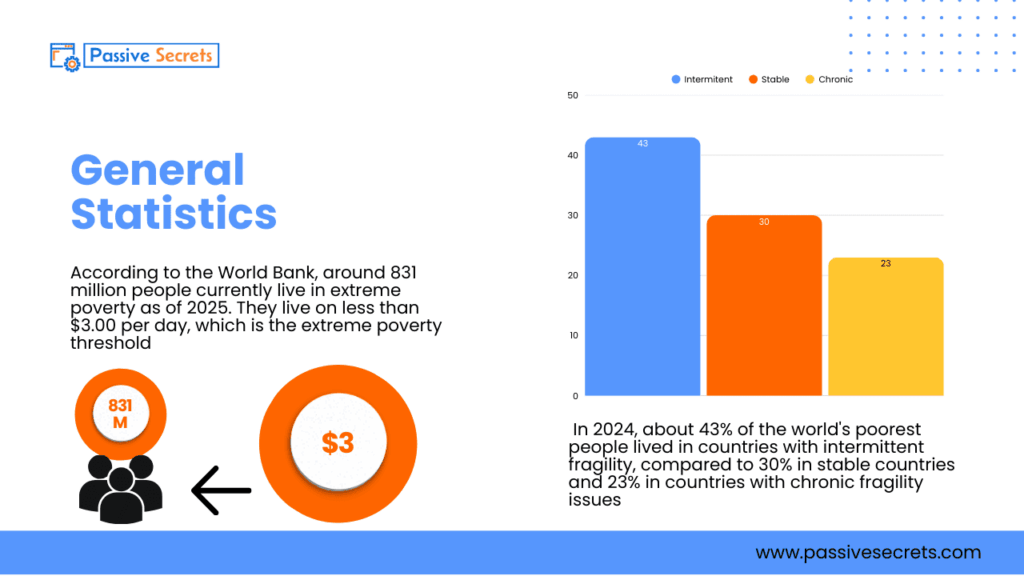
1. According to the World Bank, around 831 million people currently live in extreme poverty as of 2025. They live on less than $3.00 per day, which is the extreme poverty threshold (World Bank: PIP).
2. Approximately, one in every two children lives in extreme poverty (Save The Children).
3. In 2024, about 43% of the world’s poorest people lived in countries with intermittent fragility, compared to 30% in stable countries and 23% in countries with chronic fragility issues (World Bank).
4. In 2024, around 451 million people in fragile or conflict-affected areas were living in extreme poverty (World Bank).
5. Poverty reduction has been slower for kids compared to the general population. Kids are still hit hardest, making up over 50% of those in extreme poverty, despite being only 30% of the global population (World Bank).
6. Over 417 million kids in low- and middle-income countries (more than 1 in 5) lack access to at least two essential services crucial for their health and development (UNICEF).
7. Most kids lacking proper toilets live in low-income countries (65%), followed by lower-middle-income countries (26%) and upper-middle-income countries (11%). Poor sanitation exposes kids to diseases (UNICEF).
8. Roughly 900 million kids face multidimensional poverty, with over 300 million surviving on under $2.15 daily. The numbers jump to 829 million (under $3.65) and 1.43 billion (under $6.85) (End Childhood Poverty).
9. The real median household income in the US was $83,730 in 2024, showing no significant change from 2023’s $82,690. On a brighter note, the official poverty rate dropped slightly to 10.6% in 2024, down 0.4 percentage points (US CENSUS BUREAU).
10. In 2024, the official poverty rate in the US was 10.6%, which translates to approximately 35.9 million people living in poverty (US CENSUS BUREAU).
11. In Australia, over one in seven people (14.2%) are living below the poverty line, which equates to roughly 3,706,000 individuals. The stats are even more concerning for kids under 15, with one in six (15.6%) experiencing poverty – that’s around 757,000 children (ACOSS AND UNSW).
12. The poverty line in Australia ranges from $584 weekly for a single person to $1,226 for a couple with two kids (based on 50% of median household income). After housing costs, 14.2% of people and 15.6% of kids under 15 are living below this line (ACOSS AND UNSW).
13. In 2023, disasters (mostly climate-related) displaced nearly 9 million kids from their homes. The risks are escalating – by 2050, projections show kids’ll face 8x more extreme heatwaves, 3.1x more river floods, and 1.7x more wildfires (UNICEF 20`25).
14. Across the EU, nearly one in four children – that’s 19.5 million kids – are still living at risk of poverty or social exclusion. The annual economic burden of child poverty is quite significant, estimated to be around 3.4% of the Gross Domestic Product (GDP) across OECD countries. This is largely due to factors like lost employment opportunities, reduced earnings potential, and poorer health outcomes (Save The Children).
15. In 2024, children in the EU are bearing a disproportionate brunt of poverty – nearly one in four (24.2%) are at risk of poverty or social exclusion, a rate that’s 3.8 percentage points higher than adults (20.3%) (Save The Children).
16. The EU is currently 5.45 million children away from meeting its 2030 target of reducing child poverty by 5 million. Compared to 2019, there are 446,000 more children at risk of poverty or social exclusion. To achieve this goal, the EU must support approximately 2,500 children out of poverty and social exclusion every day until 2030 (Save The Children).
17. In addition to relative poverty measures, 6.28 million children (7.9%) in the EU experience severe material and social deprivation, indicating they lack access to essential necessities (Save The Children).
18. Approximately 490 million children under 18 live in East Asia and the Pacific, of which 106 million (one in six) are under the age of 5 (UNICEF Data).
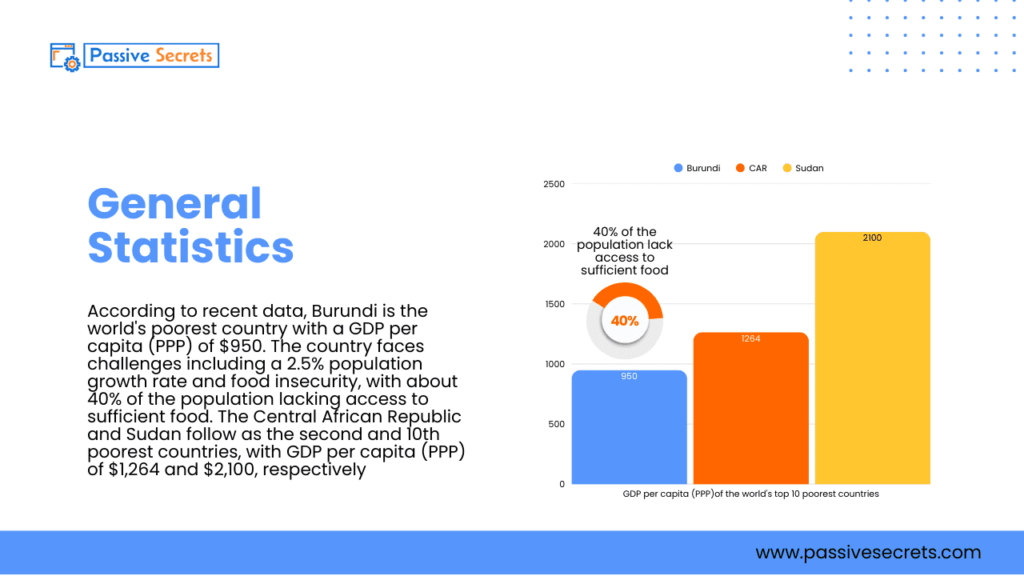
19. According to recent data, Burundi is the world’s poorest country with a GDP per capita (PPP) of $950. The country faces challenges including a 2.5% population growth rate and food insecurity, with about 40% of the population lacking access to sufficient food. The Central African Republic and Sudan follow as the second and 10th poorest countries, with GDP per capita (PPP) of $1,264 and $2,100, respectively (World Population Review).
20. In 2022, the child poverty rate for American Indian children was 25.9%, 19.5% for Hispanic children, 17.8% for Black children, 11.2% for White children, and 9.9% for Asian children (United Way).
21. A child born into a poor household today will take four to five generations to attain the national average income level (Save The Children).
22. The COVID-19 epidemic increased the number of children living in multidimensional poverty by nearly 1.2 billion (Save The Children).
Other Born In Poverty Stay In Poverty Statistics By Region
23. Child poverty rates differ greatly by region. Sub-Saharan Africa has 23% of the world’s kids, but a staggering 312 million (75%) of children in extreme poverty live there (World Bank).
24. Kids in Sub-Saharan Africa and South Asia face the toughest challenges, with the highest rates of multidimensional poverty. Take Chad, for instance – 64% of kids there face 2+ severe deprivations, and 25% face 3+ (UNICEF).
25. Children in Indonesia are more likely to be poor – 22.4% of those under 15 live on less than $3.65 daily, versus 15.7% of 15-64-year-olds (End Childhood Poverty).
26. In Senegal, 50.7% of children face multiple deprivations in 4+ areas like health and education. Rural kids are hit harder – 66.5% are multidimensionally poor, vs 28.1% in urban areas. These children typically lack access to 5 essential services (End Childhood Poverty).
27. The child poverty situation in sub-Saharan Africa is becoming increasingly concerning. The region is home to less than a quarter (23%) of the world’s children, yet it accounts for over three-quarters (76%) of all children living in extreme poverty – that’s more than 311 million kids. As the global population shifts, sub-Saharan Africa’s share of children is projected to grow from a quarter in 2025 to over a third by 2050, and more than two in five by 2100, making it a critical focus area for efforts to eradicate extreme child poverty (UNICEF 2025).
28. In India, around 206 million kids face at least one deprivation, but most (70%) experience just one – only about 62 million face two or more. So while many kids are affected, the severity’s relatively low for most (UNICEF 2025).
29. Countries such as Spain (34.6%), Romania (33.8%), and Bulgaria (35.1%) are still grappling with very high rates of child poverty and social exclusion, significantly surpassing the EU average (Save The Children).
30. Having a job isn’t a guarantee against poverty. In Spain, over 17% of households with kids experience in-work poverty, rising to over 30% for single-parent and large families. Bureaucratic red tape also hampers social support – 56% of eligible households in Spain miss out on flagship anti-poverty aid due to complex application processes (Save The Children).
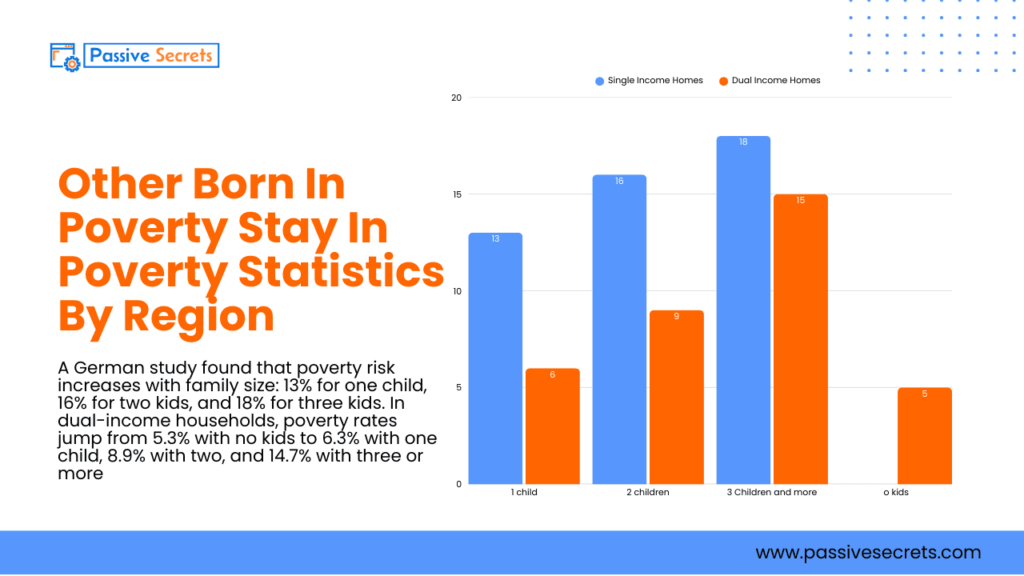
31. A German study found that poverty risk increases with family size: 13% for one child, 16% for two kids, and 18% for three kids. In dual-income households, poverty rates jump from 5.3% with no kids to 6.3% with one child, 8.9% with two, and 14.7% with three or more (Save The Children).
32. In the United States, 16% of all children, or 11.6 million, live in poverty (Kids Count Data Center).
33. A four-person household with an annual income of less than $29,678 is considered poor (Kids Count Data Center).
34. Sub-Saharan Africa has the greatest incidence of children living in extreme poverty (40%) and the largest share of the world’s extremely poor children (71.1%) (End Child Poverty).
35. Child poverty in the U.S. has more than doubled, rising from 5.2% in 2021 to 12.4% in 2022 (United Way).
36. In the UK, 45% of all children in poverty lived in families where the youngest child was under the age of five (CPAG).
37. In 2021-2022, 350,000 more children fell into relative poverty (after housing costs). This means that 4.2 million children (29% of all UK children) lived in poverty (CPAG).
38. 47% of children in Asian and British Asian families are poor, 53% of children in Black/African/Caribbean and Black British families, and 25% of children in White families (CPAG).
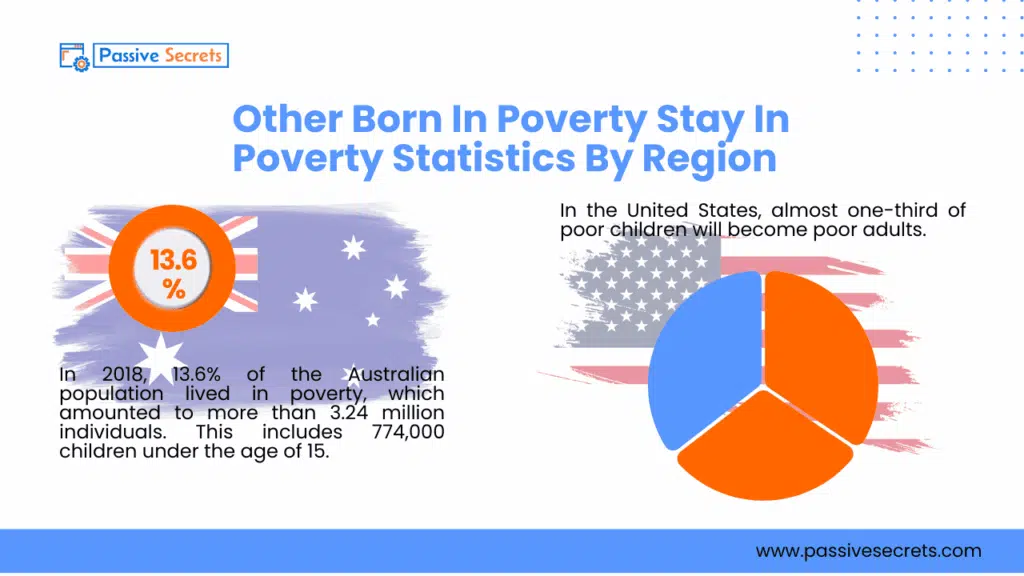
39. In the United States, almost one-third of poor children will become poor adults (Brookings).
40. Only over 60% of young people growing up in poverty finish Year 12, compared to 90% of those from higher socioeconomic situations (The Smith Family).
41. In 2013, around 210 million children in Sub-Saharan African countries experienced acute monetary poverty. By 2022, this figure had increased to a little over237 million (UNICEF 2023).
42. Seven Sub-Saharan African nations are expected to have over 10 million children living in extreme poverty. Nigeria and the Democratic Republic of the Congo account for nearly 70 million (UNICEF 2023).
43. Approximately two-thirds of the 237 million children living in extreme poverty in Sub-Saharan Africa are under the age of ten (UNICEF 2023).
Poverty From Childhood To Adulthood
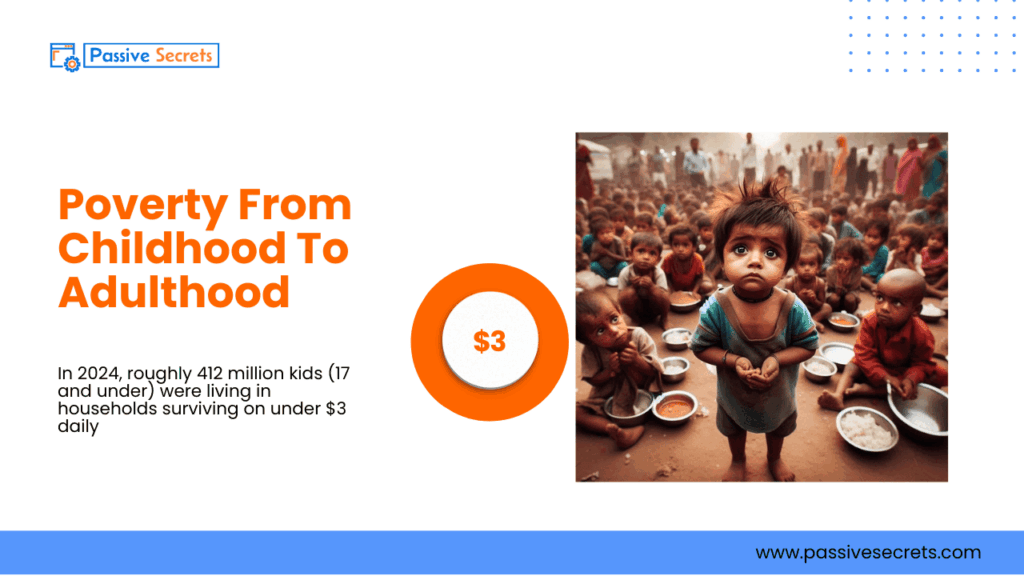
44. In 2024, roughly 412 million kids (17 and under) were living in households surviving on less than $3 per day (World Bank).
45. Adults who experienced poverty in childhood are less likely to be employed, tend to earn 20% less on average, and have poorer health outcomes, equivalent to a reduction in life expectancy of two weeks per year (Save The Children).
Conclusion
Children born into poverty face significant barriers to escaping it later in life. According to the data, over 810 million people globally live in extreme poverty on less than $3. per day
This early exposure to poverty has long-lasting consequences. Studies show that nearly half (49%) of children born into poverty will remain poor as adults.
Compared to those never poor as children, they are 3.3 times more likely to be poor, and 2.5 times more likely to experience financial stress as young adults.
Overall, these statistics demonstrate the entrenched, intergenerational nature of poverty.
Escaping the cycle is extremely difficult, underscoring the need for policies and programs that provide comprehensive support to families and children in poverty.
FAQs
Other Related Statistics Posts to Check Out:
- Single Moms Vs. Single Dads Statistics: Key Facts and Trends
- 21 Incredible Single Father Statistics You Have to Know
- Holiday Spending Statistics: How Much Americans Spend & Shopping Trends
- Black Consumer Spending Statistics: $2.1 Trillion Buying Power Brands Can’t Ignore
- The Battle of the Sexes: Male Vs. Female Spending Statistics
- 110+ Shocking Income Inequality Data You Need to Know
- Gender Inequality Statistics: 160+Insights Across Regions
- The $1 Trillion Industry: Sharing Economy Stats That Prove It’s Just Getting Started
- Millennials on Social Media Statistics: Data Brands Must Know
- How Much Are People Really Saving? Personal Savings Statistics
- 40+ Useful Procrastination Statistics To Help You
- Gen Z vs Millennial Spending Statistics: Income, Shopping Habits, and Trends
- Gen Z and Social Media: Key Statistics, Trends, and Insights
- Gentle Parenting Statistics: Is This Parenting Style Worth It?
- Dating and Love Statistics & Facts: What the Numbers Reveal About Modern Relationships
- Relationship Statistics That Reveal How Love, Dating, and Marriage Are Changing
- Period Poverty by the Numbers: Shocking Global Statistics You Need to See
- 25+ Interesting Emotional Intelligence Statistics & Fun Facts
X

