
Raising children alone can be a daunting task, and single parents are no strangers to hard work and dedication.
But have you ever wondered how single moms and single dads stack up against each other in terms of numbers and statistics?
From household income and education levels to poverty rates and family dynamics, the differences and similarities between single moms and single dads are fascinating.
In this article, we’ll explore the latest single moms vs. single dads statistics, exploring the trends, challenges, and triumphs of these remarkable individuals who are redefining what it means to be a family.
Key Single Moms Vs. Single Dads Statistics
- In 2023, about 15.09 million children lived with a single mother in the U.S., and 3.05 million with a single father.
- Approximately 90% of single parents in the UK are women.
- About 1 in 5 children under 18 in the U.S. are raised without a father.
- Full-time single mothers earn $40,000, less than single fathers ($57,000), married mothers ($60,000), and married fathers ($76,000).
- Poverty rates among single mothers: Black mothers 31%, Hispanic mothers 33%, White mothers 24%.
- Globally, nearly 8% of households are led by a single parent, with 84% being mothers (~101.3 million single mothers).
- 71% of high school dropouts come from homes without dads; involved fathers reduce dropout risk by 70% and grade repetition by 40%.
- 85% of kids with behavioral disorders and 75% of teens in substance abuse centers come from homes without fathers.
- Nearly two-thirds of single mothers work outside the home, with about one-third spending more than half their income on housing.
- In 2023, 21% of all U.S. mothers were single: 47% Black, 25% Hispanic, 14% White, 8% Asian.
General Single Moms Vs. Single Dads Statistics
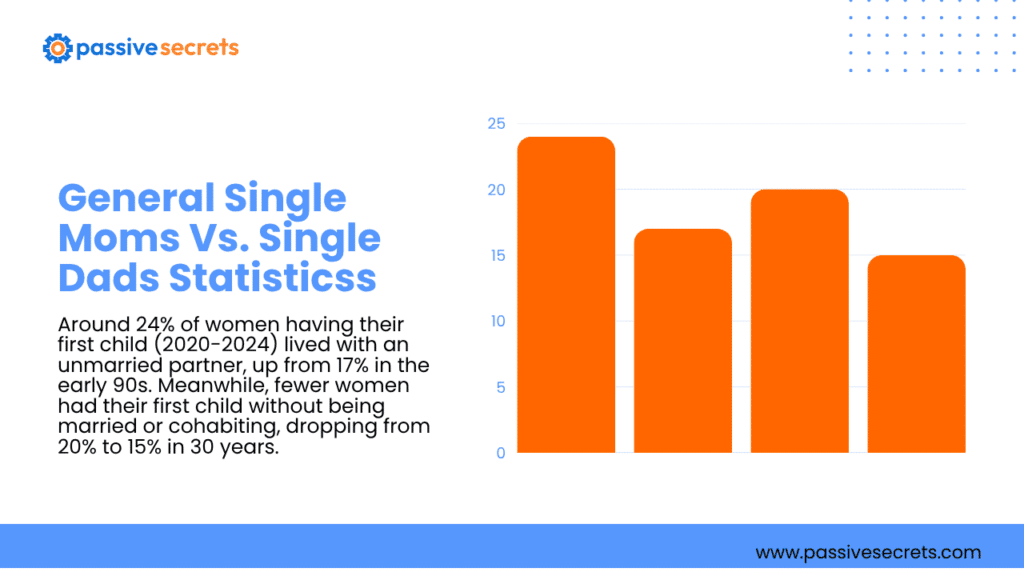
1. Around 24% of women having their first child (2020-2024) lived with an unmarried partner, up from 17% in the early 90s. Meanwhile, fewer women had their first child without being married or cohabiting, dropping from 20% to 15% in 30 years. (Census)
2. In 2025, less than half (47%) of US households were married couples, down from nearly two-thirds (66%) 50 years ago. Among married couples, fewer had their own kids at home compared to 50 years back. (Census 3)
3. 27% of parents say that kids being raised by both parents makes families strong. Kids (25%) and teens (21%) also value these factors, with some differences in priorities. (Common Sense Media)
4. The UK had around 19.7 million families in 2024, up from 18 million in 2010 and 16.8 million in 2000. (Statista)
5. About 7.4 million families in the US had a male head of household with no spouse in 2024. (Statista)
6. There are about 84.33 million families in the United States. (Statista)
7. In 2023, around 15.09 million children lived with a single mother in the United States, and about 3.05 million children lived with a single father. (Statista)
8. The cost-of-living crisis is significantly harming single parents, with 50% reporting worsened mental health and 88% feeling anxious about rising prices, along with negative effects on their overall well-being. (Gingerbread)
9. Approximately 90% of single parents in the UK are women. (Gingerbread)
10. The average age of a single parent in the UK is 39 years. (Gingerbread)
11. Fewer than 1% of single parents are teenagers, and this group is steadily decreasing. (Gingerbread)
12. Most single parents (57%) have never been married. (Gingerbread)
13. Most single parents have either one child (54%) or two children (31%). (Gingerbread)
14. Globally, nearly 8% of households are led by a single parent, with 84% being mothers. This amounts to about 101.3 million single mothers living with their children, which is rising. (Make Mothers Matter)
15. As of 2024, there are more than 3.18 million single-parent families in the United Kingdom, up from 2.94 million in 2022. (Statista)
16. In 2023, 21% of all mothers in the U.S. were single. Among them, 47% were Black mothers, and 25% were Hispanic mothers. In comparison, single motherhood rates were lower for White mothers at 14% and Asian mothers at 8%. (Center for American Progress)
17. About 4.4 of single mothers are unemployed, and 20.6% are not participating in the labor force. For single fathers, the unemployment rate is lower at 2.8%, and 14.7% are not in the labor force. (Center for American Progress)
18. Full-time single mothers earned $40,000, which is less than that of single fathers ($57,000), married mothers ($60,000), and married fathers ($76,000). Single Black women earned $38,000, Hispanic women $34,000, while single white women made $50,000. (Center for American Progress)
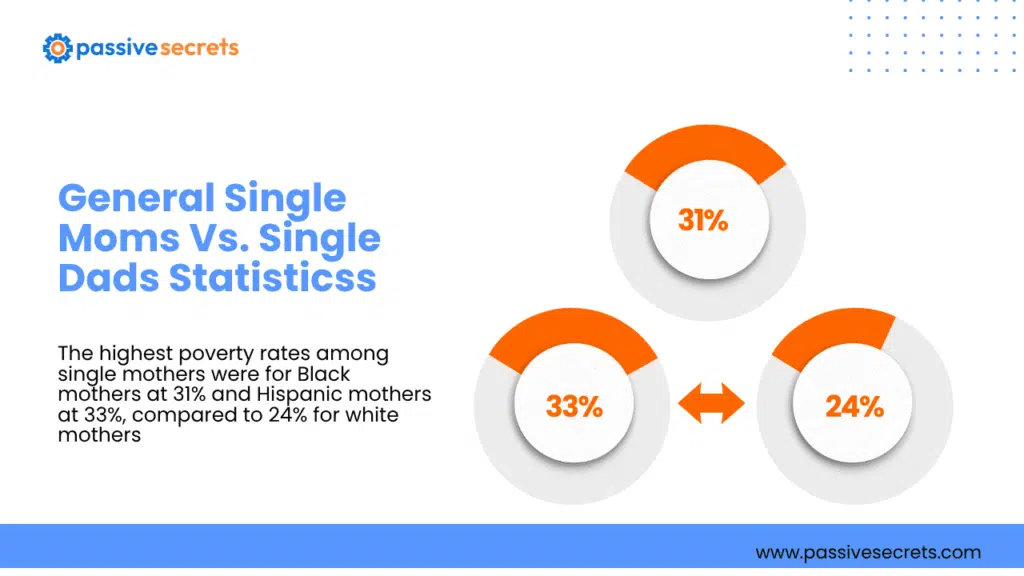
19. The highest poverty rates among single mothers were for Black mothers at 31% and Hispanic mothers at 33%, compared to 24% for white mothers. (Center for American Progress)
20. In 2022, there were around 4.15 million Black families in the United States led by a single mother. (Statista)
21. Single motherhood is increasingly common in the U.S., with about 1 in 5 children under 18 being raised without a father. (Fix Family Courts)
22. Among single mothers, 37.8% are divorced, 41% never married, and only 6.5% are widows. (Fix Family Courts)
23. Growing up without a father in the home may increase the likelihood of getting into trouble with the law, compared to having both parents present. However, this doesn’t mean that all children from single-parent households will engage in criminal behavior. (Fix Family Courts)
24. According to a census survey in the U.S, only 27% of Black households were married couples, while about 50% of White households were married couples. (US Census Bureau 1)
25. About 1 in 4 Black households are led by a single mom, making them the most common group to have a female head of household without a partner. (US Census Bureau 1)
26. Black children were the most likely to live in households facing economic difficulties or households that got food stamps or cash support. (US Census Bureau 1)
27. Poverty rates among single-mom Black families have decreased from 48.1% in 1990 to 25.9% in 2023, a significant improvement over the past 33 years. (Statista)
28. Also, nearly 17% of single-mom white families in the US were struggling with poverty in 2023. (Statista)
29. Single-father Black families in the US have increased from 472,000 in 1990 to 1.18 million in 2023, a significant growth over the past three decades. (Statista)
30. About 18% of single-father Black families in the US lived in poverty in 2023. (Statista)
31. In 2023, nearly half (47.5%) of Black children in the US, totaling 5.3 million, did not have a father living with them. However, of the nation’s 72.3 million families, 54.5 million have a dad living at home. (National Fatherhood Initiative)
32. In the US, around 86% of single-parent families are headed by mothers. (Single Parent Project)
33. Almost 22 million children live in the US, with around 19 million under 18 living with a single mom. (Single Parent Project)
34. Approximately3 million children under 18 live with a single dad. (Single Parent Project)
Single Moms Vs. Single Dads Statistics Based on Demographics
35. In Denmark, the number of single mothers decreased slightly from 2015 to 2022, then increased again in 2023, totaling 116,000. Most single mothers had one child, with 67,000 families having one child, and 25 families having seven or more children. (Statista)
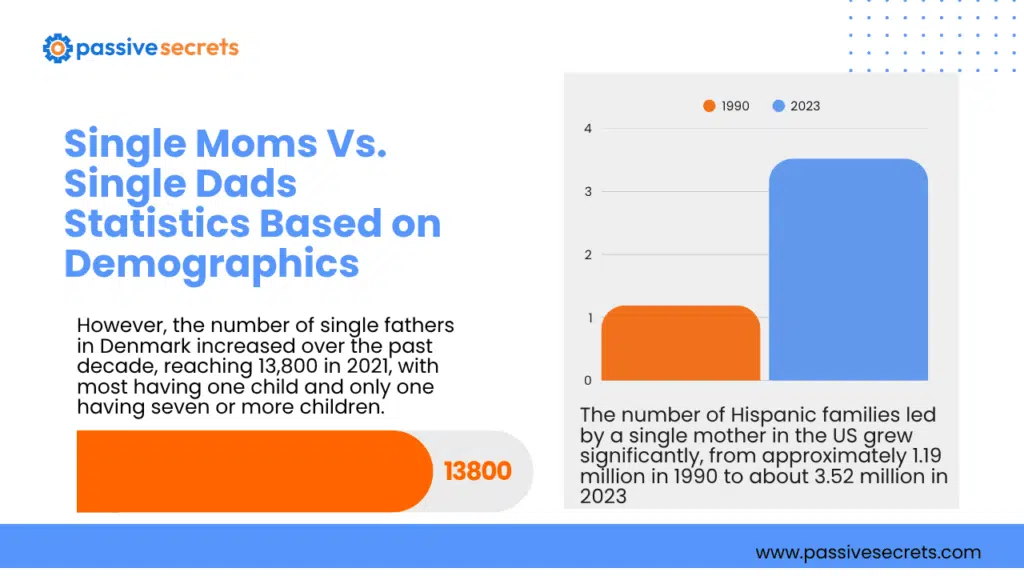
36. However, the number of single fathers in Denmark increased over the past decade, reaching 13,800 in 2021, with most having one child and only one having seven or more children. (Statista)
37. In 2023, approximately 85,000 single-mother Asian families in the US struggled with poverty, making up a significant portion of the country’s impoverished population. (Statista)
38. The number of Hispanic families led by a single mother in the US grew significantly, from approximately 1.19 million in 1990 to about 3.52 million in 2023. (Statista)
39. The number of Asian families led by a single father in the US rose from approximately 223,000 in 2002 to about 386,000 in 2021, an increase of over 73% in nearly two decades. (Statista)
40. Hispanic families led by a single father in the US declined slightly in 2022 to approximately 1.9 million, but this still represents a significant increase from 1990, when there were about 341,000, a growth of over 458% in three decades. (Statista)
41. In 2023, there were approximately 1.18 million Black families headed by single fathers in the United States. (Statista)
42. Single parents are most prevalent in London at 13%, followed by 12% in the North West, and 10% each in the South East and West Midlands. (Gingerbread)
43. A higher percentage of single parents come from Black or Black British backgrounds (9%) and Mixed or Multiple ethnic backgrounds (3%) compared to couple parents, who represent 4% and 1%, respectively. (Gingerbread)
44. A smaller percentage of single parents come from an Asian or Asian British background than couple parents, with 5% versus 12%. (Gingerbread)
Challenges Faced by Single Moms and Single Dads
45. Nearly two-thirds of single mothers work outside the home. Meanwhile, about one-third allocate more than half of their income towards housing costs. Furthermore, 40% of single mothers in the US hold low-wage jobs that offer no paid leave, exacerbating their financial struggles. (Single Parent Project)
46. 71% of high school dropouts come from homes without dads. Kids with involved fathers are 70% less likely to drop out and 40% less likely to repeat a grade. (Fix Family Courts)
47. 85% of kids with behavioral disorders and 75% of teens in substance abuse centers come from homes without fathers. (Fix Family Courts)
48. 32% of single mothers face moderate to severe psychological distress, while only 19% of married mothers do. (Brookings)
49. 7% of single mothers reported signs of significant stress, compared to two percent of married mothers. (Brookings)
50. 38% of single mothers live below the poverty line, while 9% of married mothers do. (Brookings)
51. Rural single mothers face more complex challenges than urban ones due to limited income opportunities, insecurity, and reliance on themselves. (Research Gate)
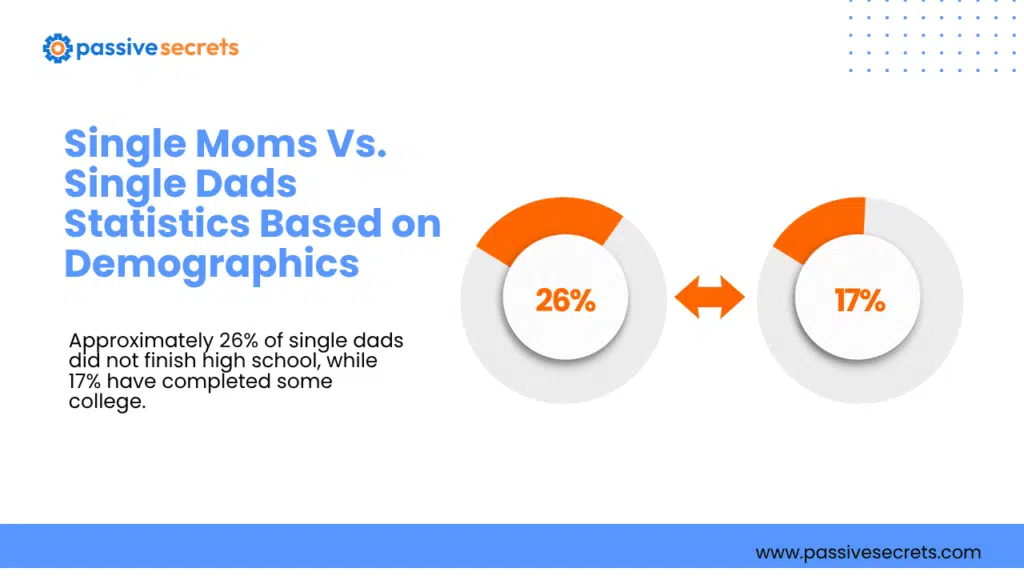
52. Approximately 26% of single dads did not finish high school, while 17% have completed some college. (Single Parent Project)
53. Single-dad households have a median annual income of $40,000. (Single Parent Project)
54. Almost 52% of single dads are separated, divorced, widowed, or never married. (Single Parent Project)
Trends in Single Parenthood in 2026
In 2026, the trends of single parenthood continue to evolve, reflecting society’s changing attitudes and economic conditions.
Here are some of the top trends influencing single parenthood in 2025;
1. Rise in Single Parenthood
There has been a significant increase in single-parent households over the years.
This is because many individuals’ mindsets and perceptions about marriage and divorce are shifting.
Many people are more comfortable raising their children outside of a typical traditional home, which has greatly influenced the number of single parents today.
2. Single Mothers by Choice
One key trend is the rise of women becoming single mothers by choice. Many women are opting to have children without waiting for a partner, often using methods like sperm donation.
This shift is partly due to increased educational and career opportunities, allowing women to establish their lives before starting a family.
As a result, they may feel empowered to pursue motherhood independently when they realize that waiting for the right partner may not align with their biological timelines.
3. Economic Challenges
Single parents, especially single mothers, face significant economic challenges that can impact their overall well-being and the quality of life for their children.
These challenges stem from various factors, including financial instability, high costs of living, and limited access to resources.
Many single parents struggle with financial insecurity. The absence of a second income can make it difficult to cover basic expenses such as housing, food, and healthcare.
Also, Single parents often struggle to find stable employment that pays a living wage.
4. Changing Attitudes
The perception of single parenthood has shifted significantly over the past few decades, reflecting broader societal changes in attitudes toward family structures, marriage, and parenting.
This evolving mindset has led to greater acceptance and understanding of single parents, crucial for their social and emotional well-being.
Society’s acceptance of single parenthood has greatly increased. Surveys show that many people now view single parenting as acceptable, even though many still prefer traditional two-parent households.
5. Diversity in Family Structures

The concept of family has now expanded to include blended families, same-sex couples, adoption, and surrogacy.
These trends show a significant shift in how society views and supports single-parent families, highlighting their challenges and the acceptance of their diverse structures.
Final Thoughts on Single Mom Vs. Single Dad Statistics
Single moms and single dads each have unique parenting experiences and face different challenges. Society tends to view these roles quite differently.
Single mothers often feel scrutinized and judged, while single fathers typically receive more sympathy and praise for their dedication to their children.
This difference in perception can impact how single parents are treated and how their children navigate life. Recognizing these dynamics is essential to creating a more supportive environment for all single parents.
Both single moms and dads deserve respect, understanding, and resources to succeed in their parenting journeys.
FAQs
Other Related Statistics You Should Know:
- 40+ Incredible Single Father Statistics You Have to Know
- Holiday Spending Statistics: How Much Americans Spend & Shopping Trends
- Black Consumer Spending Statistics: $2.1 Trillion Buying Power Brands Can’t Ignore
- The Battle of the Sexes: Male Vs. Female Spending Statistics
- 110+ Shocking Income Inequality Data You Need to Know in 2025
- Gender Inequality Statistics: 160+Insights Across Regions
- The $1 Trillion Industry: Sharing Economy Stats That Prove It’s Just Getting Started
- Millennials on Social Media Statistics: Data Brands Must Know
- How Much Are People Really Saving? Personal Savings Statistics
- 40+ Useful Procrastination Statistics To Help You
- Gen Z vs Millennial Spending Statistics: Income, Shopping Habits, and Trends
- Gen Z and Social Media: Key Statistics, Trends, and Insights
- Intriguing Born Into Poverty Stay In Poverty Statistics
- Gentle Parenting Statistics: Is This Parenting Style Worth It?
- Dating and Love Statistics & Facts: What the Numbers Reveal About Modern Relationships
- Relationship Statistics That Reveal How Love, Dating, and Marriage Are Changing
- Period Poverty by the Numbers: Shocking Global Statistics You Need to See

