
The retail industry has taken a dramatic turn in recent years as the debate between in-store and online shopping continues to evolve.
What was once a simple choice between the experience of a physical store and the convenience of e-commerce has suddenly become complex.
As consumers increasingly turn to e-commerce, retailers are forced to adapt and rethink their strategies.
But what do the numbers say? In this article, we’ll learn the latest in-store vs. online shopping statistics, exploring the trends, preferences, and behaviors that are reshaping the world of retail.
From conversion rates to customer satisfaction, we’ll examine the key metrics that matter most.
Get ready to discover the insights that will shape the future of shopping.
Key In-store Vs. Online Shopping Statistics
- In early 2024, 21% of middle-income consumers preferred online grocery shopping, while in-store shopping preference peaked, especially among older consumers.
- Gen Z shoppers prefer online shopping for entertainment and fashion, but opt for in-store shopping for groceries, pharmaceuticals, and home/garden items.
- E-commerce accounted for 16.2% of US retail sales in Q1 2025, with a record $300+ billion in sales.
- Amazon leads the US online retail market with a 37.6% share, followed by Walmart (6.4%) and Apple (3.6%).
- 78% of retailers consider in-store experiences crucial for future success, while 83% of consumers report positive experiences in physical stores.
- 66% of shoppers discover and buy new products on online marketplaces, while 58% prefer buying new products in physical stores.
- 33% of US consumers shop online for convenience, followed by fast shipping (31%) and free/low-cost shipping (28%).
- 63% of consumers prioritize price/discounts, while around 1/3 prioritize product reviews, shipping, and brand reputation.
- 40% expect online shopping to surpass in-store, while 50% expect equal seamlessness.
- Shoppers prefer online purchases due to convenience (71%) and competitive pricing (64%).
- 17% of shoppers have made a purchase using AI tools, while 28% see them as valuable.
- 50% of online shoppers use Buy Now, Pay Later, with younger generations showing a strong preference.
- 90% of shoppers expect seamless online shopping, but confidence in e-commerce meeting this expectation is declining.
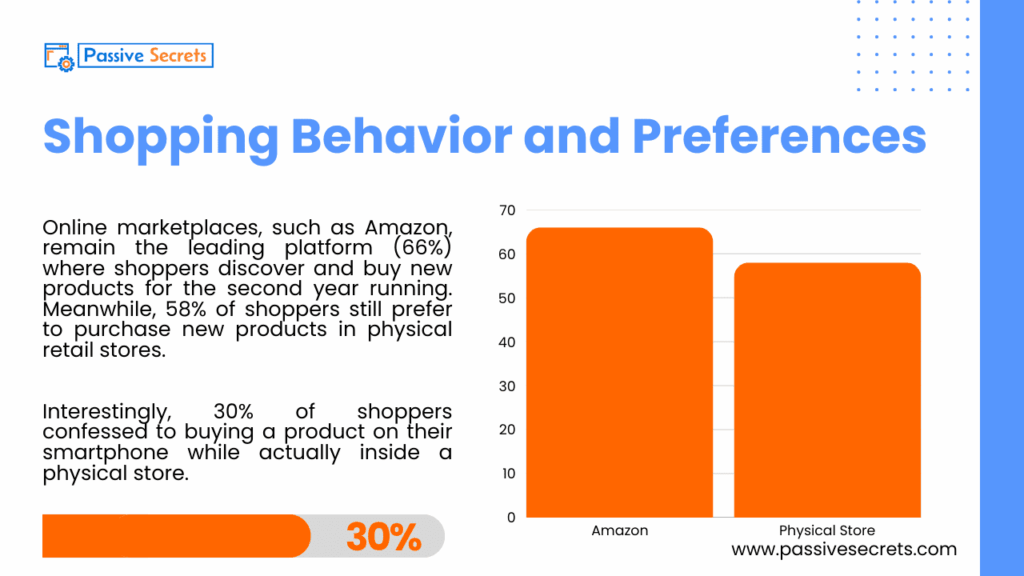
Consumer Demographics
1. As of early 2024, 21% of middle-income consumers prefer buying groceries and household goods online, citing convenience and quality as factors. Also, the preference for in-store shopping reached a high in early 2024, especially among older consumers, while the preference for online shopping remained steady. (source)

2. Online shopping for beauty products is increasingly popular, particularly among men, with 28% preferring this method. (source)
3. Gen Z shoppers preferred online shopping in categories such as entertainment and fashion, while they preferred in-store shopping for groceries, pharmaceuticals, and home and garden items. (source)
4. A survey revealed that nearly 80% of Gen Z consumers worldwide valued the ease of comparing prices and saving time as the primary benefits of online shopping, along with a wider product selection, more payment options, and better product information. (source)
5. 44% of Gen Z consumers reported starting their shopping journey in online stores, 40% used search engines, and 35% visited physical stores, indicating a strong preference for digital channels. (source)
6. As of Q1 of 2023, France and Poland had the highest percentage of Gen Z consumers (82%) buying pre-owned items online, while Norway (83%) and Spain (79%) led in selling second-hand items. (source)
7. More than a third (38%) of teens aged 13-17 express no preference between online and in-store shopping. (source)
8. Men (44%) and millennials (22%) are particularly enthusiastic about the benefits of AI-powered shopping tools. (source)
Market Share and Sales Performance
9. US retail and food services sales reached $726.3 billion in July 2025, a 0.5% increase from June and a 3.9% rise from July 2024. (source)
10. In Q1 2025, e-commerce accounted for 16.2% of total US retail sales, marking a quarterly increase. This period also saw a record-breaking $300+ billion in US retail e-commerce sales, the highest quarterly revenue to date. (source)
11. According to US consumers, Amazon ranks as the most popular online shop, while Ikea ranks as one of the least popular. (source)
12. In April 2024, Amazon.de led as Germany’s most popular online marketplace, with over 50% of desktop visits, followed by eBay.de with over 20%. (source)
13 Amazon.com is the top online marketplace in the U.S., accounting for 58% of desktop traffic in the marketplace category, with eBay.com at 11.86%. (source)
14. Amazon dominates the U.S. online retail market, holding a 37.6% share, followed by Walmart’s e-commerce site at 6.4% and Apple at 3.6%. (source)
15. In 2024, DoorDash dominated the U.S. online food delivery market, with its app being downloaded over 19 million times, surpassing Uber Eats, which had 12 million downloads. (source)
16. According to a survey, over a third of retail executives identified improving the in-store experience as one of their top priorities for driving business growth. (source)
17. Nearly 8 in 10 retailers (78%) consider in-store experiences vital for their future success. This sentiment is reinforced by consumers, with 83% reporting positive experiences in physical brick-and-mortar stores. (source)
18. To stay competitive, 35% of retail leaders plan to enhance their stores’ appeal by hosting more in-store events and creating engaging shopping experiences. (source)
Shopping Behavior and Preferences
19. Interestingly, 30% of shoppers confessed to buying a product on their smartphone while actually inside a physical store. (source)
20. Online marketplaces, such as Amazon, remain the leading platform (66%) where shoppers discover and buy new products for the second year running. Meanwhile, 58% of shoppers still prefer to purchase new products in physical retail stores. (source)
21. Modern shoppers are frequent online shoppers, with nearly a quarter (23%) making multiple online purchases per week and 21% shopping online daily. Notably, the daily online shopping rate has more than doubled from 10% last year. (source)
22. 80% of retail shoppers are motivated by exclusive discounts and rewards earned through loyalty programs. (source)
23. Around 43% of consumers in the United States preferred online shopping over in-store, marking the highest online shopping preference among countries. In contrast, more shoppers in countries like Austria, Finland, and New Zealand favored physical stores. (source)
24. In a survey of 9,989 U.S. consumers, 36% indicated “Clothing” as their preference for online versus offline purchases. (source)
25. The American Customer Satisfaction Index (ACSI) reported that customer satisfaction with e-retail in the United States scored 79 out of 100 in 2023. (source)
26. In a 2025 survey, 49% of U.S. respondents said they always research online before making a major online purchase. (source)
27. A 2025 U.S. survey of 13,686 respondents found that the most popular online shopping categories are: Clothing (43%) and Shoes (33%). (source)
28. A recent study of leading e-commerce categories in the US reveals that clothing is the most favored, with 43% of consumers purchasing these items online. This is followed by shoes at 33%, food and beverages at 26%, bags and accessories at 25%, and cosmetics and body care at 23%. (source)
29. According to global Gen Z shoppers, the main reasons for making unplanned online purchases included taking advantage of sales and deals (43%), treating or rewarding themselves (39%), and the excitement of discovering new items and the convenience of online checkout (each at 37%). (source)
30. The primary reason people shop online is convenience, with 33% of US consumers citing it as their motivation. Fast shipping options (31%) and free or low-cost shipping (28%) follow closely behind. (source)
31. A recent survey indicates no simple answer to how frequently people shop online. About 21% of US consumers shop online once a month or less, 12% shop weekly, and approximately 45% make multiple online purchases each week. (source)
32. Online shopping is a daily activity for many, with 21% of consumers buying items online at least once a day. Of these, 10% shop once daily, while 11% make several purchases throughout the day, meaning roughly one in five consumers shop online every day. (source)
33. Feedback from other internet users is also a significant factor in online shopping decisions. About 32.6% of consumers are influenced by customer reviews, and 22.4% are motivated by social media likes and comments. (source)
34. Statistics reveal that 39.5% of consumers are driven to shop online by the availability of coupons and discounts, while 25.7% are motivated by the opportunity to earn loyalty points. (source)
35. Among the top reasons for online shopping, next-day delivery is significant, with 31.8% of online shoppers considering it a motivating factor. Additionally, 30.4% of consumers value the easy checkout process as a primary reason for shopping online. (source)
36. The option to pay upon delivery influences consumers’ willingness to shop online. Nearly 18.2% of consumers list cash on delivery as a top reason for online shopping. Alongside enjoying free delivery, online shoppers appreciate being able to pay only when they receive their items. Additionally, the ease of returning purchases motivates 31.4% of online buyers. (source)
37. In 2024, weekly online shopping rates dropped 15% from 2023, with 49% of consumers shopping online at least once a week. Additionally, 27% of consumers now shop online once a month or less, and 34% do so on Amazon specifically. (source)
38. Price and discounts are the top consideration for 63% of consumers when making a purchase. Additionally, around a third of consumers also prioritize product reviews, free or fast shipping, and brand reputation. (source)
39. In Q1 2025, online shoppers spent an average of $2.42 per visit. Electronics topped the spending list at $3.03 per visit, closely followed by apparel at $2.44 per visit. (source)
40. In 2025, online shopping behavior continued to shift, with the average number of products per order increasing to 4.52, reflecting a growing consumer tendency to consolidate purchases into fewer, larger orders. (source)
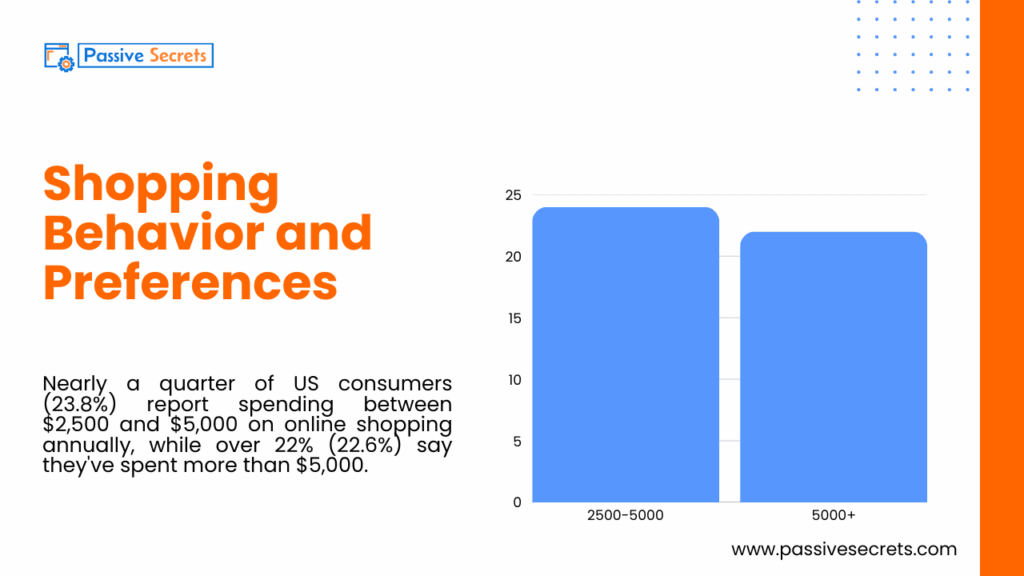
41. Nearly a quarter of US consumers (23.8%) report spending between $2,500 and $5,000 on online shopping annually, while over 22% (22.6%) say they’ve spent more than $5,000. (source)
42. Almost half of consumers (46%) shop online at least once a week. (source)
43. While 73% of US and UK shoppers find products through social media, only 37% actually make their purchases on these sites. (source)
44. There’s been a significant shift in shopper expectations: fewer people (40%, down from 47%) believe online shopping should surpass in-store experiences, while more (50%, up from 44%) now expect online and in-store experiences to be equally seamless. (source)
45. The lines between online and offline shopping continue to blur. Many shoppers research products digitally before buying in-store (35%), while others browse in-store before making their purchase online (26%). (source)
46. Nearly 75% of consumers say they pay close attention to advertised products from their preferred retailers, whether they’re shopping online or in-store. (source)
47. Shopping online has become a daily habit for 21% of shoppers, a significant increase of 11% from 2024. (source)
48. When researching products, shoppers rely heavily on search engines (65%), followed closely by online marketplaces like Amazon (54%), and physical retail stores (51%). (source)
49. Nearly a third (30%) of shoppers have made a purchase on their smartphone while still in a physical store. (source)
50. Shoppers prefer online purchases due to convenience (71%) and competitive pricing (64%). However, product content also plays a significant role in driving ecommerce sales. (source)
51. Key factors influencing online purchases include:
Technology and Digital Adoption
52. Although only 17% of shoppers have made a purchase using AI tools, a larger proportion (28%) see them as a valuable resource, suggesting potential for growth as these tools become more mainstream. (source)
53. During Black Friday, retailers leveraging AI-powered tools like chatbots achieved 15% higher conversion rates. Moreover, a majority (60%) of retail buyers credited AI-enabled tools with improving their demand forecasting and inventory management capabilities in 2024. (source)
54. A majority of shoppers (47%) believe that digital screens in stores enhance their grocery shopping experience. (source)
55. In 2025, most brand leaders (77%) are using AI to eliminate guesswork in the discovery process, while 83% are leveraging AI to improve user experience. A key goal for nearly 80% of brands is to stand out from the competition during discovery. (source)
56. A 2025 survey found that nearly two-thirds of US shoppers are aware of AI shopping assistants, and 61% have used tools like Gemini or ChatGPT for online purchases. Additionally, 42% of surveyed shoppers discovered AI shopping assistants within the past year. (source)
57. 9 in 10 shoppers use their smartphones for shopping, and the experience is evolving beyond mobile browsers to include retailer apps and voice commands. (source)
58. Nearly half, or 47%, of social shoppers use voice commands to make purchases. (source)
59. Half of online shoppers now utilize Buy Now, Pay Later, with younger generations showing a particularly strong preference for this payment option. (source)
Barriers and Challenges In Online Shopping
60. A survey found that 45% of U.S. online shoppers believed most of their returned products were resold, 36% were unsure, and 17% thought the items were discarded. (source)
61. The cost of e-commerce returns in the United States surged to nearly $362 billion in 2024, marking a significant 46% increase from the previous year’s total of $248 billion. (source)
62. Seven out of ten shoppers say they will not make a purchase from an online retailer if they do not trust the delivery or returns provider. (source)
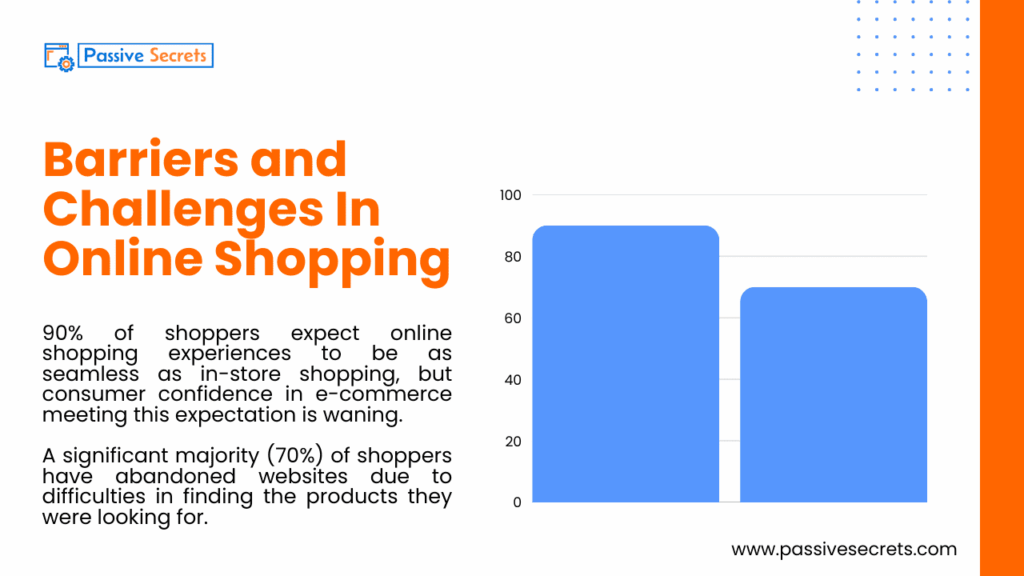
63. 90% of shoppers expect online shopping experiences to be as seamless as in-store shopping, but consumer confidence in e-commerce meeting this expectation is waning. (source)
64. A significant majority (70%) of shoppers have abandoned websites due to difficulties in finding the products they were looking for. (source)
65. Over half of shoppers (54%) have cancelled an online purchase due to inconsistent product details across websites, while 53% abandoned a sale because of incomplete, poorly written, or unclear product titles and descriptions. (source)
External Influences
66. In 2025, 76% of consumers worry about inflation and rising costs, especially Gen X and Boomers. As a result, online shopping frequency has dropped, with 15% fewer weekly shoppers and one-third of Amazon shoppers buying less often than monthly. (source)
67. In response to economic pressures, two-thirds (66%) of shoppers have reduced discretionary spending on luxuries and dining out, while over half (52%) have opted for store-brand products and more affordable alternatives. (source)
Future Projections
68. E-commerce accounted for over 23% of global retail sales in 2025, and is expected to increase to 25% by 2030. (source)
69. Between 2020 and 2029, the total number of online shoppers in the US is projected to grow by 60.7%, with an average annual increase of 5.4%. (source)
70. The growth rate of online shoppers is expected to decelerate, slowing to 5.5% in 2025, 4.7% in 2026, and 3.7% in 2027, with further declines to 3.4% in 2028 and 3% in 2029. (source)
71. The number of digital shoppers is predicted to rise in the upcoming years: 284.65 million in 2025, 296.59 million in 2026, and 310.23 million in 2027, surpassing 300 million for the first time. By 2029, the number is expected to reach 331.46 million. (source)
72. 70% of global shoppers anticipate mostly shopping on social media platforms within the next five years. (source)
73. In 2024, the US e-commerce market had approximately 273.49 million users, representing a 117.7 million user increase since 2017. This upward trend is expected to continue, with an additional 60.01 million users predicted to join the market by 2029. (source)
74. Globally, retail media is projected to reach $169.6 billion in 2025, exceeding TV ad revenue for the first time. By 2028, US retail media alone is expected to hit $100 billion, capturing 19% of total media ad spend. (source)
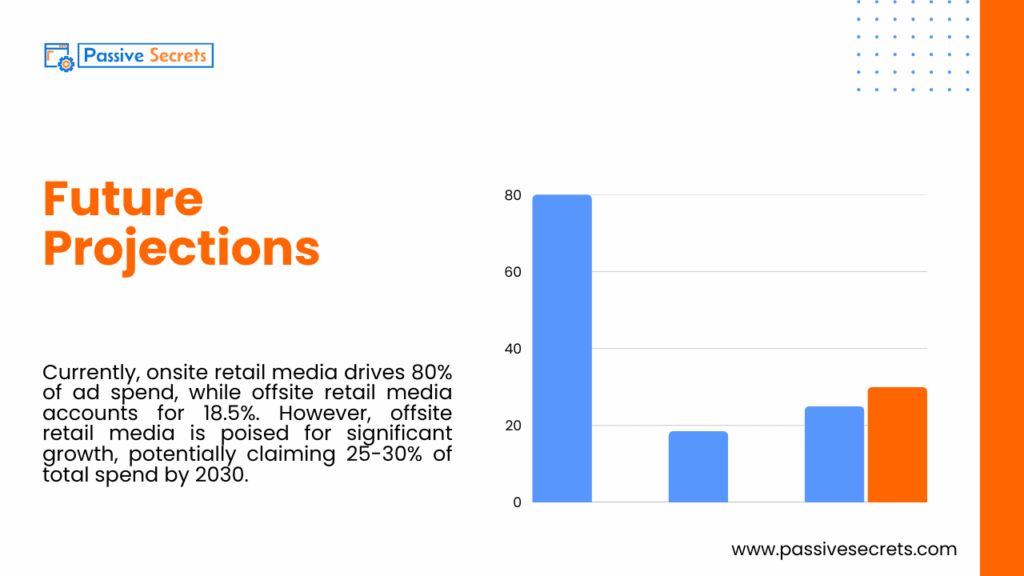
75. Currently, onsite retail media drives 80% of ad spend, while offsite retail media accounts for 18.5%. However, offsite retail media is poised for significant growth, potentially claiming 25-30% of total spend by 2030. (source)
76. The in-store segment of the retail media market is expected to reach $1 billion by 2028, driven by retailers’ increasingly effective use of digital technology in physical stores. (source)
77. Nearly two-thirds (66%) of retail leaders intend to increase their investment in loyalty and rewards programs in 2025. This shows a commitment to enhancing customer engagement and retention. (source)
Conclusion
The in-store vs. online shopping discussion is far from over, and it’s clear that both channels offer unique advantages that cater to different consumer needs and preferences.
Moving forward, the retailers who succeed will be those who can seamlessly integrate their physical and digital experiences.
Whether you’re a seasoned shopper or a retail professional, the evolution of shopping patterns is a fascinating topic worth following closely.
As consumer behavior shifts, the only constant is change—and the businesses that can easily adapt will thrive.
FAQs
Other Similar Statistics Report You Should Know:
- Useful Black Consumer Spending Statistics (NEW Report)
- Holiday Spending Statistics: Valentine’s Day, Easter, Thanksgiving, and Christmas
- Useful Male vs Female Spending Statistics
- Useful Direct Mail Marketing Statistics, Trends, and FAQs
- Sales Funnel Statistics To Increase Conversion Rates (Complete List)
- MOST Important Copywriting Statistics To Know
- 52 Valuable Trade Show Statistics and Trends
- B2B Lead Generation Statistics, Facts, Trends, Benchmarks, & Market Size
- 55 Interesting Direct Mail Marketing Statistics and Trends
- Virtual Event Statistics & Benchmarks For Marketers & Organizers
- 50+ Useful Call Center Statistics And Trends
- Amazon Book Sales Statistics: Intriguing Numbers and Facts
- B2B Sales Statistics: Latest Insights and Trends
- Sales Enablement Statistics: The Data You Need to Drive Sales Growth
- 60+ Interesting Storytelling Statistics, Facts & Huge Trends
- 23 Most Interesting First Impression Statistics To Know
- 45+ Interesting Communication Skills Statistics & Huge Trends
- Interesting Body Language Statistics And Fun Facts To Boost Your Communication Skills
- 35 Interesting Public Speaking Fear Statistics & Fun Facts
- 25+ Most Interesting Emotional Intelligence Statistics & Fun Facts
- 40+ Marketing Software Statistics & Facts (Full Industry Report)
