
Workplace conflict doesn’t usually start with a shouting match or a formal complaint. More often, it shows up quietly in tense meetings, passive-aggressive emails, unclear expectations, or that one colleague everyone avoids. You feel it before you can name it.
And over the years, it has become a serious widespread, measurable business risk.
Across industries and regions, conflict is shaping how people feel about their jobs, their managers, and whether they stay or leave at all.
Employees are disengaging, morale is slipping, and productivity is quietly draining away, often long before leadership notices. At the same time, many organizations still lack clear policies or trained managers to handle conflict when it surfaces.
The result?
Millions of employees are dealing with stress, burnout, and unresolved tensions at work, and billions are lost every year in absenteeism, turnover, and lost output.
This article breaks down the latest Workplace Conflict Statistics for 2026, revealing how common conflict really is, what’s driving it, how much it costs, and where organizations are falling short. The data tells a clear story: conflict isn’t just a people problem, it’s a leadership and culture problem hiding in plain sight.
Let’s look at the numbers.
Key Workplace Conflict Statistics (Editor’s Pick)
- 55% of employees have experienced verbal attacks at work, and 48% have faced workplace bullying.
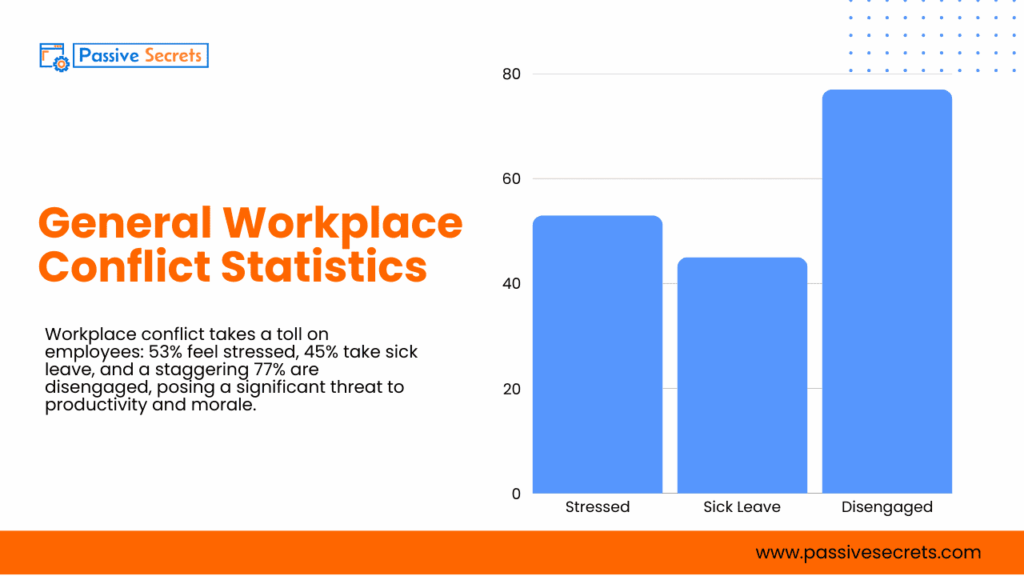
- Workplace conflict leaves 77% of affected employees disengaged, while 53% feel stressed and 45% take sick leave.
- Over 10 million employees experience conflict at work, with more than half suffering depression, stress, or anxiety as a result.
- Nearly 8 in 10 U.S. workers (78%) have experienced mistreatment at work due to political beliefs — yet only 8% of companies have policies to address it.
- The top workplace conflict triggers are lack of trust (73%), personality clashes (72%), and unclear roles (70%).
- Almost 9 in 10 employees (88%) say workplace conflict leads to low staff morale.
- Workplace conflict costs U.S. employers $3,216 per employee per year, with employees spending an average of 2 hours per week managing conflict.
- In the UK, workplace conflict costs £28.5 billion annually — equivalent to more than £1,000 per employee.
- Conflict drives turnover: 51% of employees considered quitting due to workplace conflict, and 41% actually quit.
- Most organizations (72%) do not have a formal workplace conflict resolution policy in place.
- While 98% of employees say conflict resolution training is crucial, only 27% of managers are considered highly skilled at managing conflict.
- Managers spend an average of 4 hours per week dealing with workplace conflict.
What is Workplace Conflict?
Workplace conflicts are disagreements among work colleagues regarding ideas, personalities, work ethics, etc. It’s common for almost every business to experience workplace conflict, especially if the business employs many staff.
General Workplace Conflict Statistics
1. More than half (55%) have experienced verbal attacks, and nearly half (48%) have faced bullying in the workplace (source).
2. Workplace conflict takes a toll on employees: 53% feel stressed, 45% take sick leave, and a staggering 77% are disengaged, posing a significant threat to productivity and morale (source).
3. The conflict resolution solutions market is projected to grow from $10.99 billion in 2025 to $17.76 billion by 2032, at a 7.1% CAGR. This growth is driven by factors such as the shift to remote work, advancements in AI and automation, increased focus on diversity and inclusion, and growing awareness of mental health issues (source).
4. About 79% of surveyed workers say they were required to take a workplace conflict class, which they found very helpful (source).
How Common Is Workplace Conflict?
5. Workplace conflict in the UK has decreased from 30% in 2019 to 25% in 2024, a 5% drop over five years (source).
6. Workplace conflict affects approximately 8 million UK workers, negatively impacting their job quality and overall work experience (source).
7. According to Acas, over 10 million employees experience conflict at work. As a result of this, more than 50% of them suffer depression, stress, or anxiety (source).
8. Nearly 8 in 10 US workers (78%) have experienced mistreatment at work due to their political beliefs, yet only 1 in 12 companies (8%) have policies in place to address and prevent such treatment (source).
Common Causes of Workplace Conflict
9. One-third (32%) of workplace conflicts involve management-level disputes (source).
10. Nearly one-quarter (22%) of workplace conflicts arise between supervisors and their team members (source).
11. The top workplace conflict triggers:
- Lack of trust (73%)
- Personality clashes (72%)
- Unclear roles (70%)
- Workplace stress (60%)
- Poor communication (55%)
- Excessive workload (55%)
- Abuse of power (47%) (source).
12. The most prevalent forms of workplace conflict in the UK are being humiliated or undermined (48%). This is followed by heated arguments or being shouted at (35%), and verbal abuse in the workplace (34%) (source).
13. The primary emotions that lead to workplace conflict are stress (45%), anger (44%), and frustration (38%). This highlights the need for effective emotional management and conflict resolution strategies (source).
14. The most common sources of workplace conflict are differences in work ethic (54%), followed by competition between colleagues (40%), inappropriate boundaries with coworkers (34%), and gender discrimination (33%) (source).
15. Being left out of after-work social events is a common source of conflict, with 76.2% of respondents reporting that it has caused tension or conflict for them (source).
16. 48% of employees in a recent survey say their supervisor is the one who causes workplace conflict the most. Another 36% believe it is their manager/boss, and 16% blame their coworkers (source).
17. According to surveyed employees (50%) and managers (45%), stress is the primary emotional cause of workplace conflict (source).
Demographic Disparities in Workplace Conflict
18. Women, ethnic minorities, and individuals with disabilities were more likely to experience workplace conflict than their counterparts, with a higher rate of reporting at least one form of conflict (source).
19. Non-heterosexual individuals experienced workplace conflict at a higher rate (33%) compared to heterosexual individuals (24%) (source).
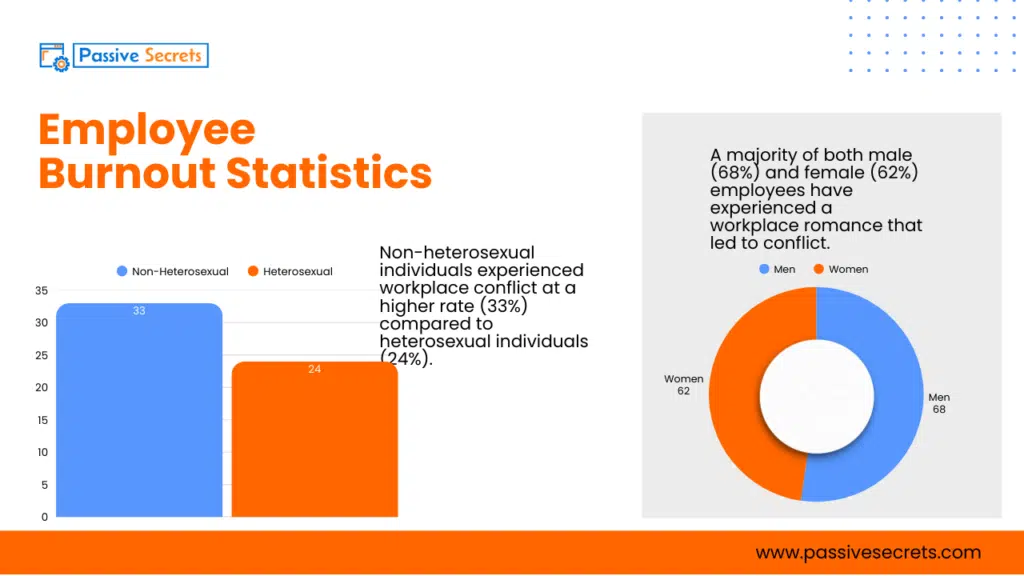
20. A majority of both male (68%) and female (62%) employees have experienced a workplace romance that led to conflict (source).
21. Women (43%) are more likely than men (39%) to experience competition between colleagues (source).
22. Older workers (over 50) are more likely to experience conflict with coworkers, while middle-aged workers (in their 30s) are more likely to cite inappropriate boundaries by coworkers (45%) as the primary reason for workplace conflict (source).
23. In a survey, employees confirmed that workplace conflict has led to 51% of them considering quitting their job and 41% actually quitting their job. Among them, men (54%) were more likely than women (44%) to consider quitting. Also, men (42%) were more likely than women (38%) to actually quit their jobs (source).
24. Middle-aged employees (in their 30s) are the most likely to experience a decline in productivity (35%) due to workplace conflict, compared to other age groups (source).
25. Gen-Z workers (86%) are most likely to involve HR in their conflict (source).
Cost of Workplace Conflict
26. Almost 9 in 10 (88%) have seen conflict lead to low staff morale (source).
27. US organizations suffer a staggering daily loss of $2 billion due to reduced productivity and absenteeism (source).
28. Workplace conflict costs US employers $3,216.63 per employee per year in lost productivity, as staff spend an average of 2 hours/week ( equivalent to 1% of their annual salary) managing conflicts (source).
29. Workplace conflict significantly impacts job satisfaction and retention: only 54% of those who experienced conflict were satisfied with their job, compared to 77% of those without conflict. Additionally, employees who faced conflict were twice as likely (33% vs 16%) to consider leaving their job within the next 12 months (source).
30. A recent survey in the United Kingdom shows that the total cost of workplace conflict is £28.5 billion. That is the equivalent of more than £1,000 for each employee (source).
31. An average of 485,500 employees resign yearly due to workplace conflicts. Additionally, 874,000 employees call in sick due to conflict (source).
32. 51% of employees in the survey say they have wanted to quit their jobs due to conflict. However, only 41% say they followed through (source).
Employee Burnout Statistics
33. A quarter of employees (25%) said work has a negative impact on their mental health, and 24% said the same about their physical health (source).
34. About 8.5 million UK workers say work negatively impacts their mental health, putting them at risk of leaving employment due to ill health (source).
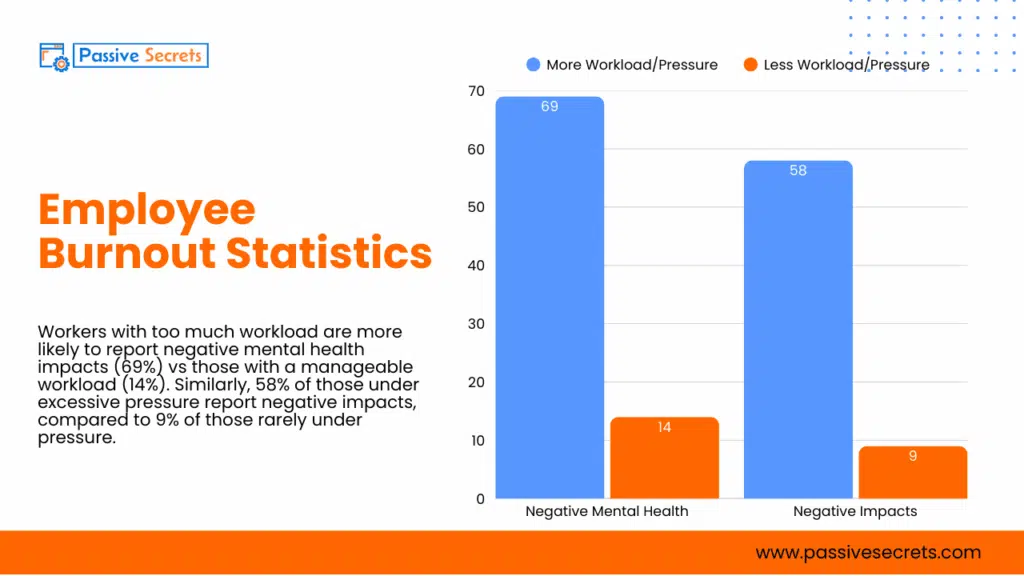
35. Workers with too much workload are more likely to report negative mental health impacts (69%) vs those with a manageable workload (14%). Similarly, 58% of those under excessive pressure report negative impacts, compared to 9% of those rarely under pressure (source).
36. Employee burnout costs businesses $322 billion yearly in lost productivity, with related healthcare costs ranging from $125 billion to $190 billion annually (source).
37. For employees, the top stress drivers are heavy workloads and unpaid tasks (47%), followed by job security concerns like redundancy anxiety (38%) (source).
38. 50% of women reported high or increased unpaid workloads, 6% more than men (44%). Women were also 5% more likely to cite unpaid overtime as a source of stress (source).
39. Employee burnout hits younger workers harder: Gen Z (66%), Millennials (58%), Gen X (53%), Baby Boomers (37%). It’s also higher among remote (61%) and hybrid (57%) employees (source).
40. Less than half (42%) of burned-out workers tell their manager. Of those who do, 42% say their manager doesn’t act to help reduce burnout (source).
41. Stress is common in 8/10 organizations, with 61% of survey respondents often feeling stressed at work. Yet, only 28% say their org effectively helps with stress issues (source).
42. Only 14% of HR pros think managers can spot employee stress, and 15% can guide stressed employees. Just 35% say the work environment supports mental health (source).
43. About 72% of US employees face moderate to high work stress. Gen Z is now the most burned-out generation (74%), surpassing millennials (66% in 2025) (source).
44. Employee confidence in employers caring about mental health dropped to 48% (from 54% in 2024). Heavy workloads (35%) remain the top stress driver (source).
Workplace Empathy Statistics
45. 73% of employees say their org is empathetic. But 27% see it as unempathetic, making them 1.5X more likely to leave in 6 months, risking $180 billion in attrition costs (source).
46. Unempathetic workplaces see 3X more toxicity and 1.3X more mental health issues, hurting productivity and boosting absenteeism – costing them big time (source).
47. Poor mental health leads to missed work, costing the economy an estimated $47.6 billion every year in lost productivity (source).
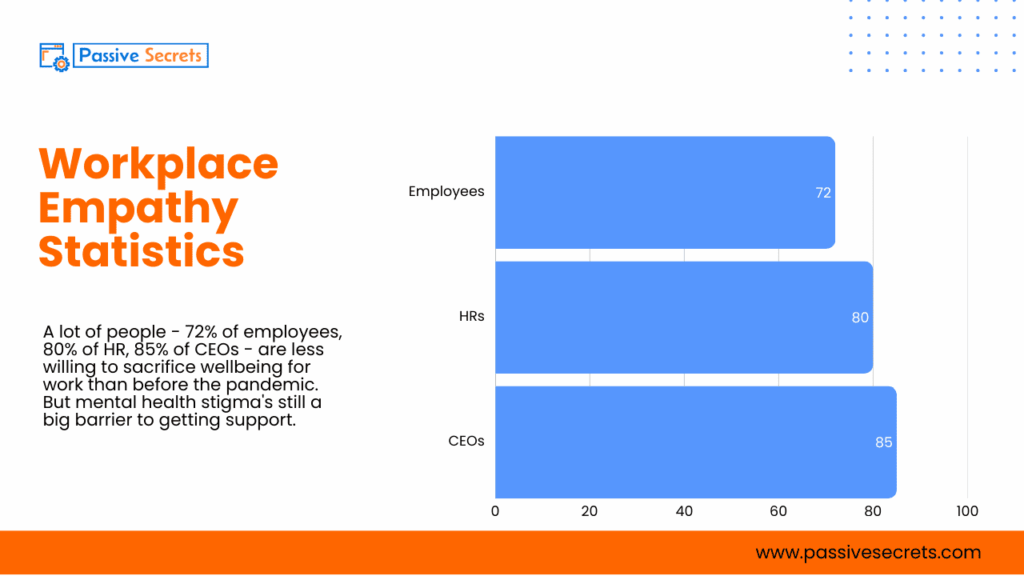
48. A lot of people – 72% of employees, 80% of HR, 85% of CEOs – are less willing to sacrifice wellbeing for work than before the pandemic. But mental health stigma’s still a big barrier to getting support (source).
Conflict Management and Resolution
49. Most organizations (72%) do not have a formal policy in place to resolve workplace conflicts (source).
50. Effective conflict resolution can have a positive outcome: 40% of employees believe that well-managed conflict leads to increased trust among team members (source).
51. Nearly all (98%) employees consider conflict resolution training crucial, and 83% believe it enhances role effectiveness. However, only 27% of managers are deemed highly skilled in conflict resolution, revealing a significant leadership gap (source).
52. When workplace conflicts arose, the most common responses were: letting it go (47%), followed by discussing with HR (29%), and then either talking to someone outside work (21%) or addressing the issue directly with the person involved (17%). Only 9% of employees said they are looking for another job and 3% had already quit (source).
53. UK employees reported varying degrees of conflict resolution: 66% said their issue was either fully or partially resolved, but only 36% achieved full resolution, while over a third (34%) had no resolution at all (source).
54. Nearly half (49%) of emerging leaders face challenges in managing workplace conflict. Only 12% may have high ability/skills in this area (source).
55. Just 30% of leaders feel confident in their ability to effectively manage conflict (source).
56. A majority (61%) of manager candidates surveyed had difficulty clearly identifying and articulating the core issues in a conflict (source).
57. A significant majority of manager candidates struggled with key leadership skills, with 65% finding it hard to offer support and resources to their team and 60% struggling to empower others, hindering team development and conflict resolution (source).
58. 7 in 10 employees consider conflict management a vital leadership skill, emphasizing its importance in effective leadership (source).
59. Managers spend an average of 4 hours every week dealing with conflict (source).
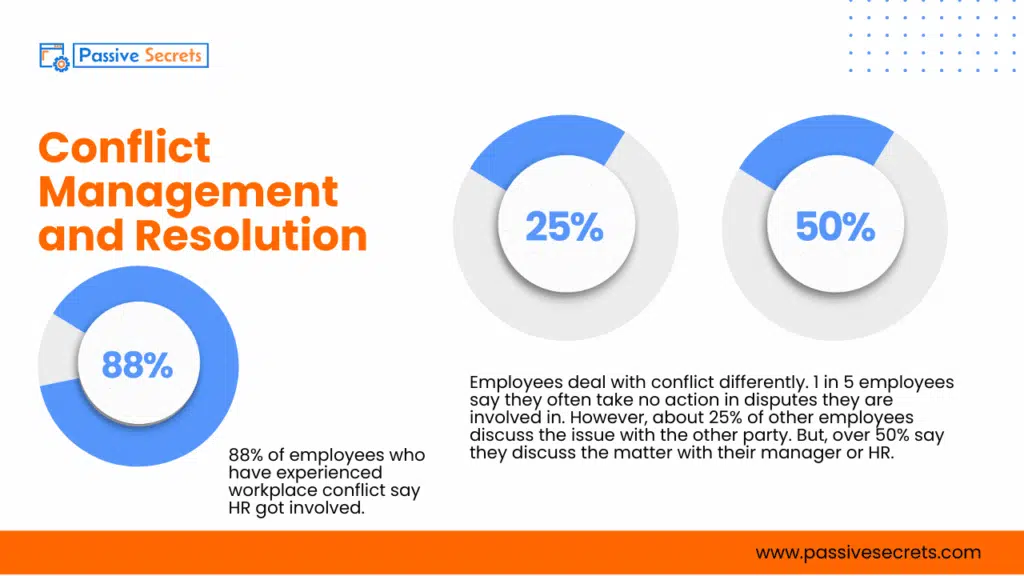
60. Employees deal with conflict differently. 1 in 5 employees say they often take no action in disputes they are involved in. However, about 25% of other employees discuss the issue with the other party. But, over 50% say they discuss the matter with their manager or HR (source).
61. 88% of employees who have experienced workplace conflict say HR got involved (source).
62. 55.7% of workers prefer to restore harmony when resolving conflict (source).
Types of Workplace Conflicts
Conflict in the workplace can arise due to different reasons. Hence, the types of workplace conflicts depend on the cause.
1. Task-based Conflicts
These are conflicts caused by disagreements on tasks. It is common when colleagues are handling interdependent roles. This type of conflict is also known as role conflict, which happens when employees don’t clearly understand their roles, affecting the next employee.
2. Personality-based Conflicts
A company can consist of people with different personalities and walks of life. It is expected to experience a clash of personalities every once in a while. It’s not easy to work with someone with a completely different personality from yours because there will be many disagreements.
3. Work Style Conflicts
As our personalities are different, so are our work styles. In fact, your personality affects your work style. Employees can have different ways they want to accomplish a task, and this can cause conflict.
4. Discrimination
Workplace discrimination is a common occurrence in large companies. Some employees are not given fair treatment and opportunities like others. Sometimes, the discrimination is gender-based, where men are more favoured than their female counterparts.
However, discrimination can also be based on other factors like values, lifestyle, race, culture, religion, etc. Discrimination is very serious, and once conflict arises, HR may have to get involved to settle it.
5. Creative Conflict
This is when employees have different viewpoints on handling a project and refuse to agree on a common ground. Unlike other conflict types that are unhealthy and chaotic, creative conflict can be healthy. It challenges employees to put in their A-game in innovation and creativity.
6. Leadership Styles
Aside from employees having conflicts, employers/managers/supervisors can also have disagreements. There are different leadership styles, and each one can affect the whole team. The difference in leadership styles can cause conflict in the company.
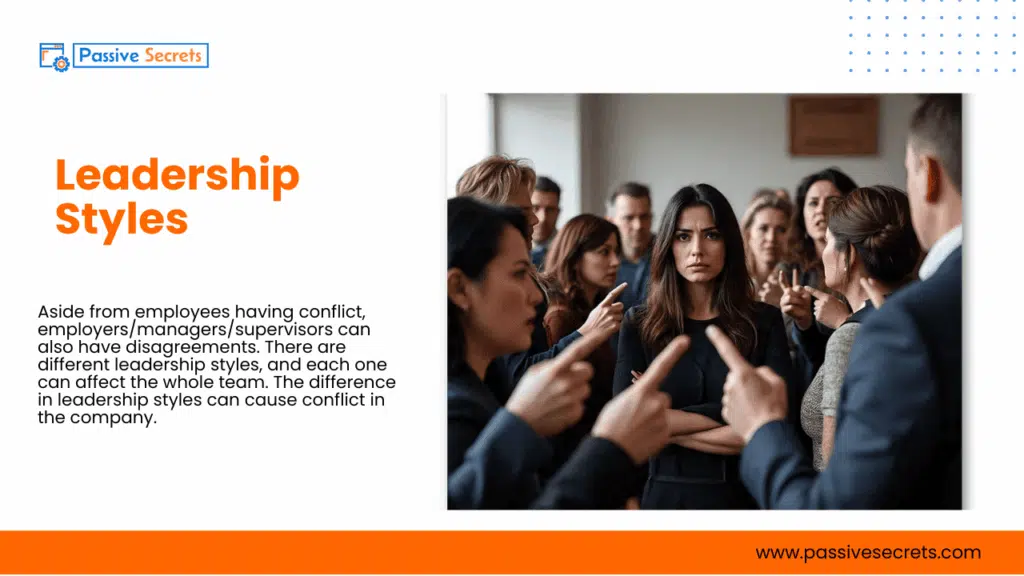
For example, when two co-founders have different leadership styles, they disagree on how to lead the company. This conflict will affect productivity and, eventually, the company itself.
FAQs
Other Workplace Statistics Articles You Should Know:
- 30+ Powerful Team Building Statistics to Boost Workplace Performance
- 87+ Essential Training Industry Statistics & Trends for HR and L&D Professionals
- Global IT Outsourcing Statistics: Key Trends and Insights
- 90+ Interesting Marketing Jobs Statistics & Facts (Latest Report)
- 80+ Employee Benefit Statistics: Insights and Trends
- The Most Important Wealth Management Statistics You Can’t Afford to Ignore
- Enterprise Data Management: Essential Statistics and Emerging Trends
- 93 Talent Management Statistics to Help You
- Top Reputation Management Statistics and Trends to Improve Your Brand
- 36 Helpful Social Worker Burnout Statistics To Know
- 100 Business Process Outsourcing Statistics & Facts
- Top HR Outsourcing Statistics and Trends Every Business Must Know
- The Top Outsourcing Statistics You Shouldn’t Ignore
- 47+ Shocking 4-day Work Week Statistics To Know
- 105+ Supply Chain Statistics & Facts You Can’t Ignore
- 50+ Interesting Employer Branding Statistics And Trends
- Job Seekers Statistics: Unemployment Rates, Preferences, Challenges
- 95 Interesting Job Interview Statistics and Huge Trends To Know
- 60+ Helpful Change Management Statistics & Facts
- 65+ Employee Performance Management Statistics & Trends
- Workforce Management Statistics: Trends, Insights, & Opportunities
- 73 Revealing Workplace Distraction Statistics
- Workplace Romance Statistics: How Common Is Workplace Romance?
- The State of Workplace Communication: Key Statistics and Trends
- 55 Workplace Collaboration & Teamwork Statistics

