
Key Business Loan Statistics (Editor’s Pick)
- The global alternative lending market is projected to grow to $884.1B by 2029 (13.4% CAGR from 2025–2029).
- The global unsecured business loans market was $253.9B in 2025 and is projected to reach $561.3B by 2034 (10.2% CAGR).
- Short-term working capital loans made up the largest share (39.36%) of the unsecured business loans market in 2025.
- Credit availability improved across secured, unsecured, and corporate lending in Q2 2025.
- Almost all banks offer small business loans up to $1M, while half provide loans up to $3M.
- 3 in 10 banks (including over half of large banks) can approve a small, simple loan within 1 business day.
- 3 out of 4 banks can approve a small, simple loan within 5 business days.
- Also, 3 out of 4 banks approve their typical loan within 10 business days.
- U.S. small business loan approval rates stayed near 50% in Q1 2025.
- The SBA guaranteed $44.8B in small business loans in FY 2025 (84,400 loans).
- On average, the SBA processes 1,600 loans per week worth $860M.
- Borrowing intentions strengthened: 97% of medium businesses and 82% of small businesses expect to borrow more.
- 85% of SMEs did not seek external financing in 2024; 9% applied once.
- Smaller businesses continue to face higher borrowing costs than larger firms.
- Businesses remain cautious: 90% expect to borrow conservatively, while 69% plan to delay major investments.

Did you know that in the past year alone, over 50% of small businesses sought financing to fuel growth, manage cash flow, or recover from economic setbacks?
Business loans provide the capital needed to turn ideas into thriving ventures.
From approval rates and loan amounts to the industries most reliant on financing, these latest business loan statistics offer valuable insights into the state of the lending market.
Understanding these statistics is crucial to navigating the complex world of business financing.
Keep reading to explore the latest business loan statistics.
General Business Loan Statistics
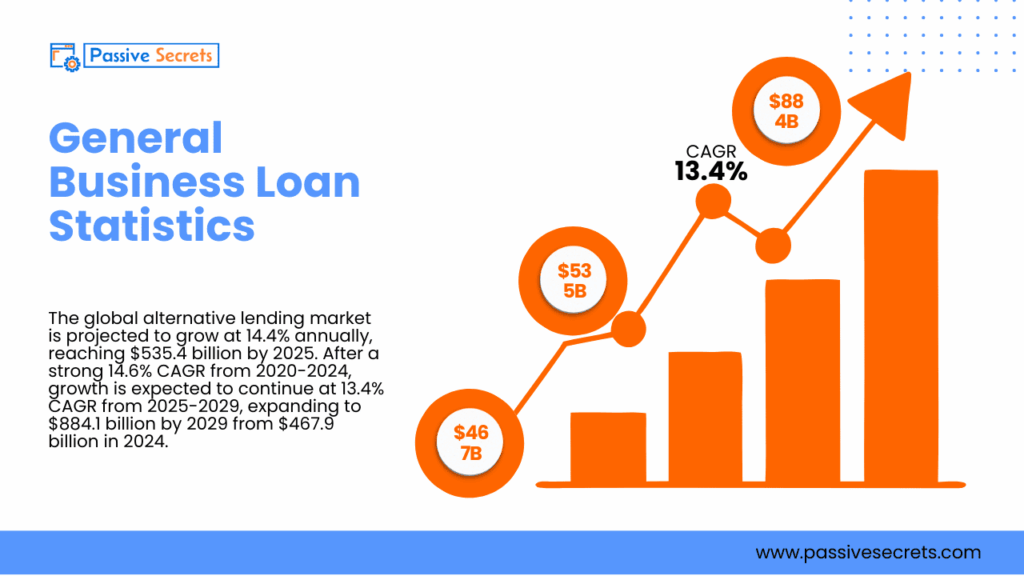
1. The global alternative lending market was projected to grow at 14.4% annually, reaching $535.4 billion in 2025. After a strong 14.6% CAGR from 2020-2024, growth was expected to continue at 13.4% CAGR from 2025-2029, expanding to $884.1 billion by 2029 from $467.9 billion in 2024 (source).
2. The global unsecured business loans market, valued at USD 253.9 billion in 2025, is projected to reach USD 561.3 billion by 2034, growing at a 10.2% CAGR. Short-Term Working Capital Loans accounted for the largest share, at 39.36% in 2025 (source).
3. Credit availability rose for Secured, Unsecured, and Corporate lending in Q2 2025. However, demand fell for Unsecured lending, but grew for Secured and Corporate lending (source).
4. In June, loan application growth increased by 1.5% year-over-year, a slower pace compared to the 3.4% year-over-year growth seen in May. Similarly, loan approvals also slowed, with a 7.6% year-over-year growth, down from the 15.5% year-over-year growth reported in May (source).
5. In the first quarter of 2025, less than half of small business loan applications in the US were approved, with approval rates hovering around 50%. This trend has been consistent, except during the COVID-19 pandemic’s initial years. These figures specifically refer to commercial and industrial loans for non-farm small businesses (source).
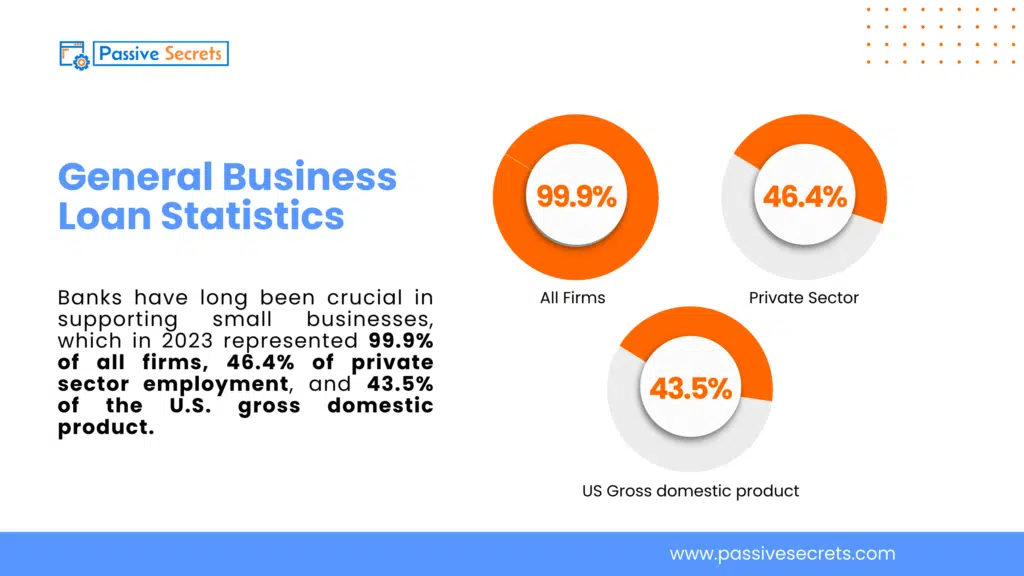
6. Banks have long been crucial in supporting small businesses, which in 2023 represented 99.9% of all firms, 46.4% of private sector employment, and 43.5% of the U.S. gross domestic product (source).
7. Almost all banks offer loans up to $1 million to small businesses, while half of them provide loans up to $3 million (source).
8. 3 in 10 banks, including over half of large banks, can approve a small and simple loan within one business day (source).
9. 3 out of 4 banks can approve a small and simple loan within five business days. Also, 3 out of 4 banks approve their typical loan within ten business days (source).
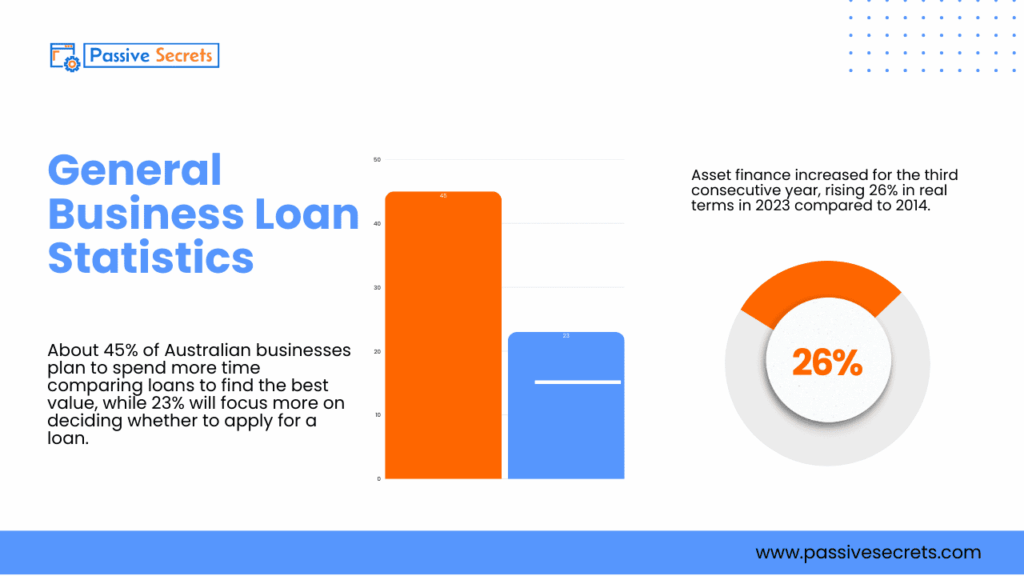
10. About 45% of Australian businesses plan to spend more time comparing loans to find the best value, while 23% will focus more on deciding whether to apply for a loan (source).
11. 12% of Australian businesses said they abandoned their loan applications after initial inquiries, while 10% plan to consider smaller loans (source).
12. Asset finance increased for the third consecutive year, rising 26% in real terms in 2023 compared to 2014 (source).
13. In 2023, the total stock of bank lending was £185 billion, marking a 12% decrease in real terms compared to 2022 (source).
14. Over the past decade, the lending landscape changed significantly, with 60 new banking licenses issued since 2014, 36 of which were aimed at serving small businesses (source).
15. 15% of UK businesses have recently been rejected for a loan (source).
16. 67% of MSMEs saw a decline in demand, mainly due to high costs (38%) and low purchasing power (36%), linked to inflation and slow growth. 12% cited alternatives, and 10% noted changing preferences (source).
17. In the financial year 2024, 27.4 million MSME loans were sanctioned, totaling Rs 54.2 trillion, reflecting a 19.3% growth in volume and a 5.4% increase in value (source).
18. Survey results show that borrowing costs remained elevated due to past monetary tightening, but to a lesser extent. Only 4% of firms reported higher interest rates, down from 31% last quarter, though many noted stricter loan conditions (source).
19. Firms reported a slight decrease in the need for bank loans, with little change in loan availability (source).
20. In 2024, a net 2% of companies reported reduced demand for bank loans, while a net 1% saw improved loan availability. Consequently, the financing gap for bank loans was negative for a net 2% of firms, a slight rise from the previous quarter (source).
21. Companies noted a rise in banks’ willingness to lend, though not as significant as the previous quarter. Overall, 6% of firms observed an improvement in lending conditions, a decrease from 9% in the last survey (source).
Average Business Loan Interest Rates
22. Smaller businesses usually face higher borrowing costs than larger ones, though the gap has narrowed in recent years (source).
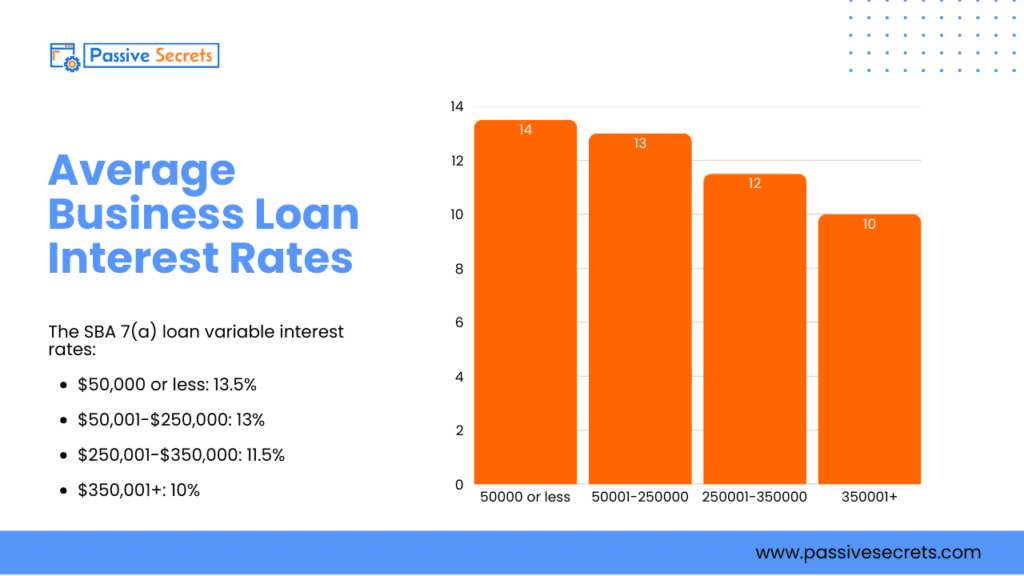
23. SBA 7(a) loan fixed interest rates vary by loan size:
24. The SBA 7(a) loan variable interest rates:
Industry-Specific Business Loan Statistics
25. A survey in Australia found 29% of hospitality SMEs needed extra funding within 3 months, compared to just 11% of retail trade SMEs, highlighting varying financial pressures across industries (source).
26. In 2024, about 29% of UK SMEs reported growth over the past year, with those in the transport sector experiencing the highest growth rate at 32% (source).
27. In June, working capital loans grew by 6.8% year-over-year, building on the 4% growth seen in May. This increase was driven by loan growth in the services, wholesale and retail, and construction sectors (source).
Small Business Loan Statistics
28. The U.S. Small Business Administration (SBA) closed Fiscal Year 2025 with a record-breaking $44.8 billion in guaranteed loans to small businesses, comprising 84,400 loans. This includes 6,750 504 loans worth $7.8 billion and 77,600 7(a) loans worth $37 billion. The majority of these loans were approved after President Trump’s inauguration in January 2025 (source).
29. On average, the SBA guarantees 1,600 small business loans per week, valued at over $860 million, or 320 loans per workday worth $170 million. This milestone reflects the administration’s efforts to boost small business confidence and growth (source).
30. In the first quarter of 2025, less than half of small business loan applications in the U.S. were approved, with approval rates hovering around 50%. This trend has been consistent, except during the COVID-19 pandemic’s initial years. These figures specifically refer to commercial and industrial loans for non-farm small businesses (source).
31. New small business lending in the second quarter of 2025 saw a significant boost, increasing by 7.5% compared to the previous quarter and the same period in 2024. This growth indicates a positive trend in supporting small businesses, which are crucial to many economies (source).
32. Outstanding small business loans grew 1.8% year-over-year and 0.5% quarter-over-quarter, with total loans up 1.5% and 1%, respectively, driven mainly by midsized banks (source).
33. In the UK, 27% of SMEs obtained £25,000-£99,999 in external finance in the past year, the largest share, according to a survey between Oct ’24 and May ’25 (source).
34. About 1 in 5 small banks and one in three large banks sold a small business loan on the secondary market (source).
35. More than 9 out of 10 banks frequently compete with another bank for small business lending (source).
36. At the end of 2023, small banks held nearly 42% of small commercial and industrial, as well as commercial real estate loans to businesses, despite holding only 15% of industry assets (source).
37. In the three months leading up to August 2021, new lending to small businesses totaled $10 billion, a26% increase from $7.9 billion during the same period in 2020 (source).
38. Small businesses have a lower survival rate compared to larger ones, with only 59% of micro businesses and 72% of small businesses still operating after four years (source).
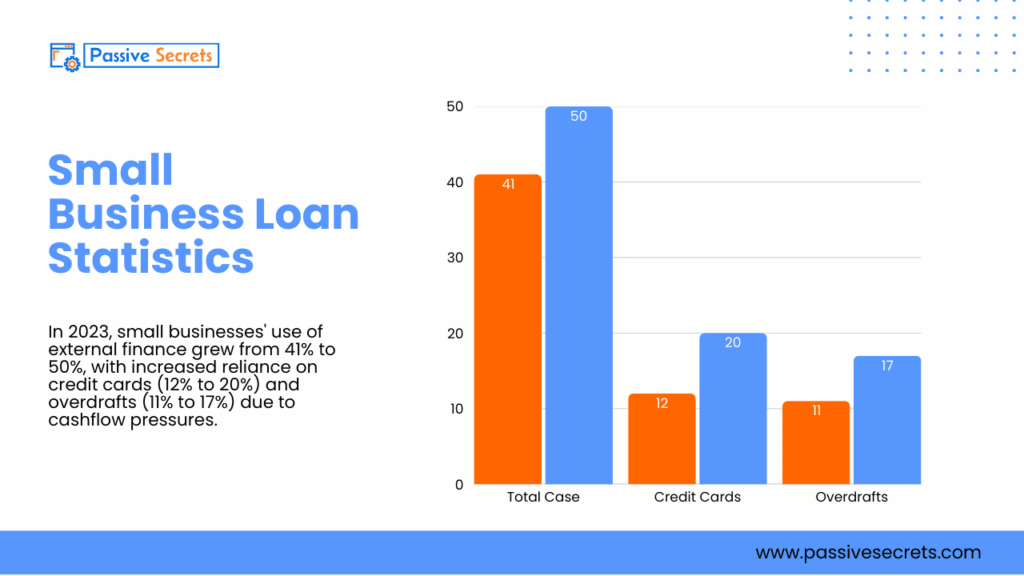
39. In 2023, small businesses’ use of external finance grew from 41% to 50%, with increased reliance on credit cards (12% to 20%) and overdrafts (11% to 17%) due to cashflow pressures (source).
40. Smaller businesses raised £6.5 billion in equity finance during the first three quarters of 2023, a 53% decrease compared to the same period in 2022. Despite this drop, the total is similar to 2020, which remains the fourth-highest year on record (source).
41. In 2025, the UK had around 5.68 million SMEs, mostly micro-enterprises (5.4 million with 0-9 employees), followed by 220,090 small enterprises (10-49 employees), and 38,440 medium-sized enterprises (source).
42. In 2024, the top external finance options for UK SMEs were bank overdraft facilities (37%) and loans from banks, building societies, or other financial institutions (36%). These two sources were the most sought-after, highlighting the reliance on traditional banking channels for funding (source).
43. A total of 85% of SME businesses stated they did not seek external financing in the 12 months prior to the survey. Additionally, 9% of SMEs reported attempting to access external finance once during the past year (source).
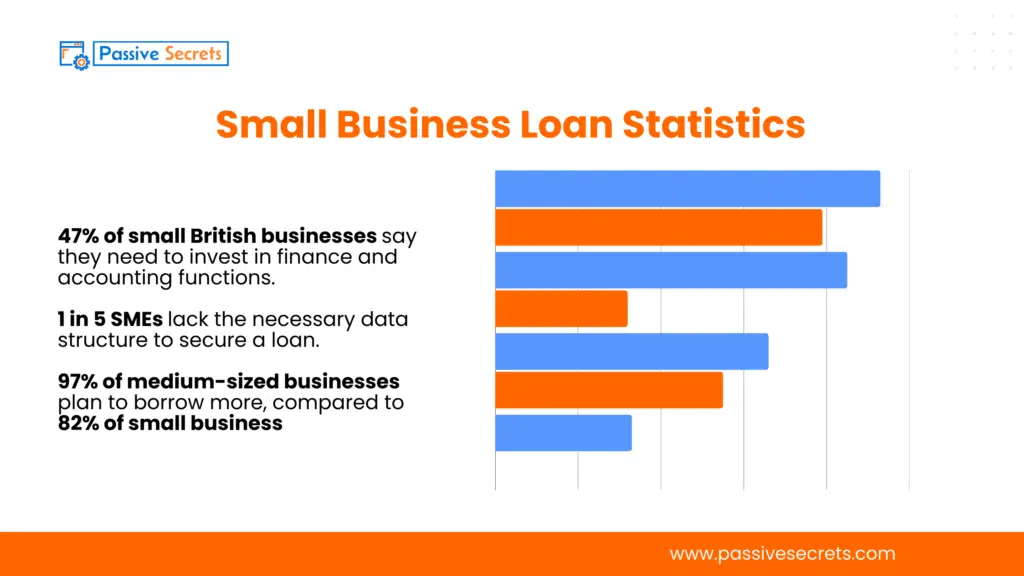
44. 97% of medium-sized businesses plan to borrow more, compared to 82% of small businesses (source).
45. 47% of small British businesses say they need to invest in finance and accounting functions (source).
46. 1 in 5 SMEs lack the necessary data structure to secure a loan (source).
47. In the 2023 fiscal year, over 63,000 loans were granted through the SBA’s 7(a) and 504 loan programs, with the total amount nearing $34 billion. Approximately one-third of those loans were allocated to businesses with female ownership (source).
48. In the third quarter of 2024, 17% of firms sought bank loans. The primary reason for not applying was the availability of sufficient internal funds, which firms felt were enough to support their business plans (source).
49. The proportion of firms facing difficulties in securing a bank loan saw a small increase. Among businesses that considered bank loans important, 6% reported encountering obstacles during the loan application process (source).
Regional Business Loan Statistics
50. In Q2 2025, fewer firms in Europe reduced their need for bank loans (net 1% vs 4% in Q1), and 1% more firms reported improved bank loan availability (vs 1% decline in Q1) (source).
51. 5% of firms in Europe that considered bank loans relevant faced obstacles getting one. Some of these obstacles include high costs, limited amounts received, loan application rejections, and discouragement from applying (source).
52. In 2025, it was stated that the EU is providing €60 million in loan guarantees to support small businesses in North Macedonia, Bosnia and Herzegovina, and Montenegro, promoting sustainable growth and job creation (source).
53. In Q3 2025, bank loan applications dropped to 17%, down 6% from the previous quarter. Most firms didn’t apply, citing sufficient internal funds for their business plans (source).
54. North America led the global unsecured business loans market with a 34.87% revenue share in 2025, while Asia Pacific is expected to see the fastest growth at a 10.84% CAGR (source).
55. In 2022, outstanding business loans from SMEs in Luxembourg totaled 8.76 billion euros, down from over9.3 billion euros the previous year (source).
56. In 2024, Lithuania topped the EU with the highest rejection rate for SME loan applications at 36%, followed by Latvia with 28%. This indicates significant challenges for businesses in these countries accessing finance (source).
57. In 2022, the average interest rate on new business loans to SMEs in France was 1.87%, up from a low of 1.04% in 2020. Rates did not return to pre-pandemic levels until 2022 (source).
58. As of June 2025, the Baltic states (Latvia, Estonia, and Lithuania) had the highest average interest rates for non-financial corporations in the Eurozone. The Eurozone’s average business loan rate was 3.3%, while Malta had the lowest at 1.9%. Interest rates for consumer loans varied even more across the Eurozone (source).
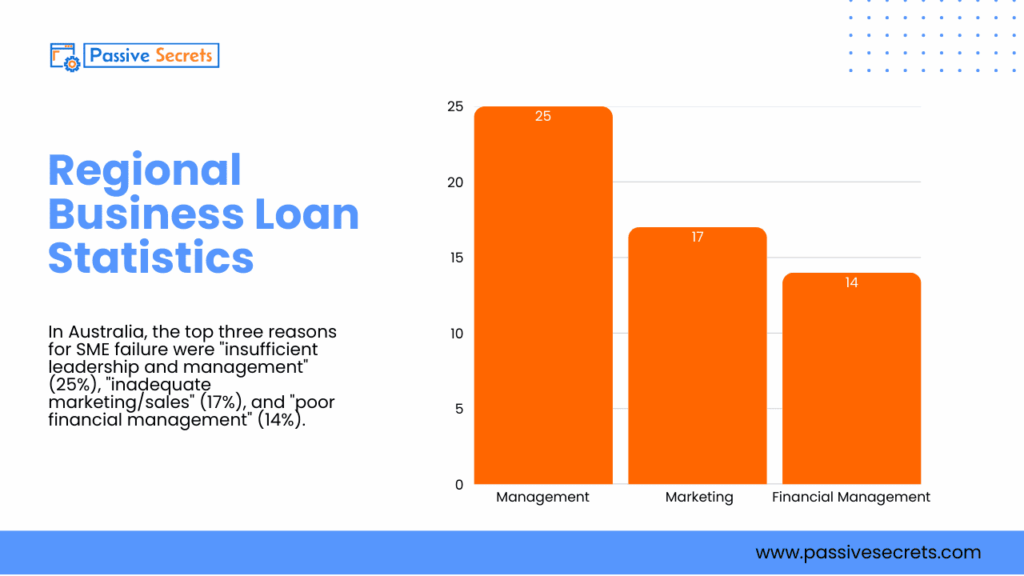
59. In Australia, the top three reasons for SME failure were “insufficient leadership and management” (25%), “inadequate marketing/sales” (17%), and “poor financial management” (14%) (source).
60. As of December 2024, a survey revealed that 50% of Australian SMEs were optimistic about meeting their loan repayments over the next 6 months, whereas 12% anticipated difficulties in doing so (source).
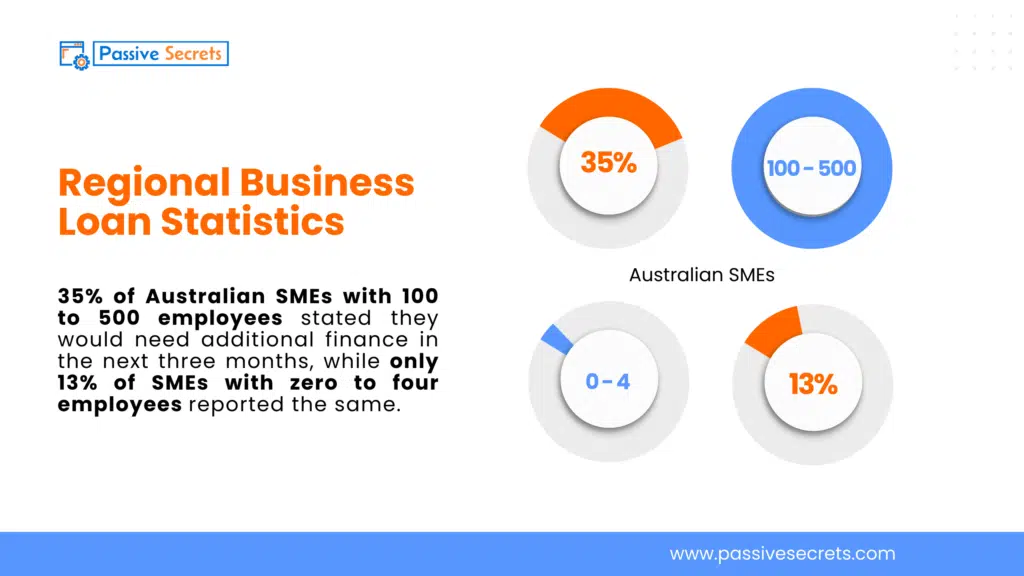
61. 35% of Australian SMEs with 100 to 500 employees stated they would need additional finance in the next three months, while only 13% of SMEs with zero to four employees reported the same (source).
62. APAC (Asia-Pacific) is expected to contribute 46% to the global P2P lending market growth by 2028 (source).
63. In Nigeria, micro enterprises (MEs) made up 96.9% of the total number of businesses, while SMEs accounted for 3.1% (source).
64. Regarding ownership structure, 96.2% of Nigerian MSMEs are sole proprietorships, while 3.3% are partnerships, faith-based organizations make up 0.1%, and other types account for 0.4% (source).
65. 35% of Nigerian businesses cited limited access to finance as their top challenge. The government has addressed this with the ₦500 billion debenture stock and the ₦70 billion MSME Development Fund (source).
66. In response to protests, the Nigerian President, Bola Tinubu, announced that 75,000 Nigerians will receive N1 million each in low-interest business loans starting August 2024 (source).
67. Despite the majority of businesses in the region falling into this category, data from the Asian Development Bank shows that financing for SMEs makes up only 22% of all bank loans in developing economies across the Asia-Pacific (source).
68. In India, despite significant progress in financial inclusion by the government, fewer than 11% of the country’s SMEs have access to formal credit (source).
69. Malaysian banks are projected to achieve over 6% year-on-year (YoY) loan growth for the entire year of 2024, driven by business loans (source).
70. According to UOB Kay Hian, based on data from Bank Negara Malaysia (BNM), business loans grew at a faster rate of 6.4% YoY in June (source).
71. India’s MSME loan portfolio grew by 17.8%, reaching Rs 64.1 trillion by March 2024, compared to the previous year, as per the fourth edition of CRIF High Mark’s How India Lends report (source).
72. A recent detailed report on How India Lends highlighted a 28.9% increase in loans to self-employed individuals, totaling Rs 35.7 trillion, while loans to MSME entities grew by6.6%, reaching Rs 28.4 trillion (source).
73. In fiscal year 2024, the microfinance loan portfolio grew by 26.8%, reaching Rs 4.4 trillion. The origination volume rose by 6%, with 83.5 million loans sanctioned, totaling Rs 3.8 trillion, reflecting a 19% growth (source).
74. In the financial year 2023,47% of business loans provided by fintech companies in India ranged from 10,000 to 50,000 rupees, while 22% exceeded 500,000 rupees (source).
75. Outstanding loans to non-financial corporations in the euro area have remained stable since early 2023. In January 2020, adjusted loans were around 4.58 billion euros. Meanwhile, business loan interest rates in the Eurozone rose sharply in 2022 and 2023 (source).
Demographic Business Loan Statistics
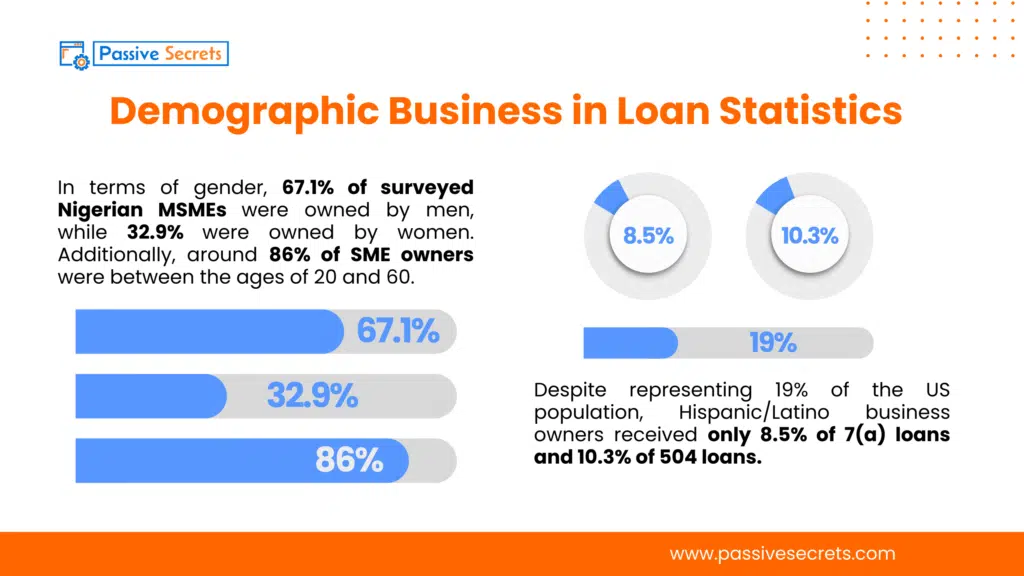
76. In terms of gender, 67.1% of surveyed Nigerian MSMEs were owned by men, while 32.9% were owned by women. Additionally, around 86% of SME owners were between the ages of 20 and 60 (source).
77. Although over 13% of the U.S. population is Black, only 8% of 7(a) loans and 3.6% of 504 loans were granted to Black applicants (source).
78. Despite representing 19% of the U.S. population, Hispanic/Latino business owners received only 8.5% of 7(a) loans and 10.3% of 504 loans (source).
Future Outlook For Business Lending
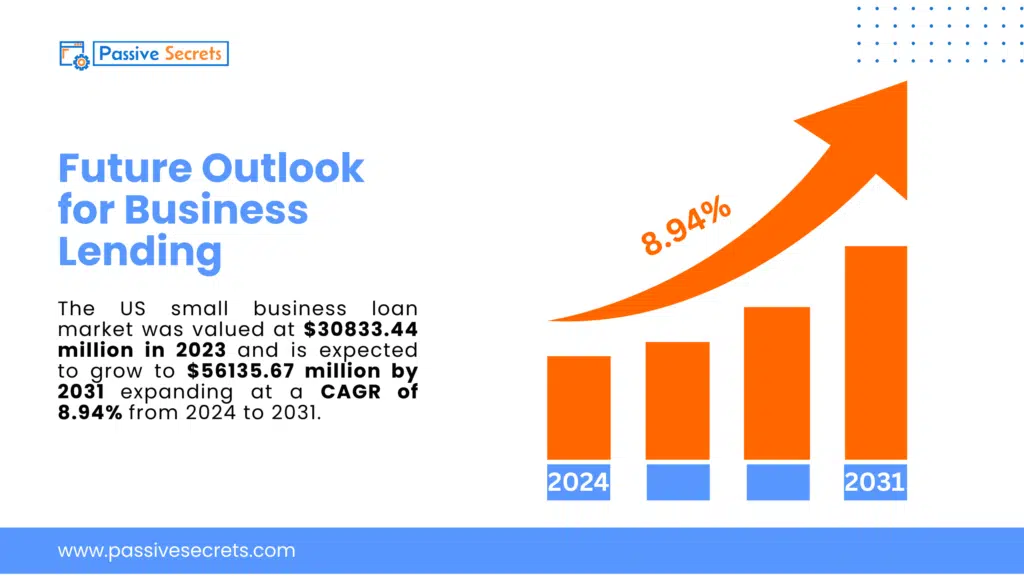
79. The U.S. small business loan market was worth $30.83 billion in 2023 and is projected to reach $56.14 billion by 2031, growing at an 8.94% CAGR from 2024 to 2031 (source).
80. Around 90% of businesses plan to be cautious with borrowing, while 69% will delay investments such as equipment purchases and hiring. Only 31% plan to continue investing in their business (source).
FAQs

Other Related Statistics You Should Know:
- 65+ Vital Leadership Statistics: Latest Trends and Insights
- 101 Billionaire Statistics: Surprising Insights About The World’s Wealthiest
- 70+ AI in Education Statistics That Prove the Future Is Already Here
- Women in Leadership Statistics: Insights into Global Gender Representation
- Soft Skills Statistics: Key Data on Demand, Training, and Impact
- 95+ Fascinating Gift Industry Statistics to Surprise and Delight
- Top Business Coaching Statistics & Trends Every Leader Should Know
- How Much Are People Saving? Key Personal Savings Statistics Explained
- 40+ Useful Procrastination Statistics To Help You
- 90 Amazing Millionaire Statistics & Facts You Dare Not Miss
- 50+ Latest Life Coaching Statistics And Huge Trends
- 30+ Useful Real Estate Photography Statistics and Trends You Need to Know
- Data-Driven Decision-Making Statistics: Trends, Benefits & Challenges
- 54 Incredible Goal-Setting Statistics To Help You
- 45+ Interesting Communication Skills Statistics & Huge Trends
- Body Language Statistics & Fun Facts To Boost Your Communication Skills
- 35 Interesting Public Speaking Fear Statistics & Fun Facts
- 25+ Most Interesting Emotional Intelligence Statistics & Fun Facts

